How to Build a Run That Leaves No Opening for Predators
A predator-proof run is a single sealed envelope, not a fence with a lid, and it gets built in the order predators test it: ground, then walls, then top, then doors. Diggers come up through the soil, climbers go over the wall, aerial hunters drop onto the roof, and squeezers push through anything wider than half an inch. Each of those four behaviors has exactly one place in the build where it gets closed off, and working in that order means every material decision has an animal attached to it instead of a price tag.
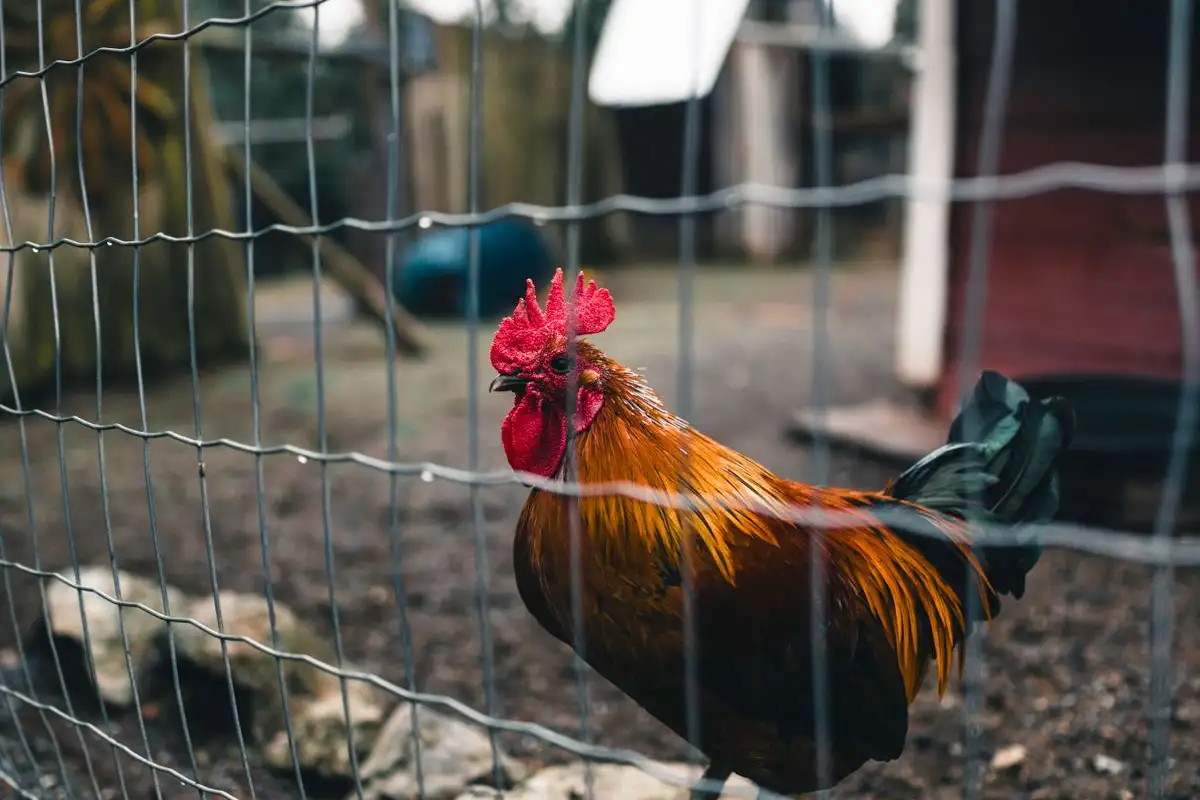
I stopped thinking about runs as rectangles the night I found a neat, cone-shaped crater in the dirt at my corner post. The wire was still there. The soil underneath it wasn't. Nothing had gone through the wall. Something had gone under it, and the wall had done exactly what I asked of it, which was nothing at all. If you're standing in a half-built run right now with a staple gun in one hand, that's the first thing I'd want you to hear: the wall is not the defense. The envelope is.
The ground is where the envelope starts
Kneel down at the corner of your run and put your palm flat on the soil beside the bottom rail. That's the load-bearing part of the whole structure, and it's the part almost everyone builds last, if at all.
Diggers — foxes, coyotes, dogs, the neighbor's roaming mutt — don't chew through half-inch mesh. They don't have to. They excavate. A dog works a corner because a corner gives it two walls to dig against and a smell to chase. A fox will come back to the same spot three nights running and deepen the same hole. What stops both of them is an apron: a horizontal skirt of the same 1/2-inch hardware cloth, 18 to 24 inches wide, bent into an L along the bottom rail and laid flat on the ground, pointing outward, away from the run.
The apron works because of geometry, not strength. An animal digging down at the base hits wire lying flat under an inch of soil, and it can't get its paws under it or its teeth into a leverage point. It scratches at loose dirt and finds a floor. I cover mine with a thin layer of soil and then pavers or gravel right at the corners, where the digging pressure is heaviest. Grass grows through it in a season and hides the whole thing.
Do the apron before the walls go up. Once the wall panels are standing you're working on your knees around uprights, and it's miserable. Run the apron in one continuous strip around the perimeter where you can, and where you can't, overlap the pieces by at least a foot and lace them together. A butt joint in an apron is just a hole with good manners.
One more thing about the base: keep the bottom rail slightly above grade rather than burying it. Wood in constant soil contact rots, and a rotted bottom rail is a sagging wall, and a sagging wall pulls your wire loose from its fasteners. Gravel packed along the outside of the rail keeps the mud from climbing and keeps the apron edge from being washed out in a hard rain.
Walls: the half-inch rule and the fastening nobody wants to do
Stand outside your run at eye level and look at the mesh. If a raccoon sat on the outside of that wall, could it get its arm through to the shoulder? On one-inch poultry netting, yes — easily — and that's how birds get killed through a wall that never actually failed. A raccoon reaches in, grabs a leg or a wing, and pulls. The bird dies against a fence that did its job.
Half-inch hardware cloth ends that conversation because the arm stops at the wrist. That's the whole reason for the size, and it's also why the gauge matters. Nineteen-gauge or heavier. Lighter wire tears at a cut edge when something pulls on it, and once a tear starts at a corner it unzips. Poultry netting has its place in a garden. It has no place on a run wall.
Here's the part I'd underline twice. The mesh is not the weak point. The fastening is. Staples pull. They pull because the wire flexes every time something pushes on it from outside or leans on it from inside, and that tiny movement works the staple out of the wood a fraction at a time. Use 1-1/4-inch screws with fender washers, every 6 to 8 inches along every framing member, and the washer spreads the load across a real area of wire instead of one thin staple crown. It takes four times as long. It's the difference between a run that holds for a decade and a run you're re-stapling every spring.
Where two panels meet, overlap them by a couple of inches and lace them together with wire or clips. Never butt two cut edges together and call it a seam. Cut edges are where hardware cloth loses its structural integrity, and they're also where a determined animal starts.
And look at the junction between the run and the coop. That's the seam everyone forgets because it's not really part of either structure. If your run butts against a coop wall, seal that line the same way you'd seal a wall panel, all the way up. A gap you can slide a finger into is a gap a weasel goes through without slowing down.
The top is the difference between a run and a buffet
Squeezers are the ones people underestimate. A weasel or a mink can pass through a gap the size of a quarter, and it doesn't need an entrance — it needs a seam. Climbers are the other half of the roof problem. A raccoon goes up a post or a tree like it's walking up a ramp, and it will test the top of your run from above with its full weight.
A solid roof is the cleaner answer. It closes the aerial category completely, keeps hawks from working the run from a perch overhead, and gives you dry ground underneath, which matters more than people expect — dry litter doesn't turn into the mud that eats your apron edge and rots your bottom rail. The tradeoff is cost and shade. A solid roof over a small run cuts light, and in a northern winter that's a real loss. If you go solid, plan for it rather than discovering it.
If you cover with hardware cloth instead, the top has to be fastened to the wall framing at every edge with the same screw-and-washer pattern you used on the walls, and it has to be supported so it doesn't sag. A sagging wire roof is a hinge. A raccoon leans down on the low spot, the wire gives a few inches, and suddenly it's reaching into the run from directly overhead. Support it, keep it taut, and tie the roof mesh to the wall mesh with lacing wire so there's no seam at the corner where the wall meets the top. That corner is where a climber will spend its whole night if you let it.
Latches, hinges, and the gaps you forget to look at
A raccoon has hands. That's the honest way to think about it. Hook-and-eye latches, sliding bolts, and simple spring snaps all open under a pair of paws with time to work. What holds is a double-ended snap, a carabiner, or a two-step latch that requires two separate motions in two different directions. I clip a carabiner through my gate latch at night as a second action even though the latch itself is already a two-step. It costs two seconds and it removes the entire category.
Then check the gate itself. Lift it, push it, watch the gap on the hinge side. A gate that fits well in July can swing a half inch out of square by February, and that half inch is a weasel doorway. Hinges are the other quiet failure — a drooping gate opens gaps at the top and the bottom, and it also drags and gets left ajar.
Space per bird is part of the envelope
Standard chickens want at least 8 to 10 square feet per bird in a run, and more if they're confined full time rather than let out to range. That number isn't just about behavior. A crowded run presses birds against the walls, and the walls are the part of the envelope under constant load. Crowding also churns the ground at the base into mud, and mud is what undermines an apron, rots a bottom rail, and lets a determined digger find soft ground where you thought you had a floor. Space is structural.
The dusk walk
The build ends, but the envelope is maintained. I do a five-minute walk at dusk with a flashlight, and I do it in the same order every time, because order is what keeps me from skipping.
- Base first. Flashlight flat along the ground, looking for fresh fans of dirt, new scratches, anything that wasn't there yesterday. Corners get extra attention; that's where dogs dig.
- Then the walls, hand over the mesh with a glove on, feeling for loose fasteners and sagging panels. Loose wire makes a sound when you tap it.
- Then the top, looking for sag and for anything that has worked loose at the roof-to-wall seam.
- Then the gate. Lift it, drop it, listen to the latch seat twice.
What I trust is the walk, not the memory of the build. What I ignore is anybody's assurance that a given material is predator-proof, including mine. This envelope handles the four functional groups — diggers, climbers, aerial hunters, squeezers. If you've got bears on the property, this is a different conversation and a wire envelope is not the whole answer. And if your run is small and low-traffic, understand that hardware cloth, screws, and washers cost real money and eat a weekend. What you're buying with that weekend is not a stronger fence. It's a structure with no seams left for an animal to find, and that's the only thing that ever actually mattered.