Hens Aren't Bullying Each Other, They're Negotiating Rank
What looks like bullying in a backyard flock is usually rank negotiation, and the two are told apart by duration and by access. A quick peck, a hard stare, a flare of neck feathers, a hen that drops into a crouch and steps aside: that is the flock updating its social map, and it will keep updating for as long as hens live together. Persistent cornering, a bird standing guard over a feeder, or a hen that stays on the roost until the others have finished eating is not a personality problem. It is a resource bottleneck, and the correction belongs in the layout of the run, not in the birds.
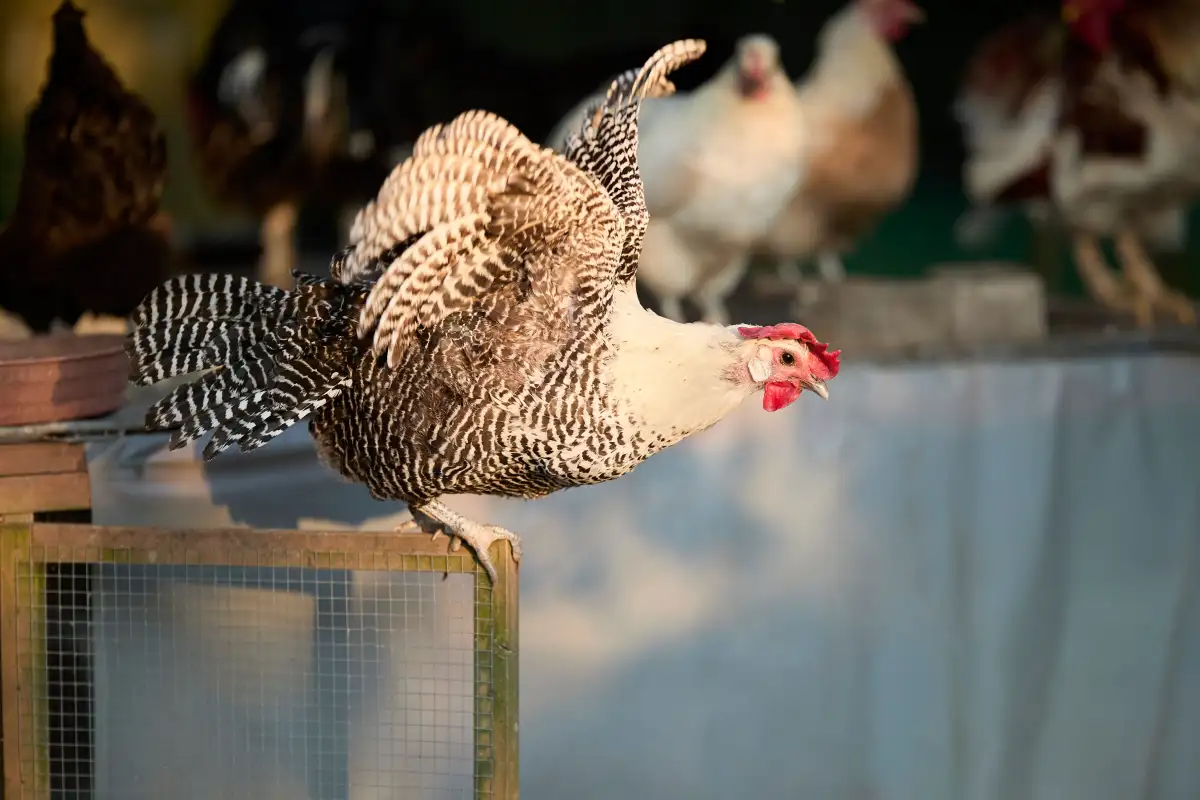
Stand with me at the run gate a few minutes after sunrise. The waterer is ticking, dew is still on the hardware cloth, and the flock is already spread across the ground doing the morning version of nothing. Two hens in the middle of the run cross toward the near feeder. One of them lifts her head and holds it there, no sound, no contact. The hen at the pan drops her shoulder half an inch, steps back a single stride, and goes on eating from the far side of the same pan. That was the whole event. Two seconds, maybe three. If you were scrolling your phone you missed it, and if you missed it, you would swear nothing happened at all.
That is what most of the pecking order looks like. Not a fight. A series of small, fast transactions over addresses.
Read it like a map, not a mood
The mistake I made early on was hearing pecking order as a mood, something the flock was in. It is not a mood. It is a map, and the map has addresses: this pan, that corner of the dust bath, the top bar on the south wall, the nest box closest to the door. Rank is just who gets which address without being asked to move.
The structure exists for economy. A flock that has to renegotiate every meal spends its day fighting instead of foraging, and hens that spend the day fighting eat less and scratch less. Rank settles the question once and then refers back to it with a glance. It reduces ongoing conflict over food, roost space, and nest boxes. That is the entire job description.
Which means the signals are almost always brief and almost always cheap. A single peck to the back of the neck. A stare held one beat too long. Neck feathers fluffed to make the bird look wider than she is. A crouch and a step to the side, which is the submissive answer and the one that ends the exchange. What you are watching for is not drama. You are watching for who yields and where the yielding bird goes afterward, because the answer to that second question is the whole diagnosis.
The bottleneck test
Here is the walk I do when something in the flock starts to feel off. I go into the run, and for a minute I stop thinking about hens and count hardware instead.
Feeders: how many, and how far apart? If two pans sit side by side against the same wall, you have one feeding station with a decorative second pan. A low bird can be blocked from both at once by one hen standing in the right place. Mine are spread so that no bird can hold a sightline on all of them at the same time.
Waterers: same question. A single bucket in the corner is a single point of failure. Two waterers at opposite ends, or one bucket plus a nipple setup on the far fence, costs little and changes the arithmetic.
Roosts: this one gets skipped the most. A single bar at one height is a single row of seats. Adding a second bar lower and offset, even just a two-by-four on brackets a foot down and two feet over, gives a low bird somewhere to be that is not the floor. It does not end the hierarchy. It ends the pileup.
Nest boxes: the queue at the door of the favorite box looks like aggression and is usually arithmetic. If most of the hens want the same box at the same hour, one more box in a different spot drains the pressure off without changing who outranks whom.
Then I stand still and watch the three places that tell the truth. Where do birds feed? Where do they roost at dusk? Who gets the good dust bath, and who gets the edge of it? A single confrontation tells you almost nothing, because any bird can have a bad thirty seconds. Patterns across those three locations tell you the actual order.
What normal negotiation looks like, and what it does not
Normal: a short chase across the run that ends in four or five strides, a quick peck, a fluffed neck, a crouch, and then both birds back to scratching within a minute. The pressure moves around. Different birds yield on different days. A hen that lost the feeder this morning is on the top roost tonight.
Not normal: the same bird moved off every resource, every time, in the same order, day after day. A hen that never comes down to eat until the others are done. A bird pinned in a corner or against the wire, or blocked from the pop door at dusk while the rest go in. When the pattern is that consistent, you are not watching rank negotiation anymore. You are watching a layout problem that happens to be expressed through a bird.
The distinction matters because the two problems have different fixes. Rank negotiation is solved by waiting and by not interfering. A bottleneck is solved by adding access points, breaking sightlines, and giving the low bird a route.
When the map redraws
Expect visible churn at four moments. Adding birds. Removing birds, including losing one, which can leave a hole in the order that the remaining hens spend a week arguing about. Point of lay, when a pullet comes into her first laying season and stops being a noncombatant. And any change to the run itself, because moving a feeder, adding a tarp, shifting a dust bath, or hanging a new roost redraws the map whether you meant to or not.
The last one is the useful one. If you change the run and the flock loosens into two or three groups with more ground between them, you moved the bottleneck. If nothing changes, you probably added objects to a space that was already too tight.
Where I stop
I do not try to break the hierarchy, and I am suspicious of anyone who claims to. A flock with no order is a flock that argues at every meal. The goal is a map with enough addresses that the bottom bird always has somewhere to be.
There is a tradeoff worth saying out loud. More feeders means more spilled feed and more pans to scrub. More roosts means more places to clean under. More clutter breaks sightlines, which helps the low bird, but it also gives a determined hen more corners to lurk in if the run is small. And no amount of hardware fixes a run that is simply too small for the number of birds in it. At some point the honest answer is fewer birds or more square footage, and no arrangement of buckets argues its way around that.
So watch the small stuff. Two seconds at the feeder. A half step. The bird who waits. That is where the flock is talking, and once you can hear it, you will stop seeing bullies and start seeing a map that needs one more road.