Six Chicks Outgrow a Standard Storage Tote by Week Three
Six chicks outgrow a standard 50-gallon storage tote during week three, and the reason is arithmetic rather than opinion. A tote that size offers roughly four square feet of floor at its base, and less than that once the waterer and feeder are subtracted. Six chicks need about three square feet in week one, closer to four and a half by week two, and a full six square feet by week three. The container's floor stays at four the whole time. The birds' requirement doubles in twenty-one days.
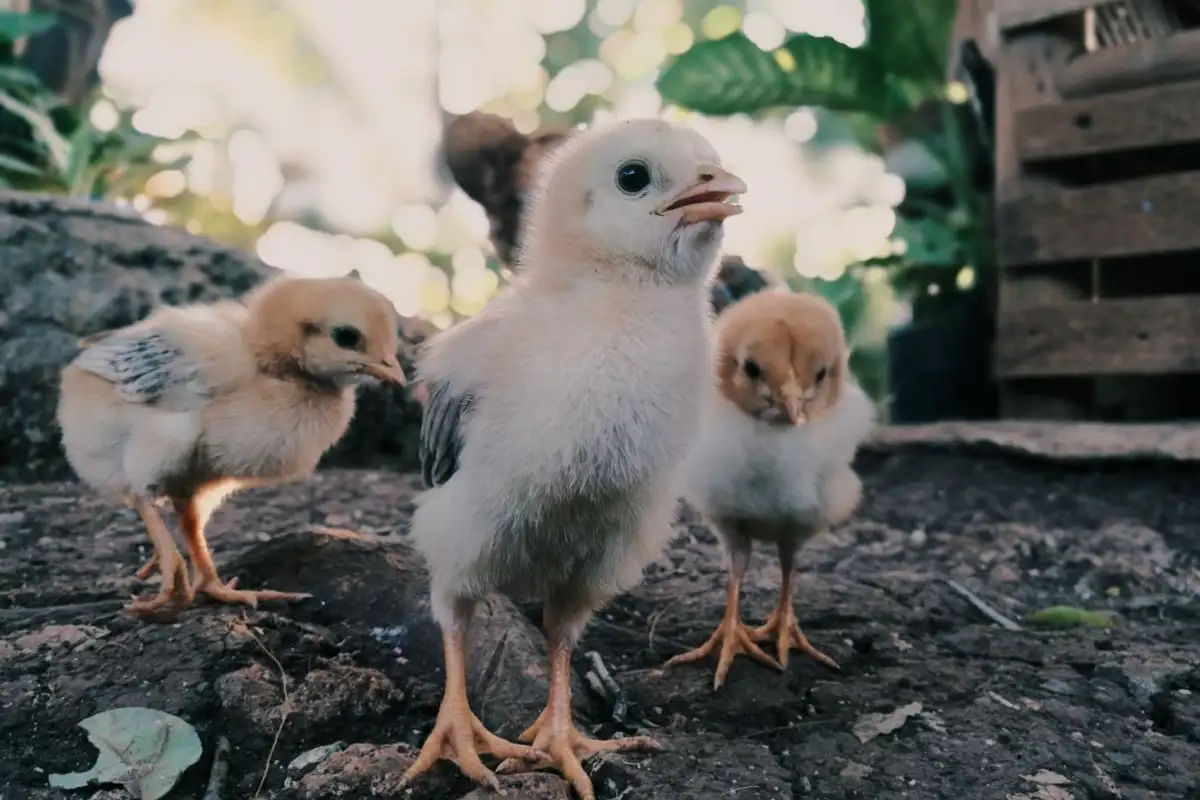
I keep a folding tape measure on the shelf above the brooder, and I want you standing where I stand when this matters. A milk crate pulled up to the tote on a Tuesday evening, day eighteen, garage door half down. Six chicks. Four of them are pressed into the end they've claimed, shoulder to shoulder like biscuits in a pan. The fifth is walking a slow lap and stepping over the sixth, which has decided the strip of floor in front of the waterer is a fine place to lie down. The waterer is shoved against the wall. On the far side there's a bare patch of floor about ten inches wide, and nothing is using it.
That bare patch is what fooled me the first time, and I suspect it's fooling you right now. It looks like spare room. It isn't. It's a corridor nobody wants to stand in, and it's the last thing standing between you and the honest answer: the tote stopped working somewhere around day sixteen, and you're going to notice it this week.
Week one: the tote looks enormous and the math says otherwise
Day three. Six chicks the size of golf balls, and four square feet might as well be a barn. The planning number is roughly half a square foot per chick in week one, so six chicks ask for about three square feet. The tote passes with room to spare, and that's exactly why nobody measures anything in week one.
Two deductions are already working against you.
The first is the taper. The tote I've used for the last several batches measures a hair over three feet by twenty inches across the rim, and its inside bottom is closer to thirty-two by eighteen, because the walls lean inward and the base is molded thicker. That's a floor of roughly four square feet, not the five you'd get by measuring across the top. Nearly every tote in this format tapers the same way, but check yours instead of trusting that. Turn it over, run the tape across the inside bottom, write the number on the lid in marker. It's the only measurement that will matter for the rest of the batch.
The second is equipment. The waterer base and the feeder base sit on that same floor, and early on they take close to three quarters of a square foot between them. So week one is not four square feet against a three-square-foot requirement. It's about three and a quarter usable against three. It fits. It never fits more generously than that.
Week two: the first honest squeeze
The published rule jumps from half a square foot in week one to a full square foot in week three. The weeks between aren't in the rule, so I run them at roughly three quarters, which is the interpolation I've settled on after enough batches to trust it. Six chicks at three quarters is four and a half square feet of bird on three and a quarter square feet of floor.
That's the week the geometry starts telling on itself. The waterer lives in a corner because there is no other place for it. A chick crossing the brooder steps over two others to get anywhere. And one of the bolder ones puts a foot on the rim, just to see.
That last detail matters more than it looks. Hold onto it.
Week three: this is the week the tote actually fails
Day sixteen through day twenty-one. Six chicks at one square foot each is six square feet of requirement. The tote holds four before equipment and about three and a quarter after. The shortfall is roughly half the requirement and nearly double the usable floor. You cannot shuffle your way out of a gap that size.
Here's the week-by-week footprint, at six chicks:
| Week | Floor per chick | Six chicks need | 50-gallon tote provides |
|---|---|---|---|
| 1 | 0.5 sq ft | 3.0 sq ft | ~3.2 sq ft usable |
| 2 | ~0.75 sq ft | 4.5 sq ft | same |
| 3 | 1.0 sq ft | 6.0 sq ft | same |
| 4 | ~1.25 sq ft | 7.5 sq ft | same |
| 5 to 6 | 2.0 sq ft | 12.0 sq ft | same |
Column four is the whole point. It's a constant. Everything in column three grows.
By week three you can see it without a tape. They use the diagonal. The pile at one end gets tighter and the rest of the floor gets an empty ring around it, because a chick that isn't in the pile doesn't want to be adjacent to it. There's a trail worn from the pile to the feeder. And the rim has stopped being a curiosity.
The growth curve peaks exactly when the container is failing
Chicks put on most of their visible bulk between week two and week four. That's not a coincidence with the sizing problem — it's the same fact viewed twice. The requirement triples from week one to week three while the container holds one number forever. Any brooder that looked correct on day one is mathematically out of room by day eighteen, and the moment you finally see it is the moment the growth rate was highest. That's why the squeeze always seems to arrive out of nowhere. It didn't. It compounded.
The rim fails on a different schedule than the floor
This is the part I'd want you to carry away if you carry away nothing else, because it's the part that catches people whose floor math looks fine.
Floor area and wall height are two separate limits, and they fail in the order that depends on the container, not on the birds.
A shallow container — a small tote, a cut-down box, a plastic wading pool — loses the height race first. Chicks start hoppling at the edge somewhere in the second week, and once one of them is standing on the rim, your usable floor has effectively become the floor minus the area the wall no longer contains. The floor number on paper is still fine. The container is done anyway.
A tall 50-gallon tote is the reverse. They can't get out of it, not for a while, so it fails on floor. That's the case in this article, and it's why the arithmetic above is the correct way to predict the date.
So the weekly check is two questions, not one. Enough floor? And is anything standing on the rim?
The check I actually run every Sunday evening
I don't measure weekly. I measured once, at setup, and after that I use my hands.
Sunday evening, before the last top-up of the feeders, I sit down on the crate so my eyes are at floor level instead of looking down from standing height. Looking down compresses everything and makes a full brooder look half empty. From the crate, the floor is honest.
Then the test: could two more chicks of this size lie down side by side in the open floor without touching anyone? Not two chicks tucked into the empty ring — two chicks actually lying flat, without contact. If the answer is no, the container is finished, whatever any chart says about square feet per bird. If the answer is barely yes, you have about a week.
That's it. No tape, no chart, no guessing at what a tote is supposed to hold. You're asking the floor a direct question and the floor answers it.
Adding footprint without building a second brooder
When the answer comes back no, you have options that aren't a rebuild, and the time to think about them is setup day, not day eighteen.
The first is a second container clamped alongside the first, with the two joined so the birds treat them as one space. The second is an adjustable pen panel that replaces one wall and lets the footprint creep outward as the batch grows. Either way, the planning decision is made early: which direction does the brooder expand, and is there clear floor in that direction? I stage the second container against the wall, empty, from week one. On the evening I decide they need it, expansion is a ten-minute job, not a rehousing project with six panicking chicks and a dustpan.
I'm deliberately not getting into how to join them here. The planning question — where does the extra footprint come from and when — is the one that decides whether week three is a shrug or a scramble.
Size for the number you're keeping, not the number you hatched
Two versions of the same trap.
If you hatched six and intend to keep four, the peak count in the brooder is still six until the other two leave. Size for six through week three. Shrinking the container early because the final flock is smaller just moves the failure forward.
If you're keeping all six, do the far-end math on day one rather than on day thirty. Six birds at two square feet apiece by the time they feather out is twelve square feet — three of those totes' worth of floor. Knowing that in week one changes what you set up. Discovering it in week five usually means a rushed trip and a brooder built badly in an afternoon.
The date your tote stops working
For six chicks and a standard 50-gallon tote, that date falls between day sixteen and day twenty-one. It isn't a surprise when it arrives. It's a line on a curve you could have drawn on day one, and the only reason it feels sudden is that the birds spend two weeks looking small in a space that was already too tight for the size they were about to become.
If you take one habit from all of this, take the tape measure at setup and the two-chick question every Sunday after. The evening a chick stands on the rim and looks down at you, you'll already know which week you're in — and you'll already know what to do about it.