The Weakest Layer in Chicken Predator-Proofing Isn't the Coop
The weakest layer in a predator-proofed flock is almost never the coop itself. It is whichever of five layers nothing is actually guarding — the ground below the wall, the wall and every junction in it, the space above the run, the coop shell, and the dusk routine that ties the other four together. The fastest way to find that unguarded layer is not to buy more hardware. It is to work backward from the predator that got in and let the evidence tell you which layer was open.
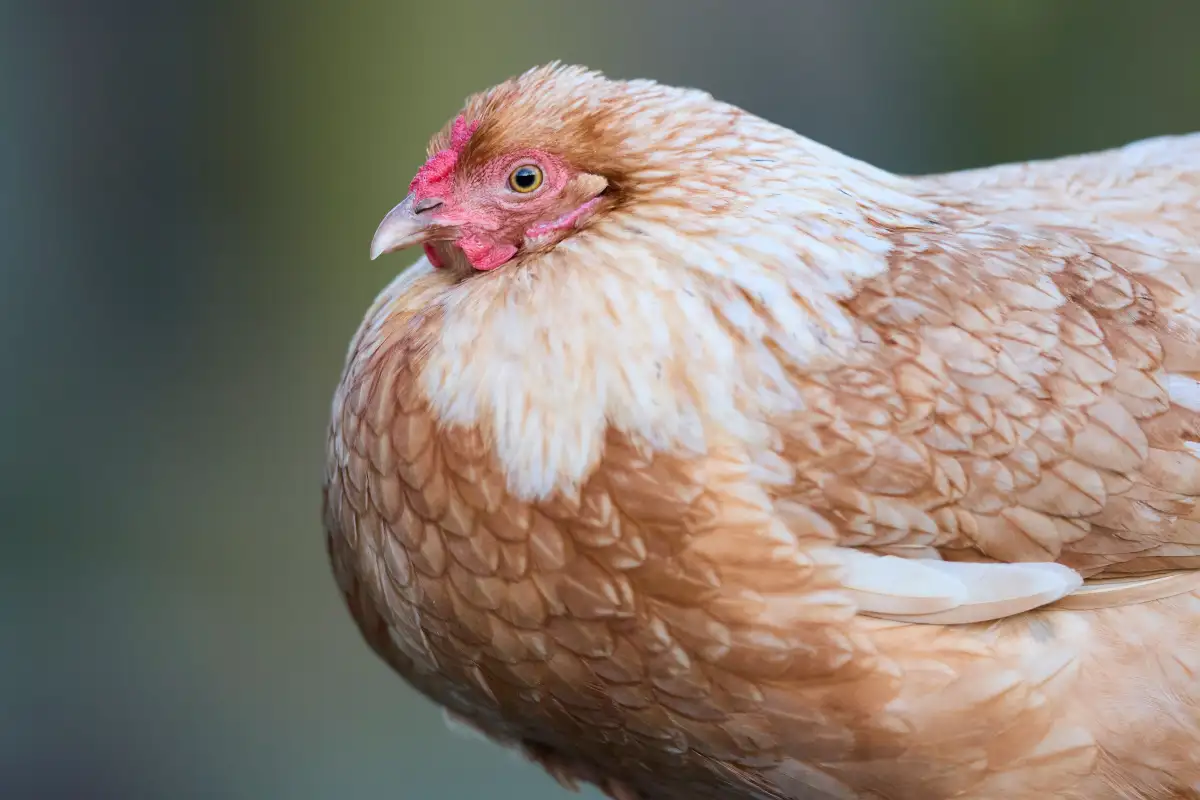
I do it the same way every time, and it always starts badly. You come out at first light with a feed bucket you don't need yet, and you count before you look at anything else. Twelve hens, twelve heads, and the morning is fine. Eleven, with the pop door still latched and the run gate still hooked, and the shape of the day changes. A closed door means something came through a place that isn't a door.
So you get down. Not a squat — down, knees in the wet grass, face close to the soil, because most of this story is written at ankle height.
Read the wreck before you touch anything
Where the feathers are tells you more than anything you'll see standing up. A tight cluster inside the run, with the bird still on the ground, is one kind of event. A line of feathers running out under the base of the wall is another. Feathers caught high on the wire, well off the ground, is a third. I don't treat any of that as a lab result. I treat it as a direction to start walking and a height to start at, because something that leaves sign six inches off the ground is a different animal from something that leaves sign on the top rail.
Then you go looking for the hole, and you go looking with your hand, not your eyes. Grass hides a buried apron edge. Flat morning light hides a two-finger gap at a gatepost. Your fingers don't care about either one. Walk the base of the wall fingertip to fingertip and you will find the soft soil, the pulled staple, the place where the wire has separated from the bottom rail and the opening behind it is exactly the size of an animal.
That hand-on-the-seam motion is the whole audit. It is also the thing nobody does after the first month.
The ground under the wall
A wall that goes straight down into the dirt has no layer here at all. Foxes dig, usually at the base, often with a tidy trench that looks almost deliberate. Skunks dig under and then up. Dogs dig because they dig. Whatever is on the other end of it, the fix takes the same shape: wire that turns outward from the base and lies flat along the ground, pinned down, with soil, gravel, or stone over it. A digger working at the wall line hits wire and quits, because digging is work and work that stops paying gets abandoned.
Where this layer fails is at the fasteners and at the ground itself. The turn of wire at a corner held by one clip that has rusted through. An apron laid on top of the grass instead of under it, so the first mowing finds it and the edge lifts. Sandy ground that drains fast and lets a digger move. Clay that slows things down and holds water against the wire until the wire goes. And freeze-thaw, which over one winter can open a gap under a gate you would swear was flush in October.
I walk the base twice a year now — once in spring when the ground is soft, once in late fall before it locks — because the soil moves even when I don't.
Around the wall, at the junctions
This is the layer people think they have finished, so it gets the least real inspection.
The mesh itself is the first thing to be honest about. Chicken wire is a bird barrier. It holds chickens in. It is not a predator barrier, and a determined climber can work an opening into that light hexagonal weave. Half-inch hardware cloth is where most of us land for the wall, and coarse welded wire is a frame that still needs a skin over it.
But gauge gets argued about endlessly while junctions get ignored, and junctions are where animals actually get in. Put a hand on each of these on your own setup: the corner posts, the gatepost, the frame of the pop door, the overlap where two panels of wire meet but were never clipped to one another, the gap under the gate, and the top rail. Two lines matter more than the rest — the bottom edge and the top rail — because a climbing animal works from the top down and a squeezing animal works from the bottom up.
Raccoons climb, pry, and reach. They worry a loose corner until it gives. Opossums do almost none of that; they walk the entire perimeter looking for an opening roughly the width of their head, then pour through it. That difference matters, because a raccoon fix and an opossum fix are not the same fix.
Nothing a hawk cares about happens at knee height
This is the layer most backyard setups simply don't have. Roofing or netting the run is the single change that closes several routes at once — the overhead attack, and the wall-climbing route for anything that reaches the top rail and finds the run open above it.
It is also the change that quietly rearranges your whole week, so it has to be planned rather than improvised on a Saturday.
A roof changes the light. A run that grew grass goes to dirt, and dirt changes drainage, and drainage changes how much bedding you haul. Netting catches snow and sags, and a sag between supports becomes its own climbable bridge. A hard roof has to be pitched and framed for whatever load your winters actually deliver, and once it's up, head clearance decides whether you still walk inside twice a day or start reaching through the door instead. If you roof a run and then stop going into it, you have traded one layer for another without noticing.
So figure out the pitch, the span, the head clearance, and where the access door goes before you buy anything. Decide up front what happens to the snow. Decide whether you are giving up the grass.
The coop is a layer, not the answer
The coop gets inspected last because it feels like the strongest part. Vents, soffits, ridge gaps, window openings, the seam where two sheets of siding meet, the space between the top of a wall and the roof panel. A screen stapled over a vent is tension, not attachment — it isn't fastened to structure, it's just pulled tight, and a persistent animal works at tension until it isn't tight anymore.
The shell also degrades from the bottom. A wall panel whose lower edge sits on dirt is wet permanently, and a wet edge rots, and a rotted edge is a gap. If the coop has a raised floor, that floor belongs to the shell too.
The layer you perform at dusk
This is the only layer you actually do, and it is only as good as your worst evening — the night you get home late, the night it pours, the night you have people over.
Close in the same order every single time. Count. Put a hand on every latch instead of glancing at every latch. Know which door is the one you occasionally forget, and make that one first instead of last.
Then once a week, or after any storm, take a slow lap instead of a fast close. Flat dusk light is forgiving in a way that hides hairline gaps, so half the value of the lap is just slowing down enough to see. If you can, do one pass in daylight too. The two walks find different things, and neither one replaces the other.
Working backward instead of adding on
When something goes wrong, don't ask what to add. Ask which layer was open, and use what you know to eliminate the others.
The pop door was shut. The bird is gone. That rules out the routine layer and tells you the failure is structural — one of the other four. Feathers along the outside base of the wall say the failure is below or around the wall, not overhead. A gap at the gatepost the width of two fingers says it's the wall-junction problem. Sign well up on the wire says it's the top rail or the layer above the run.
Every time I've skipped that step and just bought something, I fixed the layer I could see instead of the layer the evidence pointed at, and the next loss proved it. A taller fence does not stop a digger. Netting the run does not stop a digger either. A new latch is irrelevant if the opening is under the wall. Each change closes one route, and the animal that got in used a different one.
So before you spend anything, walk the perimeter once with the light behind you and one hand dragging along every seam — first at ground level, then at knee height, then along the top rail. That lap is free, it takes about ten minutes, and it will find more weak points than any single piece of hardware you were about to order.
And accept the tradeoff, because it's real: total sealing and easy daily access pull against each other. A run built like a bank vault is a run you stop enjoying, and a routine you stop doing is its own kind of hole. The goal isn't a sixth layer bolted onto the five. It's finding the one that's already open.