The Breed Traits That Matter Most Before a Cold Snap or Heat Wave
Three traits decide most of a breed's climate fit before any hardiness chart gets a vote: comb type, feather density, and body size. They matter because they don't agree with each other. Each one is a trade, and the same structure that helps a bird in January hurts it in July. So the useful question isn't which breed is hardy. It's which season you're willing to lose, and how much of it.
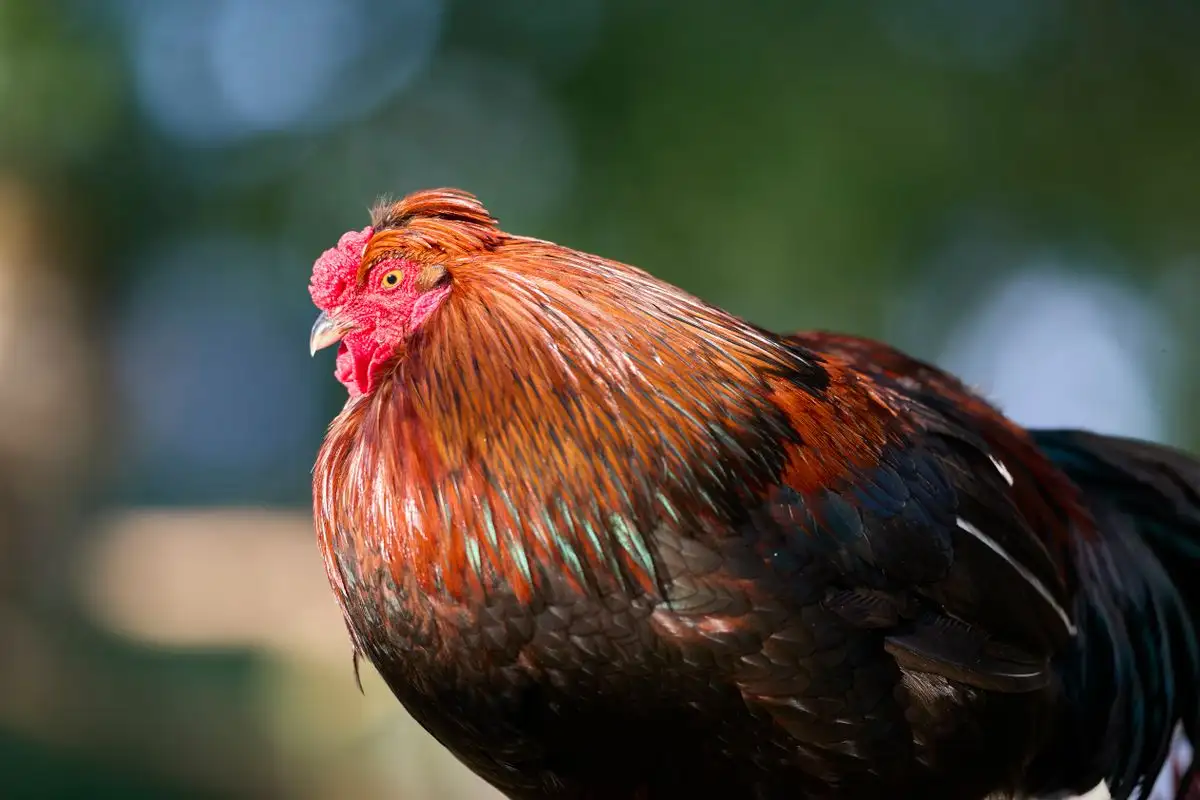
I'm at the coop door on a February morning with a water bucket that's already skimming over, and I'm not looking at the thermometer. I'm looking at combs. The single-comb Leghorn's blade stands up off her head like a red leaf, and it's the only part of her that looks cold. Two feet down the roost, the Wyandotte's rose comb sits so tight against her skull that you'd have to lean in to see it's a comb at all. Same roost, same morning, two birds answering the same weather in completely different ways.
Six months later, put yourself back in that doorway at four in the afternoon. The Wyandotte has her wings held out from her body like a coat she can't take off. The Leghorn, that big floppy comb now working like a radiator bolted to her head, looks like she's on vacation. If you only ever see a breed in one season, you'll draw the wrong conclusion about it. You have to stand in both doorways.
Read the comb first
Comb type is the trait people skip because it looks cosmetic. It isn't. A comb is a bare, uninsulated sheet of tissue, and what you're really choosing is how much of that sheet faces open sky.
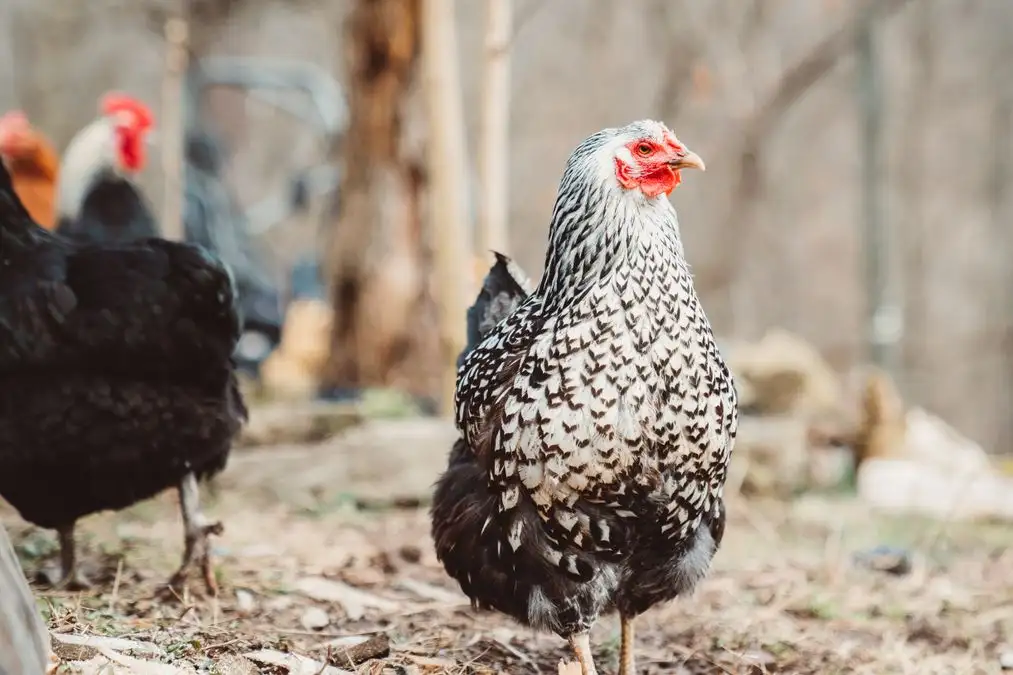
Single combs stand tall and away from the head. Rose combs on Wyandottes and Hamburgs, pea combs on Brahmas and Buckeyes and Ameraucanas, cushion combs on Chanteclers, walnut combs on Silkies: all of them sit low and close against the skull. The difference is exposed surface area, and it's not a small difference. On a windy, dry, single-digit morning you can see it in how the birds hold themselves.
Then July arrives and the same structure flips. A tall single comb and the wattles under it are a place for heat to leave the body. That's why the Mediterranean class looks the way it does. Lean bird, big comb, tight feathers, built to dump heat in a hot dry summer. In a Gulf Coast July, that same bird is the one still walking around at two in the afternoon while my heavies are parked in the shade with their beaks open.
Two things change what you're actually looking at, and neither is breed. Roosters carry bigger combs than hens of the same breed, often much bigger. And a first-year pullet's comb is smaller than the same bird's comb at three years old. So when you stand at someone's fence judging their birds, check whether you're looking at hens or a mixed flock and how old they are before you decide anything about the breed.
There's strain variation too. Some lines of Leghorns have single combs that flop over to one side. A flop changes how much of the comb faces the wind, and I've seen two flocks of the same breed handle the same cold snap differently for that reason alone. That's illustrative, not a rule. It's just the kind of thing you notice after you've kept the same breed for a while.
Feathers: density and loft aren't the same thing
People say "heavily feathered" as if it's one quality. It's two. Density is how tightly the feathers pack against the body. Loft is how much air the plumage traps. Air is insulation in both directions, which is the whole problem.
An Australorp's plumage lies dense and tight against the body. An Orpington or a Cochin carries a great deal of loose, soft feathering with a lot of loft. In dry cold, the lofted bird is the one that looks unbothered. In a humid Southern summer, that same bird is the one in trouble, because trapped air works against her as hard as it works for her. And humidity matters more than temperature here. A dry 100 degrees in the Southwest is a different problem from a wet 92 on the coast, and birds handle the dry version far better.
The extreme cases are worth knowing because they show the mechanism. Frizzles have feathers that curl away from the body, so they don't trap much air and they don't shade much skin either. Silkies have plumage without proper barbicels, so it hangs and mats instead of standing up, and it behaves more like wet cloth than like insulation. Neither is a climate breed. Both are useful for understanding what feathering is actually doing.
The observation that tells you the most is free. Watch where your birds hold their wings in the heat of the afternoon. Lifting the wings away from the body is how a chicken dumps heat, and a bird doing it all day in shade is telling you her plumage is the problem, not the sun. A Mediterranean bird with close feathering will do it briefly and go back to foraging. A densely feathered bird will do it from noon until dusk and get nothing done.
Body size is a ratio, not a ranking
Bigger isn't hardier. Bigger is a smaller surface area relative to volume, which means slower heat loss in winter and slower heat shedding in summer. Same fact, opposite consequences.
Jersey Giants, Brahmas, Cochins, Orpingtons: heavy bodies, and they hold warmth. Leghorns, Anconas, Minorcas, Andalusians: light bodies and quick heat loss. If your January is the season that actually scares you, the heavy end of the scale is working for you. If your August is the season that scares you, the heavy end is the bill you're paying.
Bantams sit at the far end of the ratio and are worth thinking about separately. A bantam is high surface area, low volume, loses heat fast and gains it fast. That is often a good deal on the Gulf Coast and a bad deal on the northern Plains. It's also why a bantam Wyandotte is not simply a small Wyandotte for climate purposes. Same breed name, different physics.
Watch your heavy birds in a hot stretch and you'll see the cost in behavior before you see it anywhere else. They quit foraging in the afternoon. They stand in whatever shade they can find and stay there. Production on the heavy breeds sags in a Southern summer in a way it doesn't on the light Mediterranean class, which keeps working through the heat. That's not a flaw in the heavy breeds. It's the trade arriving on schedule.
Legs and feet are about the ground, not the air
Feathered shanks show up on Brahmas, Cochins, Langshans, Faverolles. Everything else has clean legs. This trait has almost nothing to do with air temperature and almost everything to do with what your birds have to walk on.
The thing I watch is whether they're willing to move. A feathered-shank hen on dry frozen ground walks out with everybody else. The same hen in a wet March yard will spend the day on the roost instead, because mud loads those feathers and she knows it. Clean legs handle mud without collecting it. Clean legs on hard frozen ground will also send birds looking for straw or litter to stand on, and you'll notice the flock choosing the same dry patch every morning.
So this one isn't a winter trait or a summer trait. It's a mud trait and a snow trait, and it depends entirely on what your run turns into in February and again in April. If your ground is heavy clay that stays wet, feathered feet are a choice you'll be thinking about a lot. If you're on sand, you'll never notice the difference.
Regional favorites are climate data, not sentiment
New England keeps Dominiques and Wyandottes. Ohio gave us the Buckeye. The northern tier gave us the Chantecler, with its cushion comb. The Gulf Coast keeps Leghorns, Anconas, Minorcas, and a scatter of landraces that never got standardized. That's not nostalgia. That's decades of culling in one place, and the birds that survived are the ones whose structure matched the weather.
This is the reason hardiness drawn from a climate like yours beats popularity every time. A breed that shines in Vermont can be a slog in coastal Georgia, and the difference usually isn't the temperature number. It's humidity. Wet heat is much harder on a chicken than dry heat. So when you're comparing notes with someone online, find out what their summers feel like before you take their recommendation, even if their winter sounds just like yours.
Comparing two breeds when your seasons disagree
The method I use is short. First, decide which season is the binding constraint where you live. Not the one you like least, the one that actually sets the ceiling on your flock. Second, stack comb type, feather density, and body size in the direction that helps you survive that season. Third, price out what you're giving up in the other one, in writing, so you're not surprised in six months.
If your July is the killer, you're looking at a light body, a tall single comb, close feathering, clean legs. You're accepting that a hard freeze is a real event for you. If your January is the killer, you want a low comb, dense and lofted plumage, a heavier frame. You're accepting that August will be a slow grind, and that your birds will spend their afternoons under the shade tree instead of working the yard.
One caveat, and it's the one that keeps me honest. On the cold side, breed traits set the margin; what decides a January night is whether the birds are dry and out of moving air. That's a building question, not a bird question, and it's where I'd put my attention before I'd put it in a catalog. A rose comb doesn't rescue a damp roost.
What your own birds tell you
The flock already in your yard is better data than any chart, including this one. Watch them through the season you're worried about. Note which birds are still moving at four in the afternoon in July and which birds stand in the wind in January like it's nothing. That's your site talking, and no breed description can override it.
And when you do buy, buy from a climate as close to yours as you can get. Strain and selection history matter as much as breed. A bird bred for decades in Iowa isn't the same animal as one bred in south Florida, even if they share a name.
The last thing to hold onto is that these traits don't add up to a score. There's no number where a rose comb cancels out a light body. A bird isn't hardy or not hardy; it's shaped a particular way, and that shape has a season where it wins and a season where it pays. Pick the season you're willing to lose. Then pick the bird.