The Corner Raccoons Peel Back First — Hardware Cloth and Apron Fencing That Hold
Predator protection is a construction layer, not a product list, and it starts at the corner, because the corner is where a raccoon gets its fingers under an edge and peels. Build outward from there: half-inch hardware cloth on the walls and the lid, an apron of wire fastened to the bottom of the wall and pinned flat to the ground, a latch that takes two separate motions to open, and a monthly pass around every corner, seam, and roofline. Every one of those choices should be made for the predators your own ground actually shows you, in tracks and scat and past losses, not for the ones in whatever article you read last.
I have knelt at the same bottom corner of the same run more times than I can count, usually after rain, almost always with a flashlight because by the time I get out there the last of the light is gone. What I am feeling for is movement. Run your palm down the seam where the wall wire turns into the apron and press. Wire that is properly fastened does not give. Wire with two lifted staples will rock under your thumb like a loose tooth, and that rock is the whole story. Everything a raccoon needs is already there: an edge to get fingers under, a lever arm, and eight or nine hours of darkness to work on it.
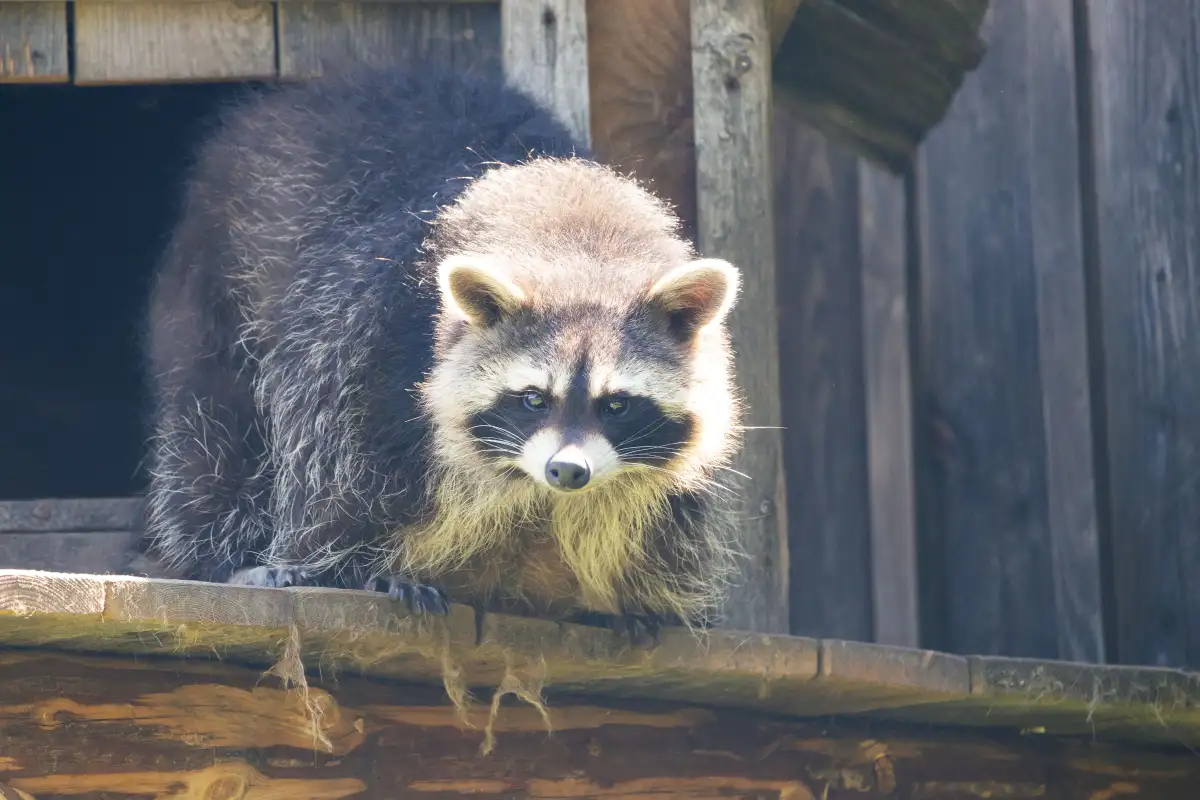
People talk about raccoons like they are criminal masterminds. I do not find that a useful model. The useful model is that they are strong for their size, they have hands, and they are persistent in a way most animals are not. A raccoon does not defeat a wall. It defeats a fastener, and it does it at a corner, because a corner is where the geometry hands it a lever.
So the design question is never what do I buy. It is what am I actually up against, and where does that animal get its leverage.
Read your own ground before you spend a dollar on wire
The first thing I do in a new setup, and the first thing I do every spring, is walk the perimeter in the morning and look down. Tracks hold in mud, in dust, and in a fresh inch of snow, and they tell you what is coming through and how often. Scat is the other half. Raccoons use latrines, which means you will find their droppings piled on a flat raised surface, a fence rail, a stump, a roof edge, sometimes the top of a coop. Fox scat tends to show up on a rock or a hummock, often full of hair and seed. Skunks leave small cone-shaped divots in a lawn where they have been grubbing. Hair snagged on fence wire tells you what has been pushing against it.
Then the losses themselves, because a loss is evidence with a timestamp. Daytime deaths point toward hawks, loose dogs, and occasionally a fox that has gotten bold. Night deaths point toward raccoon, fox, owl, opossum. A bird simply gone, with a few feathers drifting under the run and nothing else, is a different event from a bird dead and untouched, which is different again from a bird pulled through mesh and reduced to a wing and a smear. Count how many and when. If you have lost birds in more than one season across more than one year, you do not have an incidental visitor. You have a resident population, and residents come back to the same weak spot every time.
Region matters more than most people admit. The Midwest, the Southeast, and much of the Northeast carry heavy raccoon pressure, and the Northeast and upper Midwest add fisher and marten, which are a different problem because they climb and they are small. Parts of the desert Southwest have far fewer raccoons and far more coyote, skunk, and raptor pressure, so the roof matters more than the apron. Coastal areas rust wire faster. Hot humid summers rot wood faster. Snow load sags a flat wire lid. Where I am, that last one means the roofline gets checked more often in winter than in summer, which is the opposite of what most people assume.
Hardware cloth, and why the details matter more than the label
Chicken wire is the wrong material for a wall that actually has to hold. Not because it is weak in tension, because it holds a bird fine. It fails because the weave is a light hexagonal mesh, and a hexagonal mesh unzips. A raccoon worries at one strand, the strand deforms, the opening widens, and the whole panel starts to look and behave like a loose sweater. Once the hole is hand-sized, it is head-sized, and the bird is gone through a gap that from ten feet away still looks like a fence.
Hardware cloth is welded rather than woven, and the weld is the difference. Half-inch openings are the standard I keep coming back to. One-inch hardware cloth gives you heavier wire for the same money, and I understand the temptation, but a raccoon can reach through a one-inch square, and that is exactly the failure you are trying to prevent: you find the bird dead inside the run, with no hole anywhere, and it takes a minute to understand what happened. Half-inch stops the reach.
Gauge is the other number. The thicker the wire, the longer it takes to fail. Something in the 19-gauge range in a half-inch mesh is roughly the working baseline. Thinner wire exists, it is cheaper, it will hold for a while, and then one night it will not. If the mesh is coated, know that the coating hides rust at the weld until the wire underneath is already compromised. I look for galvanized after welding, because the cut edges and the weld points are the first places to go red in wet weather, and once they do, the mesh is on a clock.
The last thing about hardware cloth is that it is only as good as its support. A panel stapled to a frame with three feet of unsupported span will bow, and a bowed panel is a place a raccoon can push a gap open at the top edge. Support every couple of feet, and treat the wire as a skin over a frame rather than as a structure of its own.
The corner is the whole article
This is the part most barrier advice skips, and it is the part that decides whether anything else you did matters.
If you staple hardware cloth to wood, staples alone will pull. Not always, not immediately, but they will. A staple that has sat in a pine board through a wet winter is not holding much, and a raccoon that gets its fingers under an edge does not need to be strong, it needs to be repetitive. What holds is a screw with a fender washer, or a poultry staple driven at an angle with a second one crossed over it, or a lath screw through the mesh into a solid backing. I use washers at every corner and every place the wire changes direction, because that is where the load concentrates.
Where two panels of wire meet, overlap them by a couple of inches and wire them together along the seam with J-clips or hog rings every few inches. Two edges butted together are not a seam, they are a gap with a schedule. Raccoons find gaps the way water finds low ground.
The junction where the apron meets the wall is the single most common failure point I find. The apron has to be fastened to the bottom of the wall wire, not just laid against it. If it is only laid against it, a digging animal pushes soil away, the apron lifts, and the wall becomes a curtain it can push under. Clip the apron to the wall wire first, then pin the apron down. Order of operations matters here more than the width of the apron.
The roofline is the same problem in a third dimension. If the run has a wire lid, the place where the lid meets the walls is a corner, and a raccoon works it from the outside by hanging on the wall and pulling at that top seam. Overlap, clip, and support it the same way. A lid that is only tacked down at the ends is a lid that has already been opened.
Latches, and the two-motion rule
A raccoon can open a simple hook and eye, a slide bolt with a loose fit, and any hasp that does not have a pin through it. The rule I use is blunt: if a five-year-old can open it in one motion, a raccoon can open it in one night.
So I want two motions. A barrel bolt plus a carabiner through the eye. A spring-loaded gate latch that has to be lifted and then pushed. A hasp with a carabiner through the hole. The strength of the hardware is almost beside the point. What matters is the number of separate movements and the amount of dexterity the animal has to bring to them, especially while hanging off a wall or standing on a narrow gate frame. Raccoons are excellent at one motion. They are mediocre at two, and they are worse at two when the second one is above their comfortable reach.
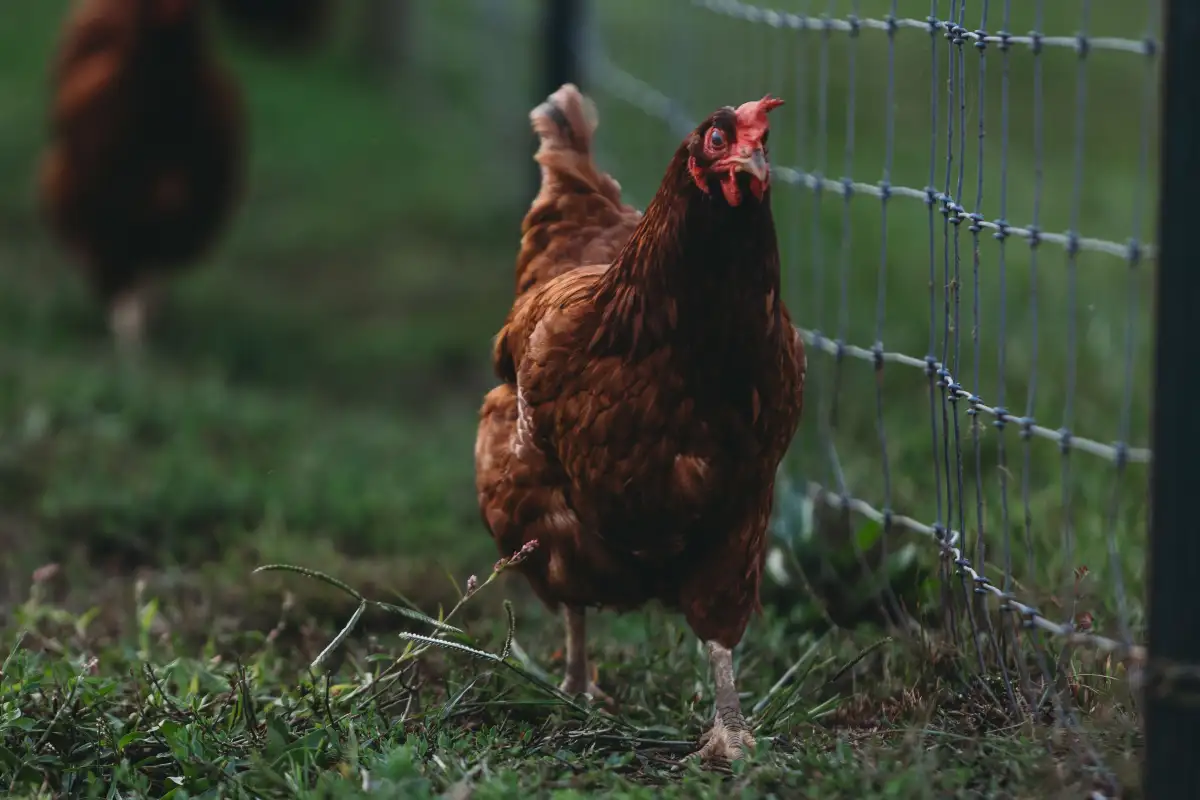
Gates deserve their own attention, because a gate is the loosest thing on any run. Any gap in a gate frame wider than about an inch is a handhold, and a handhold on a gate is a way to work the whole frame loose over a season.
The apron, and why trenching is often the wrong answer
An apron is a strip of hardware cloth, 18 to 24 inches wide, fastened to the bottom of the wall wire, laid flat on the ground around the perimeter, and pinned down with 9-gauge landscape staples or 6-inch galvanized poultry staples every couple of feet, more at corners. Then cover it with soil, mulch, or grass clippings so it disappears and the grass grows back through it.
The reason it works is mechanical rather than clever. Animals dig at the base of a wall because that is where the wall is. When they hit a horizontal plane of wire, they stop, because getting through it means moving an enormous volume of soil sideways for no progress. They are not defeated by strength. They are defeated by the geometry.
Trenching the wire down a foot is the older method, and it works if you are in heavy clay that holds a trench wall. In sand or sandy loam, a trench slumps, the wire ends up angled rather than vertical, and you have spent an afternoon for less protection than a flat apron would have given you. I use an apron almost everywhere now.
I have also watched aprons fail, and they fail at the junction, for the reason above. Fastening beats width. Wider is just more forgiving when the soil shifts under it, and the soil will shift.
Lids, and why wing clipping stops being the answer
A covered run changes the entire problem. If the top is closed, the flock is inside a box, flight is no longer an escape route, and you are no longer clipping wings to keep birds in. That matters because clipping is a one-way trade: it costs the bird its main defense and it does absolutely nothing against a raccoon, a fox, or an owl. A lid does the job clipping was being asked to do, and it does other work at the same time. Hawks and owls hunt from above. A run a bird can fly out of is also a run a bird can be chased out of.
The lid needs support, same as the walls. Wire spanning more than about two feet sags, and a sagged lid pulls the seams loose where it meets the walls, which puts you right back at the corner problem.
Monthly, not once
I do this on the first weekend of the month and it takes twenty minutes.
Corners, bottom and top. The apron edge, looking for fresh digging and lifted staples. Hinges and latch, checking that the gate still swings flat and has not developed a gap. The roofline, for sag and pulled fasteners. Anywhere wire meets wood, because wet wood swells and dries and works fasteners loose over a season. Any place the mesh has gone dull or chalky, because that is the coating failing and rust behind it.
The inspection is cheap. Fixing one lifted staple takes a minute. The alternative is finding out at six in the morning, and it is always six in the morning, and it is always the corner.
Where wire stops
Hardware cloth and aprons will not stop a determined bear. A bear treats a run wall roughly the way you treat a screen door. That is a different construction problem, and it is outside what I can responsibly walk anyone through here. What I will say is that in bear country the conversation is not about mesh at all, and anybody telling you a heavier gauge solves it is selling something.
The same is true of a large dog that has decided to come through, and of a predator that has already learned your routine. Barriers reduce losses. They do not eliminate them.
And no barrier is permanent. Wood rots, wire rusts, soil moves, ground settles under a gate. What you are building is not a fortress. It is a layered system that you maintain, and it only works as well as your last inspection.
So read the ground, name the animals you actually have, and then build outward from the corners. Half-inch hardware cloth, well supported, screwed or clipped at every seam. An apron fastened to the wall and pinned flat. A lid over the top. A latch that takes two motions. That combination holds against the predators that really do take backyard birds, and the corner is where you will find out whether it holds.