What the Feeder Line Tells You About Your Flock's Pecking Order
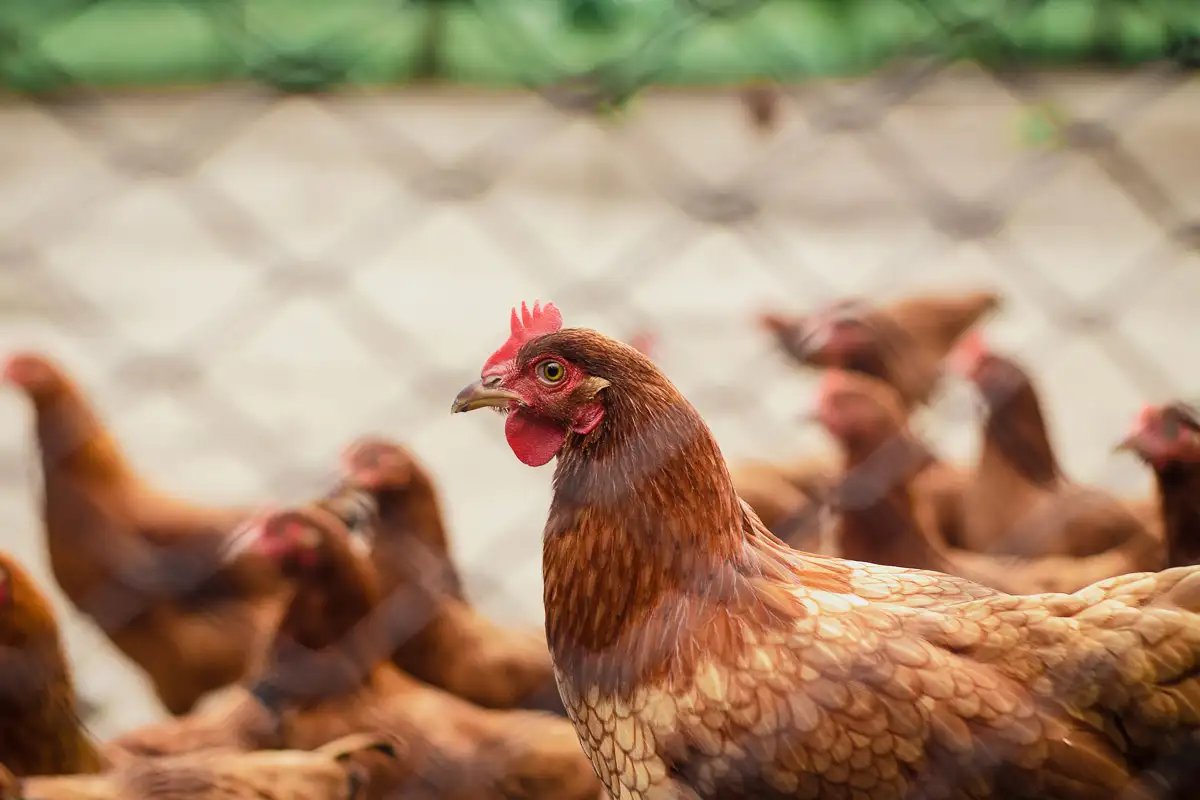
The feeder line is a map of your flock's pecking order, drawn in real time and readable in about two minutes. The hen who walks in and eats first, the two who feed side by side because they have already settled their business, the one who circles the trough twice before committing, the one who never approaches until the others drift off toward the dust bath: that sequence tells you more about rank than any scuffle you will ever witness. Rank shows up in who gets to arrive. It rarely shows up in who gets chased.
I keep feed in a galvanized trash can by the gate, and I have learned to stand still for a full minute after I fill the trough instead of capping the can and walking back to the house. That minute is the entire education.
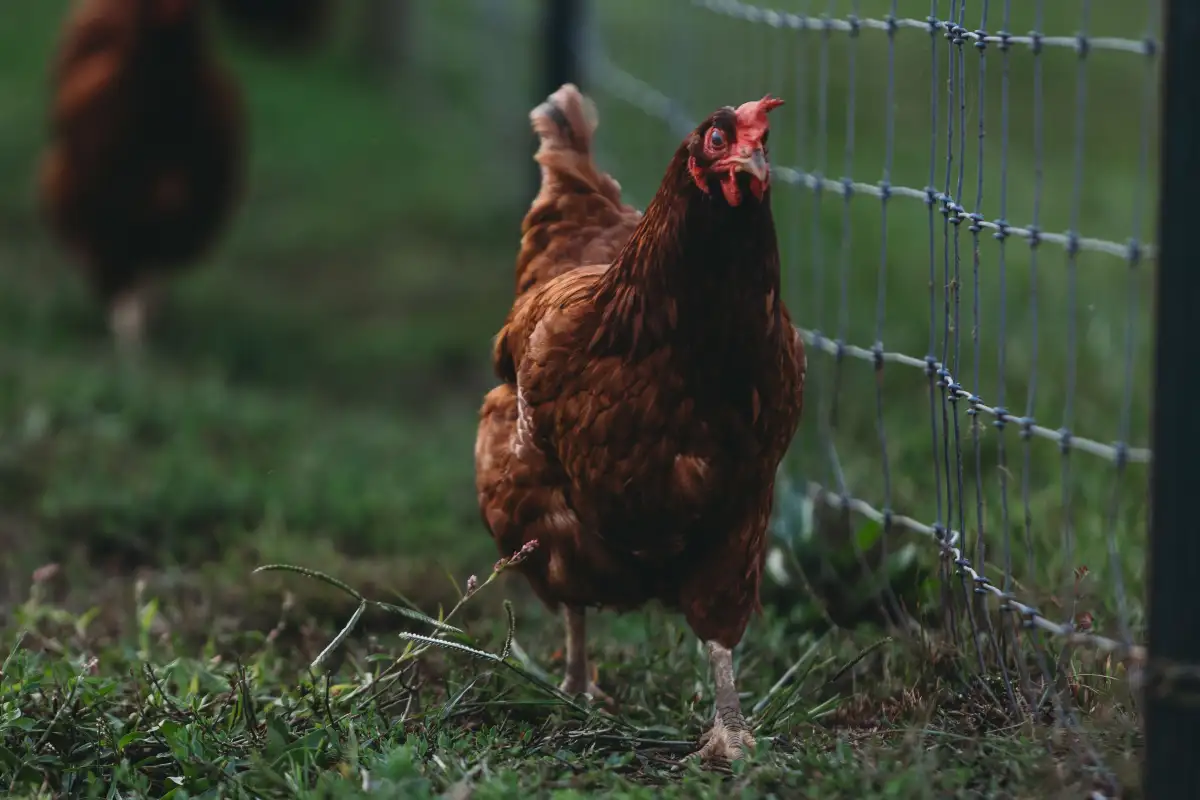
You pour, you step back two paces, you watch. The first bird down the ramp is almost never the one you would guess. Sometimes it is the oldest hen. Sometimes it is a plain bird with a low tail and no obvious size on anyone. She does not rush. She walks. And the others adjust around her before she even gets there, without a sound. That adjusting is the part nobody tells you about. There is no peck. There is no chase. A lane simply opens.
If you are watching for violence, you will conclude nothing is happening and go back inside. Watch the spacing instead. A settled morning feeder line is almost silent, and the whole hierarchy is written in the gaps.
The lane, the shoulder, the shadow
Stand at the fence with your coffee and count three things.
The lane is the bird at the trough with room around her. Nobody stands within a body length. That is a hen with nothing to prove this morning, and she will be the same hen at the water bowl, and the same hen on the middle of the top roost tonight.
The shoulder is the bird eating at the same time but half a step back, angled away, head down but body turned. She is not being bullied. She is being told, in a language made of angles, that she is next. Watch her for a week and you will see her move up a notch after a molt, or after the top hen starts laying later in the day and loses her spot at the front.
The shadow is the one working the perimeter. She comes in from the far side, takes a bite, steps away, comes back when someone else turns their head. She is not starving. She is spending energy on approach that the top birds spend on eating, and that deficit is what you are actually managing, whether you mean to or not.
Nobody pecked her. That is the point I keep coming back to. Almost all the pressure in a small flock is delivered as denial of access, not as aggression. Water, shade, the cool ground under the coop, the two feet of roost nearest the wall. Whoever controls arrival controls the resource, and they usually control it by simply being there first.
The map gets redrawn, so you keep re-reading it
A pecking order is not a list you make once. It is a fluid map, and it gets redrawn several times a year whether you like it or not.
A hard molt will knock a bird down two or three places for six weeks while she regrows feathers and feels like nothing. Pullets coming into their first lay often jump a rank in a week, mostly because they stop acting like they expect to be moved. Losing one old hen can leave a gap that gets filled by the bird you least expected, and the new arrangement usually appears overnight, before any noise.
Old age does it too. Every fall I watch a hen who has run the trough for three years start eating at the edge, and nothing dramatic happens. She just begins arriving second. If you were only checking for wounds, you would miss the entire transition.
That is why I stopped treating the flock as a problem to be solved by catching one bird and moving her somewhere else. Pulling a hen out of the equation does not teach the rest of them a new map. They redraw the same one with the next bird in line, and you have spent a week with a confused chicken and learned nothing about your flock. What changes the map is geometry.
Geometry is the lever
Feed, water, shade, roost, vertical space. Those are the five things rank competes over, and every one of them can be duplicated.
I run two troughs now, about fifteen feet apart and out of each other's sight line, because a hungry hen will guard what she can see. Twelve birds, two troughs, no line and no waiting. Same with water. A rubber bowl on a cinder block at chest height is a different resource than a bowl on the ground, and birds pushed off the floor bowl often use the raised one with no conflict at all. Height changes who can use a thing at the same time, because a bird on the ground cannot loom over a bird standing on a block.
Shade gets duplicated the same way, and it is the one people forget. A single shade patch in a bare run in July is the most contested real estate on the property. Two shade sails, or one sail and a pallet leaned against the fence, and the argument mostly evaporates.
Then there is clutter, the cheapest fix on the list and the one I use most. A couple of pallets on their sides. A milk crate. A stump. A sheet of plywood angled into the run fence. You are not decorating. You are breaking lines of sight, so a bird who has been moved off the trough does not have to run a gauntlet to get out of view. A hen who can step behind something stops being a target, and she usually comes back to eat thirty seconds later from a different angle.
One caution, because I have built this wrong. Clutter with a dead end is worse than no clutter. If a pallet creates a corner where a bird can be pinned with nowhere to go, you have built a trap, not a refuge. Every piece you add should have at least two ways out, and you should be able to see over or through it from where you stand. I walk my run every few months and pull anything that has turned into a pocket.
What the roost tells you after dark
The feeder line is the daytime map. The roost is the night shift, and it is the one most people never look at.
Go out an hour after the birds have settled, with a dim light you can point without blasting the whole coop. You are reading position, not behavior. The birds at the far end of the top roost, tucked against the wall, are usually the ones at the bottom of the day's map. A bird on the floor, or on the nest box lid, or on the edge of the pop door frame, has told you exactly where she stands without ever being pecked. The middle of the top roost, where the bodies are packed together, is the good real estate, and it is held by the birds who eat first.
You cannot fix that with encouragement. You can fix it with roost length and roost height. More linear feet of roost than you think you need, at two different heights, gives the peripheral birds somewhere to go that is not the floor. I added a lower parallel roost about a foot below and slightly behind the main one, and the two birds who used to sleep on the nest box lid moved onto it within a week.
Feathers are a ledger, not a verdict
The map also leaves a record.
Bare patches on the back, the back of the neck, or the top of the head, with no broken skin: in a small flock that is usually the arithmetic of access, not illness. Somebody is spending her days in the wrong place, and the feathers are the receipt. A bird who reaches the feeder last also reaches the dust bath last and the shade last, and over weeks that shows up as thin feathers where she cannot quite reach to preen properly.
I log it rather than act on it. Which bird, which patch, and where she is standing when I notice. Twice now the answer was a single contested spot, the one shady corner or the one water bowl, and adding a second version of that one thing stopped the wear from spreading. No crates, no reordering the flock, no products. Just one more of whatever was scarce.
Tomorrow morning
Fill the trough, step back, and give it a full minute before you turn around.
Watch who walks and who circles. Watch the gaps, not the pecks. Then walk your run and look at it the way a low-ranking bird would. Where can I eat without waiting. Where can I stand without being seen. Where can I sleep that is not the floor. Every one of those questions has a physical answer, and building it is far more useful than trying to referee a flock that is only doing what a flock does.
That is what the feeder line was telling you all along. It is not a problem. It is a map, it gets redrawn every few months, and you are allowed to change the terrain it is drawn on.