Square Feet Per Bird Is Not Enough — Your Run Layout Matters More
Square feet per bird is a starting number, not a layout, and the layout is what actually decides how much room your flock has. Usable space is what's left after the standing water, the packed trench under the feeder, the strip along the fence nothing grows in, and the choke point at the pop door — and two runs with identical dimensions can deliver wildly different amounts of it. Get the layout right and a run that measures 8 square feet per bird behaves like 10. Get it wrong and a run that measures 12 behaves like 5.
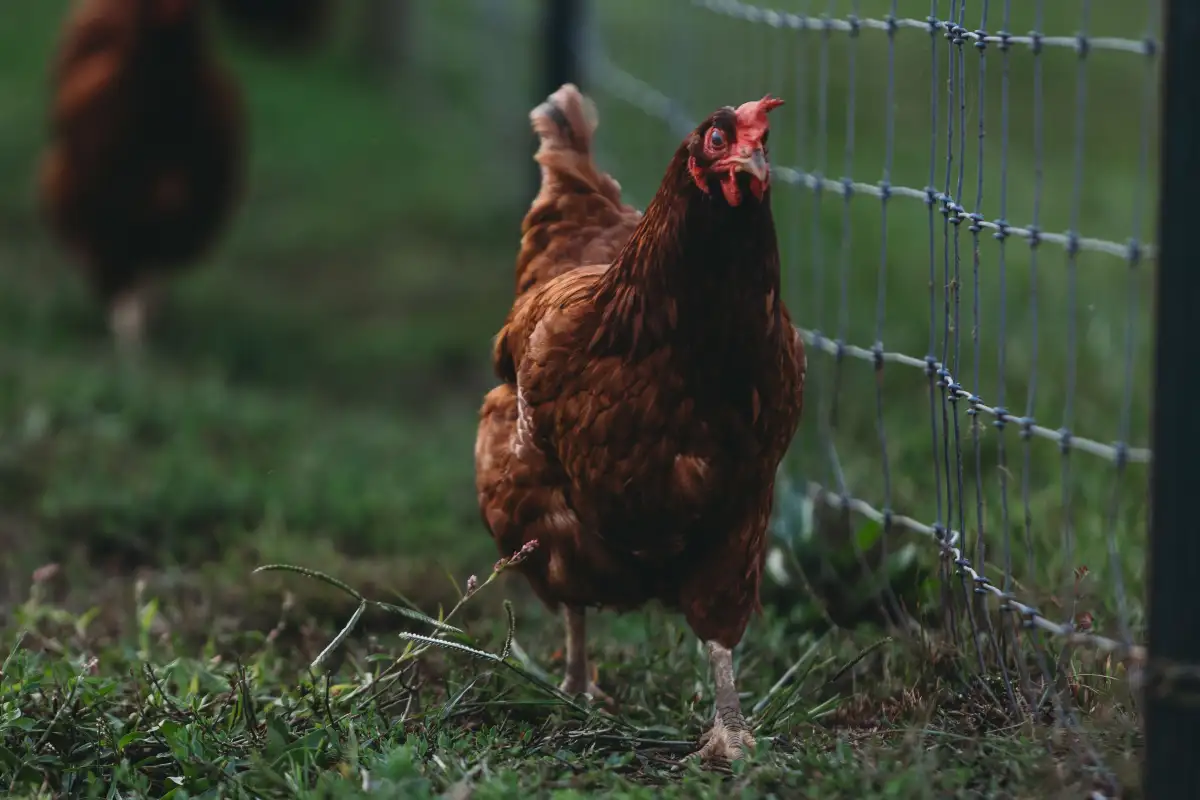
I found that out in a run that measured perfectly. Eight feet wide, twenty-four feet long, 192 square feet, twelve hens. Sixteen square feet a bird. By every chart I'd ever read, I had room to spare.
Then it rained for three days, and I stood at the gate with a bucket in my hand, looking at the arithmetic.
The low spot sat about two-thirds of the way down the run. Water had pooled there and stayed. The far end, past the puddle, was a part of the map my birds simply did not visit. All twelve of them were within ten feet of the pop door, standing on ground that had been worn to bare, packed mud. The feeder and the waterer were both in that same ten feet. So was the ramp. When the top hen shifted her weight, four other birds shifted with her.
That run had 192 square feet. My flock was living in about 60 of them.
The number you need is smaller than the number you built
Here's the calculation I use now, and it's deliberately rough, because your run doesn't care about precision.
Take the gross footprint. Subtract the area that stays wet or muddy through your wet season — not the day after a storm, but the week after. Subtract the permanent dead zones: the bottom of the ramp, the packed ring around the feeder, any deep shade that stays bare year-round because nothing grows there. Subtract the strip along a solid fence or wall where birds won't walk because they can't see through it.
Then divide by birds.
If the result lands under 8 square feet, you're running a smaller run than you think you are, and no amount of chart-reading will change that. The published guidance — roughly 8 to 10 square feet per bird in a run, 2 to 3 inside the coop — is describing usable space, not fenced space. Almost nobody builds to the second number by accident.
Breed and climate pull that number in opposite directions
Size first. A Jersey Giant or a Brahma or a big Orpington is not just heavier, it's wider and slower to turn. Heavy breeds need a real cushion above the chart — call it a quarter more — because a wide bird can't slip past another wide bird in a tight lane. Bantams can technically get by on less floor, but they fly, and the ones that fly end up on top of whatever's in the way, which is its own kind of crowding.
Climate is the bigger lever, and it cuts both ways.
In a wet climate, covered square footage is worth more than uncovered square footage, full stop. If you roof a 6-by-12 section of the run, you haven't added a single foot to the fence line, but you've added 72 square feet of ground that is dry in January — and dry ground is the only ground birds will stand on when it's cold and wet. That's the best return on effort in a rainy place, better than expanding the run.
In a hot climate, the constraint is shade. Birds pile into the shaded corner in the middle of the afternoon, and if that corner holds six birds, then a flock of twelve is crowded no matter what the tape measure says. The shaded area needs to hold the whole flock without piling. If your run has no natural shade, shade cloth over part of it isn't decoration, it's floor space.
And in a cold climate with real snow, the run goes out of service. Snow deeper than a few inches and most breeds won't cross it. That's the season when coop floor space is the number that matters, so plan for the top of the 2-to-3 square foot range and give each bird 8 to 12 inches of roost. Nest boxes don't count toward floor space — they're furniture, not living area — and a flock that can't spread out on the floor will spread out on each other's nerves.
Four zones, and the order you build them in
Once you've got a real number, the layout is about giving that number somewhere to live.
The dry zone comes first. Put a roof over the side the weather hits. You can find that side without any instruments — walk your run after a storm and look at which wall of the coop is streaked. In a lot of the country it's the west or northwest, but your own site will tell you. Cover a third to a half of the run's footprint, floor it with wood chips or coarse sand, and put the feeder and waterer under it. That zone becomes the living room in bad weather, and it's the reason the run still works in February.
The dust-bathing area comes second, and it wants to be somewhere completely different. Birds want loose, dry, fine material — dry soil, sand, a sand-and-soil mix — and they want it out of the traffic pattern. Put it at the far end or tucked against a wall, well away from the feeder and the waterer, and understand that whichever spot they choose is going to lose its grass forever. Better to give them a designated two or three feet square than to lose the whole lawn edge one dust bowl at a time.
The traffic lane comes third, and it's the one people never think about. There's a path in every run: pop door to feed, feed to water, water to the dust bath, everything back to the ramp at dusk. That path wants to be clear, and it wants to be more than one bird wide. If the lane runs the length of a narrow run and the feeder sits in the middle of it, the bird at the bottom of the pecking order has nowhere to step aside — and you get the thing you see in crowded runs, a bird standing at the edge, waiting for permission to walk.
Everything left over is the open area. Scratch, foraging, digging, whatever the day's project is. If you have to shortchange one of the four zones, shortchange this one — but not to nothing, because an idle flock finds its own entertainment, and it's usually each other.
Two ways in beats one wide door
The pop door is where crowding becomes visible. One opening means every bird entering or leaving has to pass every bird loitering nearby, and the low-ranking birds pay the toll every time.
A second access point changes the geometry more than any other single change I've made. It doesn't have to be fancy — a second cut-out with its own small ramp, a run gate propped open to a side pen, even a ground-level opening in a partition. Two doors means a bird being chased has an exit instead of a corner.
The same logic applies inside the run. A pallet leaned against the fence on a couple of blocks. Two cinder blocks with a board across them. A half-height panel that breaks the longest sight line in the run. None of it adds square footage, and all of it adds usable space, because it gives a bird somewhere to be that isn't in front of another bird. Chickens use the third dimension more than people expect. A low platform 18 inches off the ground effectively doubles the floor for birds that want to get out from underfoot.
When you can't add a single foot
Most people can't rebuild the run. Here's what works when the footprint is fixed.
Split it. A cross-panel with a gap at one end turns a long corridor into two rooms. Birds get somewhere to escape to, and the ground gets half a season of rest on one side.
Move the furniture. Rotate the feeder and the waterer every week or two — a few feet is enough. A fixed feeder position is how you get one permanently worn, permanently muddy pit that stays wet long after the rest of the run has dried.
Put them on something. A concrete paver, a rubber mat, a scrap of plywood under the feeder keeps the ground underneath from turning into a crater.
Widen, don't lengthen. If you ever do get to expand, adding width to a narrow run buys more usable space than adding length. Twenty-four feet of length at eight feet wide is a hallway. Sixteen by twelve is a yard.
How to check it in ten minutes
Go out after a real rain, before anything has dried. Stand at the gate with the flock watching you.
Count the birds. Are they spread across the run, or bunched in one dry corner? Walk the length of it and watch what they do — a flock that can't get out of your way without crossing the whole run is telling you the run is one lane wide. Then watch feeding time and roost time, the two moments when crowding shows up on its own.
If they queue at the pop door, the door is the problem. If they all stand on the same six square feet, the dry zone is too small. If one bird spends the whole afternoon orbiting the feeder without ever getting to it, the traffic lane is doing the crowding, not the bird count.
The chart gives you a target. The layout is what you actually build. Those are two different numbers, and only one of them is in the run with your birds.