How to Add New Chicken Breeds to a Flock So the Pecking Order Actually Settles
The breed you choose matters far less than whether the birds you put together match on three things: body weight, headgear, and temperament. After that, it is about the sequence — add newcomers in pairs, not singly, and merge them into the coop at dusk rather than the run at dawn. A mixed flock that matches on those points and gets added in the right order re-sorts itself in a few days. A flock that mismatches on any of them will grind for weeks, no matter how gentle the breed names sounded in the catalog.
I learned that in a run at dusk, holding a cardboard box with one bantam inside it. The six hens already in there were standards, nothing exotic. I set the box down, opened the flap, stepped back, and leaned on the fence. For almost a minute nothing happened. Then the second-ranking hen walked over — not fast, no flapping, no noise at all — and simply stepped onto the bantam. One foot, then both. The bantam went flat, got up, shook herself, and walked to the far corner of the run. She ate at the trough after that only when the trough was clear of everyone else, which for a bird at the bottom of the order means about eleven seconds a day.
Nothing I watched that evening looked like aggression. That is the part nobody tells you. It looked like physics.
Weight Settles More Arguments Than Temperament Ever Will
A standard hen outweighs a bantam several times over. She does not need to chase, posture, or peck to control the feed trough. She only has to arrive. The bantam yields because yielding is cheaper than being stepped on, and once she yields at the trough she yields at the pop door, and once she yields at the pop door she is last onto the roost every night. The order writes itself out of pure mass, and it writes itself in a direction you did not intend.
So group by weight class first, before you think about anything else. Bantams with bantams. Standards with standards. If you insist on mixing them, build the run so a small bird can leave a situation without crossing open ground — a pallet leaned against the fence with a gap under it, a couple of cinder blocks creating a low tunnel a standard hen will not fold herself into, a second feed station on the far side of a visual barrier. It is not that the small bird needs a hiding place. She needs a route.
And if you are building the flock from scratch, buy all your birds at roughly the same weight and grow them out together. Chicks raised in the same brooder settle into a working order almost without your noticing.
A Crest Is a Blind Spot You Are Choosing to Install
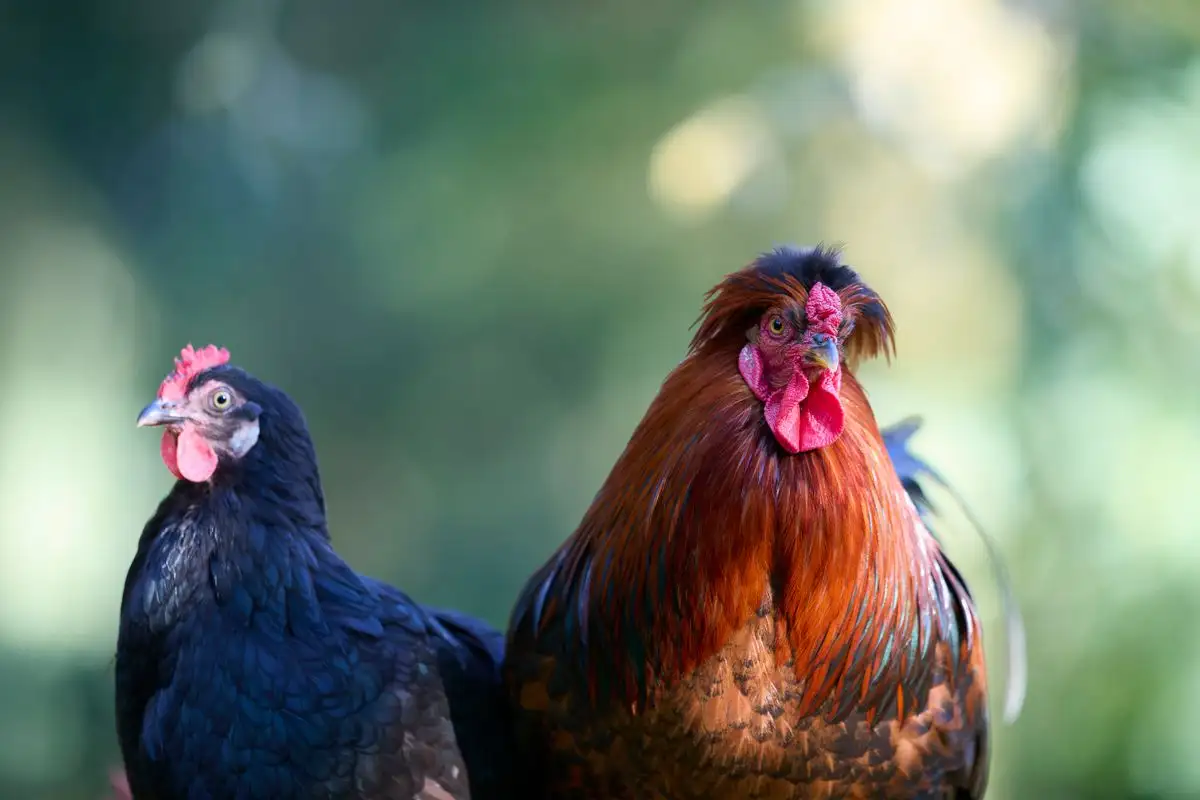
Crested breeds — the Polish types, Silkies, crested Legbars — carry a curtain of feathers directly over the eyes. It costs them a slice of their field of view, particularly forward and upward. In a working flock, almost all the information moves at eye level: the side-eye, the half-turn of the head, the quick step backward that means I am not challenging you. A bird who cannot see the incoming peck cannot step aside from it, and a bird who takes pecks without yielding them drops down the ladder fast. The crest also makes the head look larger, which some hens read as a threat and some read as a target. Either way, a crested bird dropped alone into a pen of sharp-eyed standards tends to land low.
It is not a law. I have watched a crested hen run a whole mixed pen for two years on nothing but attitude. But temperament is a variable and the blind spot is a fact, so plan around the fact and let temperament surprise you.
Two Birds Buy You a Rung
A single newcomer has nobody. She eats alone, roosts alone, and has to negotiate every approach from scratch, dozens of times a day, with every bird in the pen. Two newcomers have each other. They eat together, they move together, they roost shoulder to shoulder. Until they sort against each other — and they will, quietly, within a week or so — they occupy the same rung as a two-bird unit. That is a genuinely different negotiation.
I have put in pairs that were largely ignored within five days. I have put in single birds of the same breed and size that were still eating last at three weeks. Buy two. If the seller only has one, wait for the next hatch. And if you can get two that were already brooded together, do that instead — they arrive as a unit rather than forming one.
The Roost Is the Room That Matters
This is the piece generic advice skips. Everyone measures floor space. Floor space barely matters to a settled order. What matters is the perch, because the perch is where the order physically encodes itself every night: the top bird at the end she can control, the middle birds in the middle, the bottom bird at the far end or, if there is no far end left, on the floor in the litter by the door.
When roost length runs short, the lowest bird does not squeeze in. She sleeps below. And a bird who sleeps on the floor starts every single morning at the bottom, which means she has to renegotiate her position at first light, every day, forever. That daily renegotiation is what a grinding flock looks like from the outside. It is not ongoing war. It is a negotiation that never gets to close.
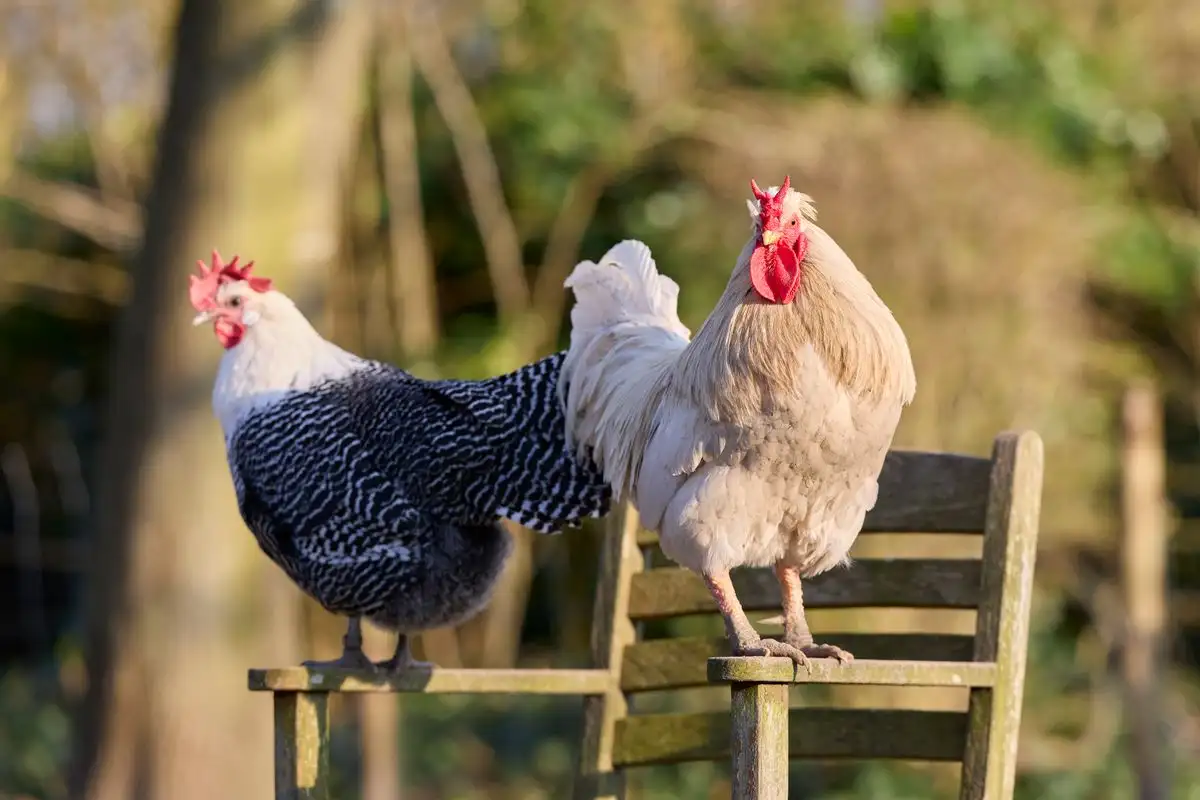
What I work with: roughly eight to ten inches of roost per standard bird, and more than that in a mixed flock, because a bantam needs room for her body plus a buffer of empty perch on either side. A second bar at the same height, parallel and a good stride away, gives birds a way to move without a confrontation. Do not stack bars at different heights in a mixed flock — the bird on the lower bar ends up with her head under the feet of the bird above her, which is the worst sleeping arrangement you can build.
Also watch the ends. The highest-ranking hen usually claims a corner or a wall end, because it is the one spot where nothing can approach from behind. In a short roost, those claimed ends eat most of your usable length before anyone else gets on.
The Week Behind the Fence, and the Transfer After Dark
The old sequence works: house the new birds where the flock can see them but not reach them for about a week. Fence, hardware cloth, or a stalled section of the run — whatever lets everyone look at everyone without contact. By day four or five, the staring usually stops. The resident hens have filed the newcomers as background, which is exactly the state you want before you put bodies in the same airspace.
Then move them at dusk, and move them into the coop — not into the run. This is the detail that shortens the settling period more than anything else I do. In a dim coop, on the perch, the flock is half asleep and the run is not in play. There is no open ground to be chased across, no audience. You set the newcomers on the perch beside the lowest-ranking resident, and by morning they are just part of the row of bodies. Merge at dawn into the run instead, and you are releasing two strangers into open space in front of a fully awake flock — the hardest possible conditions, on purpose.
Work in near-dark or with a red headlamp. Keep your movements slow and your hands quiet; carry the bird, do not chase her around a box. Then be back at first light, because the first hour after dawn is when the new arrangement gets tested. Stand there with your coffee and let it happen. What you are watching for is whether it stays brief.
Two or Three Breeds, Not Five or Six
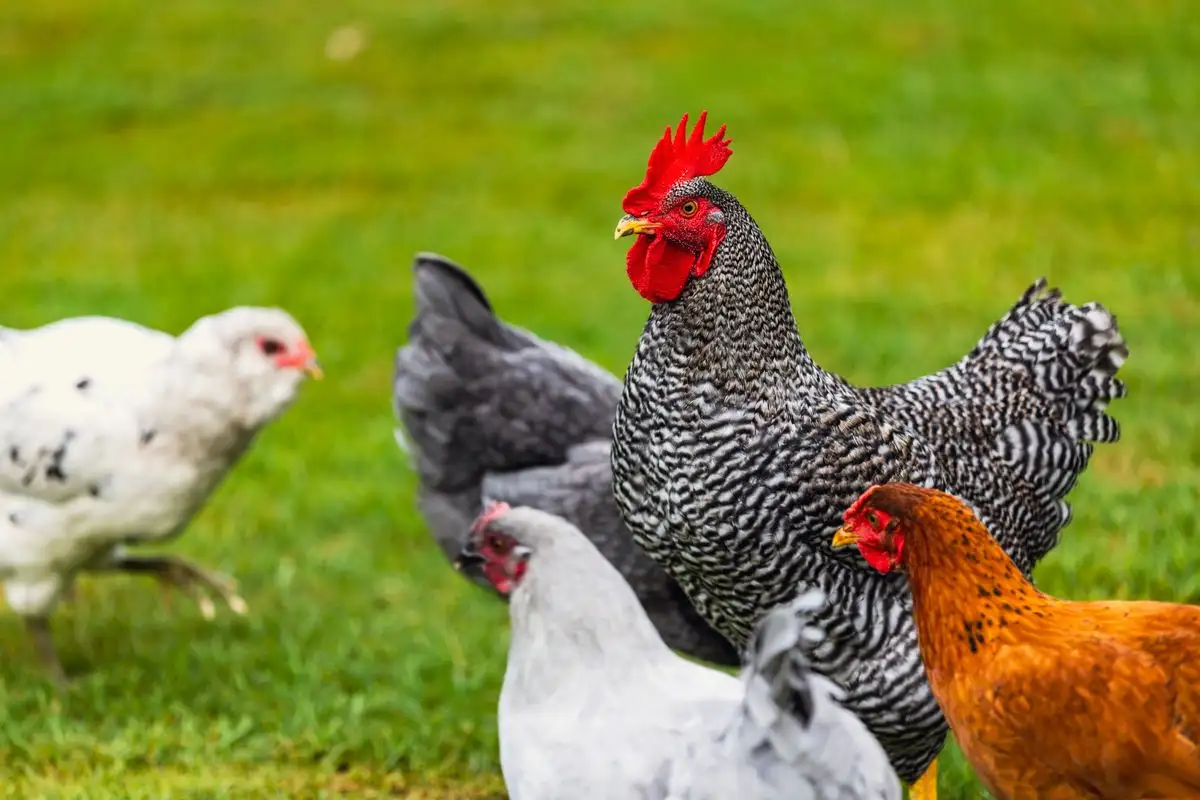
Plumage is a marker. When every hen in the pen is one of two colors, the eye stops registering different within a few days and the markers go quiet. When you have a barred bird, a buff bird, a black bird, a white bird, and a speckled bird sharing one run, every bird stays a distinct visual object indefinitely, and the newcomer keeps getting re-flagged as the one who does not look like the others. Novelty keeps resetting the clock.
Two or three breeds in a flock settle noticeably faster than five or six. If you want a colorful pen anyway, that is a legitimate choice — just expect the longer timeline and do not stack another addition on top of an unsettled flock. Every addition resets the order. Two additions in the same month means the first one never finished.
The Sequence to Add Them In
When I am building a flock up over a season, the order runs like this. Add the birds that most closely match what is already in the pen first — similar weight, similar look. Let them settle for three to four weeks. Then, if small birds are coming at all, bring them in as a pair and treat that as its own event. Never add during a molt, and never add into a pen where the birds are already crowded or the run is bare dirt with nowhere to go — a flock with space to spread out is a much easier audience than a flock with nothing to do.
Wait for a stretch when the birds are ranging. The more room and distraction the resident flock has, the less attention each newcomer absorbs. A confined flock is a focused flock, and focus is the last thing a stranger needs.
What Settling Actually Looks Like
Once a flock is stable, the pecking order is mostly ritual. A look. A half-step. A ruffle of neck feathers. Two seconds and it is over, and it happens maybe a dozen times a day without anyone thinking about it. Nearly all the visible conflict in a chicken's life belongs to the settling period. If you are a month in and still seeing sustained chasing, cornering, or a bird who will not come down off the roost in the morning, you do not have an order yet — you have an unfinished negotiation, and it almost always traces back to one of four things: a weight mismatch, a crest in the wrong pen, a single newcomer with no ally, or a roost too short to seat everybody.
I will be honest about the limits here. Individual birds break breed rules all the time; I have had famously docile hens turn out to be the worst actor in the pen, and I have had cresteds run the room. What I am describing is not destiny, it is odds. You are stacking the deck. Size, headgear, how many you add at once, and how much perch you give them are the four things you actually control, and controlling them well is the difference between a flock that settles in a weekend and a flock that never quite does.