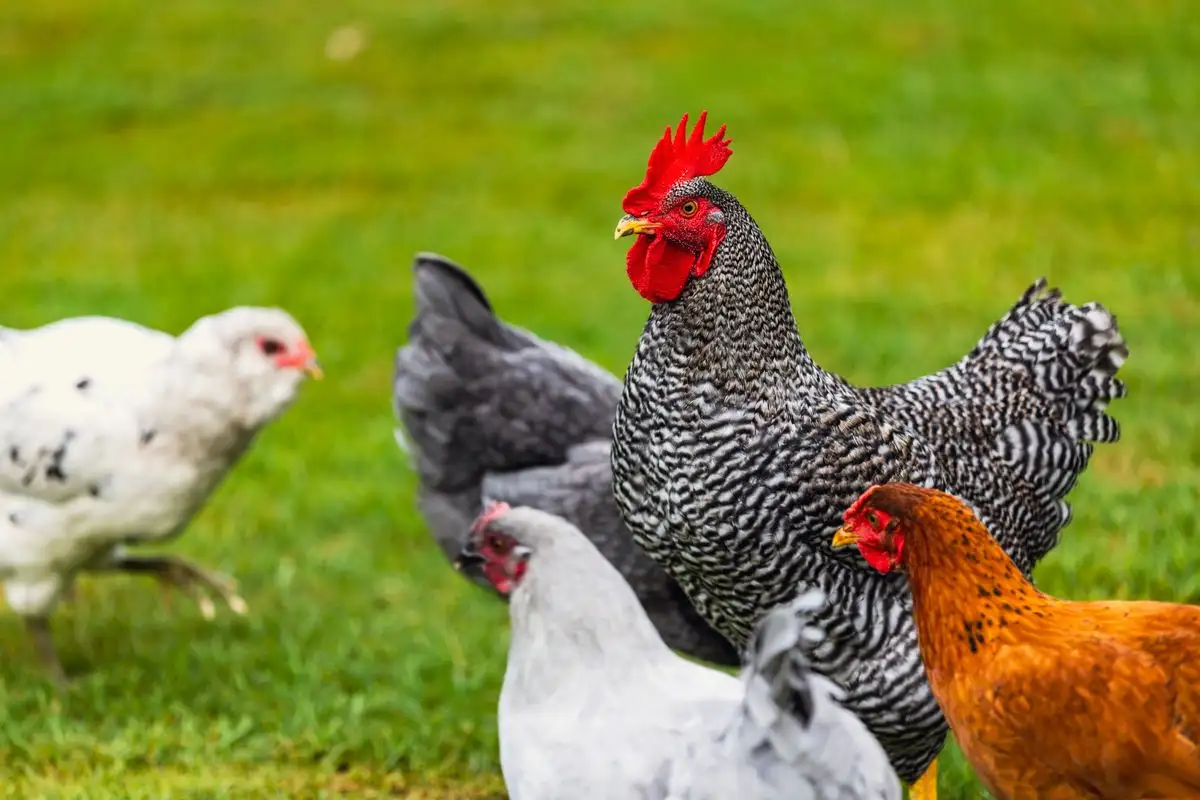
What Counts as a Heritage Chicken Breed, and Why Keepers Still Choose Them
A heritage breed, in the American sense most keepers mean, is a chicken breed documented before the mid-twentieth century, developed from a defined parent stock, and still able to mate and reproduce without help. That definition is the floor, not the point. What a keeper is really preserving when they keep a Dominique or a Buckeye is broodiness, foraging drive, a body shaped by one particular climate, and a growth curve that refuses to be hurried — and every one of those traits gets paid for at the egg basket and the feed scoop. Choosing a heritage breed is a trade, and the trade is the reason to do it.
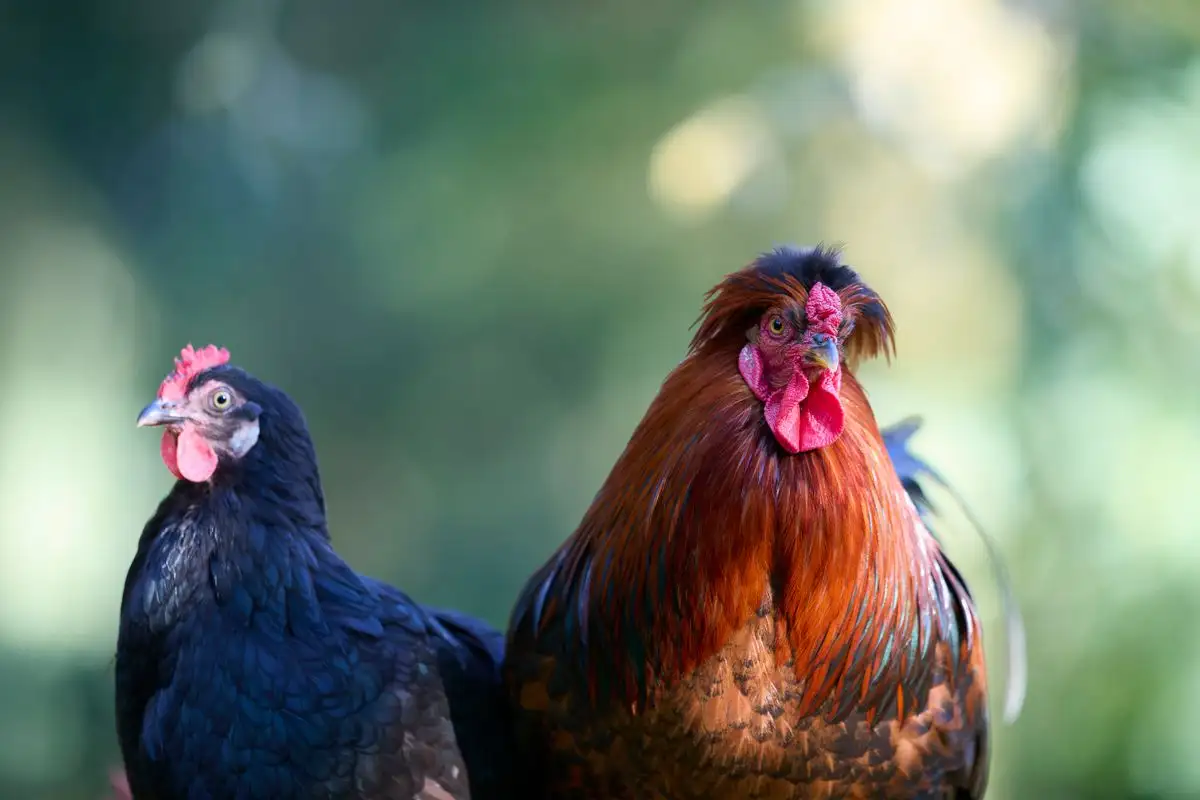
Come stand in the coop doorway with me on a February morning, because that's where the decision gets made every year.
The hasp is iced and takes a knock from the heel of my hand. Inside, the air is warm and thick and smells like pine shavings and dust. Eleven birds are on the roost, feathers puffed out to twice their size. Ten of them turn their heads. One doesn't. She's flattened in the corner nest box, wings spread a little, making a low sound somewhere between a purr and a growl, and when I reach toward her she puffs up, holds her ground, and doesn't move an inch.
Any keeper of old breeds knows that posture. That hen is broody, she intends to stay broody, and she is the clearest single answer to why anybody bothers with these birds.
A hen who won't leave the nest is the definition in one bird
Setting instinct is the trait production breeding removed faster than any other, and it removed it for a good reason. A hen who sits a nest for twenty-one days lays nothing for those twenty-one days, and a commercial flock cannot carry that. Old farm flocks could, because the farm needed it. A hen who hatches and raises her own chicks replaces an incubator, a brooder box, a heat lamp, a thermometer, and a string of 2 a.m. checks. She does the brooding, the warming, the teaching, and the weaning, and she does it better than hardware does.
What she costs you first
Nothing about that is free. For three weeks she's off lay. She hogs the best box, so the other hens start dropping eggs on the floor. She comes off the nest once a day to eat, drink, and leave a cecal dropping the size of a small dog's, then goes straight back. If you let her set, she loses weight and comes off thin. If you decide to break her, you do it with a wire-bottomed crate, cool airflow, and a few days of not letting her settle on anything soft, and you'll feel mildly rotten about it.
The part that catches new keepers is that you don't get to pick half of it. Once you've selected a line for the setting instinct, you own it. You are not going to get a hen who broods a clutch in May and also lays like a production bird the rest of the year. The trait sits where it sits.
The flock that works the ground instead of the feeder
Nine in the morning, and I open the pop door onto a run with a few forkfuls of turned compost, leaf litter, and weeds along the wire. A heritage flock hits that ground and doesn't line up at the trough. They fan out. Head down, three scratches, a look around, three more scratches. They're reading the ground the way they were built to read it.
That's the second trait being preserved, and it has a number attached to it. A foraging bird finds some of her own calories in bugs, seeds, and greens, which lowers feed cost per bird. But foraging calories are not free calories. A bird who spends the day walking and scratching burns more energy than a bird who stands at a feeder, and she converts feed into eggs and meat less efficiently because of it. Ranging also puts her out in the open in front of hawks, and it means she'll eat things you'd rather she skipped.
So why keep it at all? Because a flock that can make part of its own living is a flock that costs less to keep when feed prices move, and because it's a working capability rather than a decoration. If you've ever watched a run go bare, or eaten a jump in the feed bill, or gone through a season where the birds had to fend for more of their own groceries, you understand why someone would deliberately protect that instinct instead of breeding it out.
Slow growth is the receipt for everything else
Here's where the trade shows up in plain figures, and I'd rather say them out loud than let the word heritage imply something it doesn't. Commercial layer strains sit somewhere around 280 to 320 eggs a year on a small body with a low feed intake. A heritage dual-purpose hen usually lands closer to 150 to 200, and some of the old breeds are lower still. On the meat side, the fast-growing commercial cross reaches about five pounds in six or seven weeks. A heritage dual-purpose cockerel takes somewhere in the range of 16 to 20 weeks to dress out lighter, with more leg and a longer, leaner frame.
That's the trade. More feed per egg. More weeks per pound. More birds to fill the same basket. What you get on the other end is a hen who is still laying in her fourth and fifth year instead of burning out at two, and a carcass that holds together as a meal instead of a bird you have to butcher on a stopwatch or lose.
If someone tells you heritage birds lay as well as production hybrids, they're selling you something. If someone tells you heritage birds are worthless layers, they've never kept one.
The climate is inside the breed
A lot of these breeds are regional in the most literal way. The Dominique came out of the Atlantic seaboard with a rose comb and tight feathering. The Buckeye came out of Ohio with a pea comb and a compact, cold-tolerant frame. The Chantecler came out of Canada with a small cushion comb and practically no wattles, which is what a bird looks like when it's been shaped by hard winters. These aren't decorative details. A comb is a radiator, feather tightness is insulation, and where a breed was made tells you what it was made to survive.
The reverse of that is the warning. A breed adapted to one climate can be the wrong bird somewhere else. A tight-feathered northern bird in a humid Gulf summer needs shade, airflow, and water management you may not have planned for. A light Mediterranean-type bird with a big comb and thin feathering laughs at heat and sulks through a cold snap. Buying a breed because of where it's from, without matching it to where you are, is one of the most common ways a first heritage flock goes sideways.
Why rare stayed rare
It's worth being clear that these breeds didn't thin out because they failed at anything. Through the middle of the twentieth century, commercial production narrowed onto a handful of strains — a couple of egg lines, one meat cross — and everything that didn't fit that model stopped getting improved toward production. Slower birds, broody birds, regional birds got left in the barnyard. The market stopped paying for what they were good at. The birds didn't change. The economics did.
Few founder lines, and what that asks of you
Here's the consequence that doesn't get said often enough. Because these breeds stayed small, many of them come down through a genuinely narrow set of founder lines, and a whole breed's worth of birds might trace back to a small number of original flocks. So keepers of rare stock do a different kind of bookkeeping than a commercial operation does. They track lineage. Who came from whose flock, which rooster over which hen, which birds are related closely enough that you shouldn't pair them again. Where it's possible, they bring in birds from a second line to widen the gene pool.
That's easy to describe and much harder to live with. It means you sometimes keep a bird with a crooked comb or an off-standard color because that bird carries the outcross you need. It means you're selecting for two things at once — production vigor and the breed's own physical standard — and those two pull in different directions more often than anyone admits. It also means you'll do a fair amount of driving.
What the word does not promise
Heritage describes breeding structure and the ability to reproduce. That's it. It is not a health claim. A lineage that reaches back before the mid-twentieth century is not armor against Marek's, mites, or coccidia, and nothing about the age of a breed makes a bird easier to keep alive through a wet spring. I've buried heritage birds for exactly the reasons anyone else buries a chicken, and I've watched production-bred birds sail through a bad season without a cough. Anyone telling you the old breeds are automatically hardier has confused a slogan with a catalog description.
The label also doesn't promise a better egg or a better roast. Age at lay, what the bird ate, how much space she had, and how long she lived are what change the table. Heritage is a fact about how a bird was bred and whether it can still do the work of reproducing itself, nothing more.
Back to February. The hen is still on the nest, and in three weeks that box will hold a shifting heap of damp chick fluff. She'll talk to them in a low, rolling cluck, teach them to scratch, call them under her feathers when the wind picks up, and I will not have run an extension cord or checked a thermometer once.
That's the whole trade, named and paid. Fewer eggs, more feed, more weeks, and a bird that still knows how to do the entire job. The reason keepers choose heritage has very little to do with nostalgia. It's that in a small flock, on a real piece of ground, the things these birds are still good at happen to be the things that matter.