Why 10 Square Feet Per Bird in the Run Fits Some Chicken Breeds and Not Others
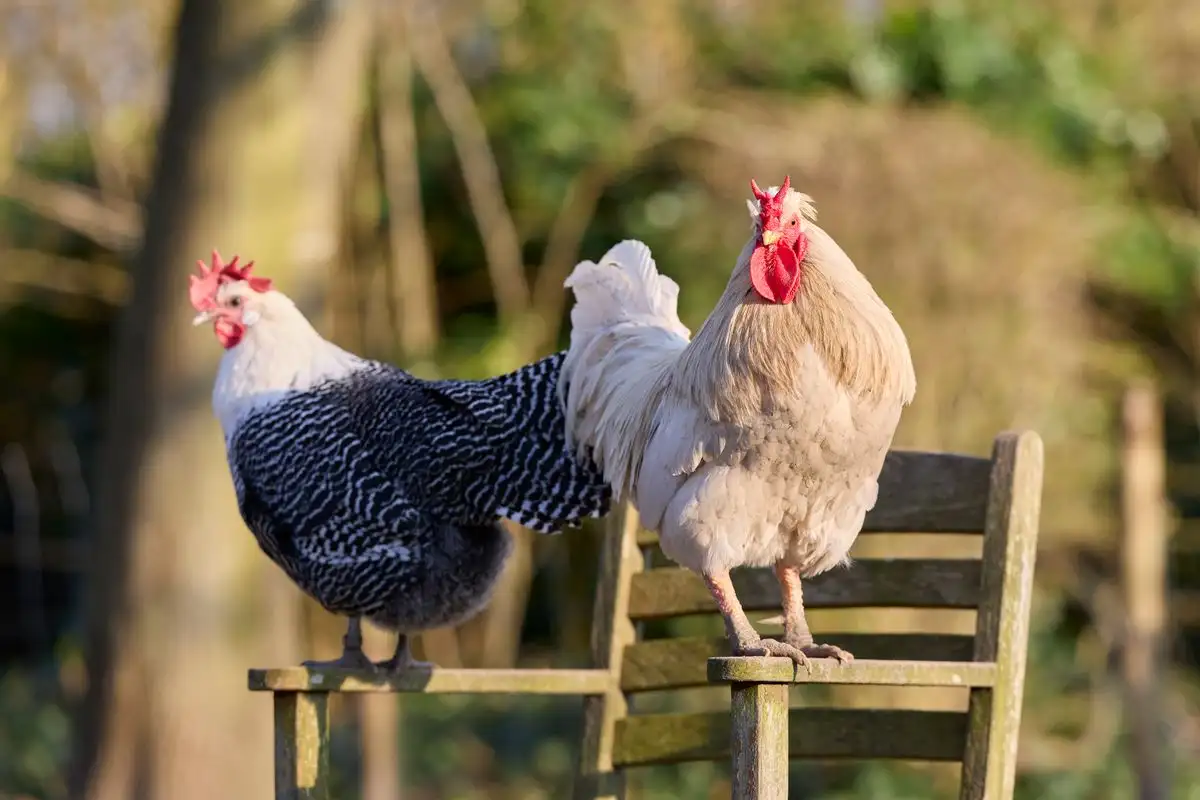
Ten square feet per bird is a floor, not a fit. That figure was written for an average dual-purpose hen — a Rhode Island Red or Plymouth Rock sort of bird that walks a few steps, scratches one patch, dust-bathes in the same spot every afternoon, and stands around for most of the day. Give her ten square feet and the number holds. Give the same ten square feet to a Leghorn or an Andalusian and it behaves like five, because that bird is moving through all of it, all day. Give it to a Brahma or a Cochin and it behaves like fifteen, because she barely moves and the ground outside one small circle takes almost no wear. The square footage doesn't change. The breed decides how much of it is actually usable.
Stand at the gate on the fourth day of rain
Come stand at the gate of my run on the fourth morning of a wet week. The wire is still dripping, the gate drags in the mud, and there's a low spot about six feet in where the water sits. That low spot is the whole point. Everything looks fine in July. In March the ground writes down exactly how your flock uses the space, and it doesn't flatter anybody.
My pen is eight feet by sixteen — about 128 square feet, roughly half of it under a metal roof panel I put up mostly to keep the ground from turning to soup. I've run it through two very different flocks, and the difference was never the count. It was the birds' width and their engine.
With the heavy flock — a couple of Brahmas, an Orpington or two — day four of rain looks like this. The surface is packed. Smooth, greasy, the color of wet coffee. There's one scraped patch near the gate and a dust bowl under the roof panel that somehow stayed dry, and that's it. The run didn't get torn up. It got pressed.
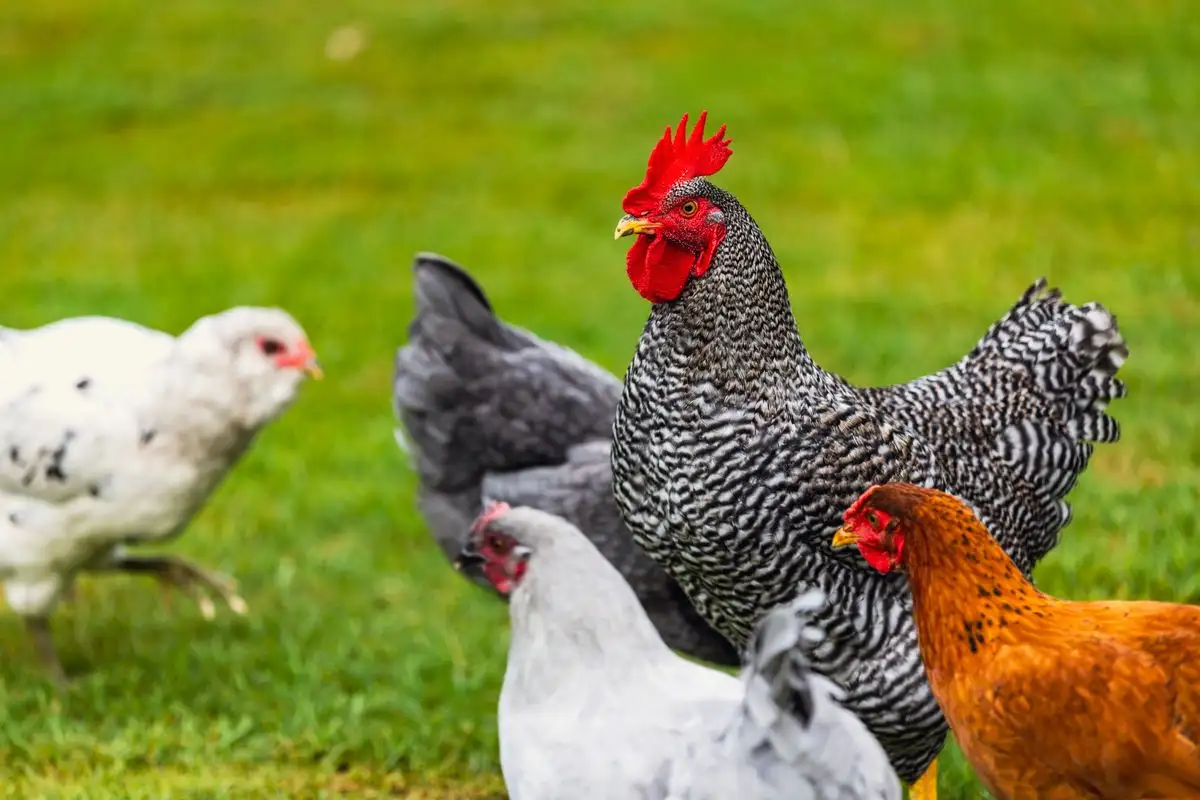
With the light flock — Leghorns, an Ancona — the same pen on the same day is a rototiller. Three-inch pits where somebody was after something. Roots showing along the fence. A trench worn in the gate line, twelve inches wide and hard as a brick, from birds walking the wire and looking for a way out. Same run. Same square footage. Same rain. Two completely different landscapes.
That's the thing the ten-square-foot rule can't tell you, because the rule is a floor area and a chicken is not a floor area. A chicken is a footprint plus a radius.
The number measures a footprint and forgets the radius
Ten square feet is a way of saying a bird needs roughly a three-by-three patch. Fine. A three-by-three patch is about the size of a standing hen plus the space around her. But what a hen does with a patch depends entirely on how far she travels from it.
A heavy hen's working radius is small. She gets up, eats, walks maybe ten feet, sits. She has three or four places she likes and rotates through them. Ten square feet is generous for her — maybe too generous in a bare run, because she only uses a fraction of it. Her wear is concentrated.
A Leghorn's working radius is the fence line. She covers the whole run in a morning and does it again after lunch. She is not using ten square feet; she's using a hundred and twenty-eight, and wearing all of it.
So when someone tells me their run is "ten square feet a bird" and it still looks awful, I ask what the wear pattern looks like. If the damage is concentrated in a fifth of the run, the effective area is a fifth of the run, whatever the tape measure says. If the damage is spread evenly across every inch, the run is working exactly as designed — the number is just wrong for that breed.
Same area, more usable space
Geometry counts as much as area. A hundred square feet can be laid out as a ten-by-ten square or a six-by-sixteen rectangle, and those are not the same run.
In the square, the corners go unused. Birds hang in the middle. The longest line of sight is about fourteen feet corner to corner, and in a bare square run every bird can see every other bird all day. That's the part people miss. The area is big enough; the space is not, because there's nowhere to be out of view.
The rectangle gives you sixteen feet of length. Add a pallet on blocks at the halfway mark, a shrub, a roofed section at one end, and you've cut one open rectangle into three zones. The same birds can be in the same run without being in each other's faces. That's what a long run with cover buys you: not more square feet, more places to be. A covered, broken-up run will hold more birds comfortably than a bare square run of identical size, and I'd take the long one every time.
Translating a breed into feet
Coop floor first, because the coop is where a heavy breed chooses to spend its day. The familiar guidance is two to three square feet per bird in the coop and eight to ten in the run. Two is the bottom of the range for an average dual-purpose hen.
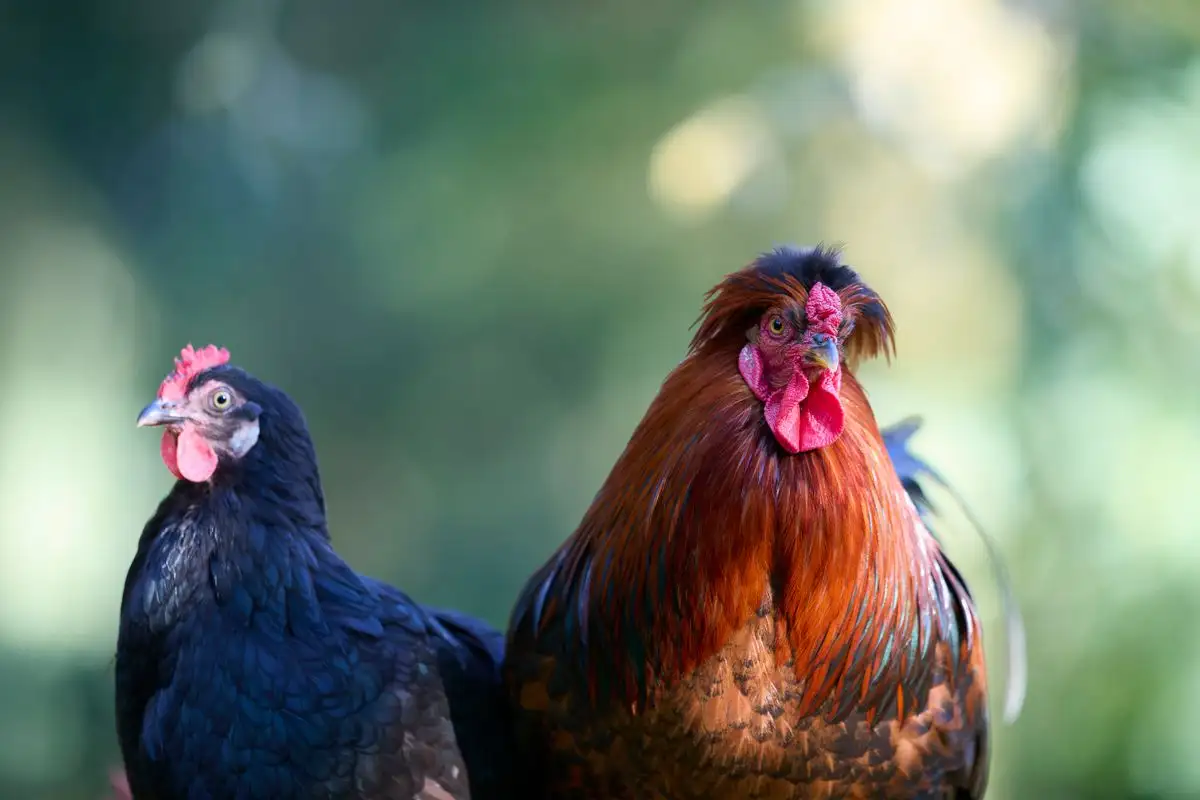
For a Brahma, a Cochin, a Jersey Giant — anything with a wide frame and a full chest — I plan on three, closer to four if they aren't out much. Not because they fight, but because two wide birds standing side by side need shoulder room, and these breeds tend to be inside more than lighter ones. They handle cold well, they handle heat poorly, and they'd rather stand in the shade of the coop doorway than patrol the run. Add a heavy breed to a flock sized at the textbook minimums and the numbers start shrinking from the inside.
Bantams need about half. A square foot to a square foot and a half each is honest for a Cochin bantam, a little more for the flighty bantam games.
The run is where the breed shows up on the tape. Ten square feet is reasonable for a calm heavy breed. For a light, high-energy Mediterranean type, I'd want fifteen to twenty, and if the run can't be covered or broken up, I'd push toward twenty. Notice the inversion: the smaller bird often needs the larger run. Body size sets the coop floor. Activity level sets the run.
Roost length is a separate ledger, and it's per bird rather than per breed — with one adjustment. Figure eight to ten inches of perch for a standard bird, twelve for the heavy breeds, because a Brahma lands like a sack of feed and spreads out when she settles. Six to eight inches for bantams.
Here's the trap. People halve the floor space for bantams, then halve the perch to match. Ten bantams squeezed onto three feet of roost is a bad night, every night — jostling at dusk, somebody giving up and settling on the floor in the corner. Perch length doesn't scale down with body size the way floor area does, because when they're all up there they're shoulder to shoulder no matter how small they are.
What the wet week is actually telling you
Go back to the two landscapes. The heavy flock's run is packed and greasy; the light flock's run is a minefield. Both of those are information.
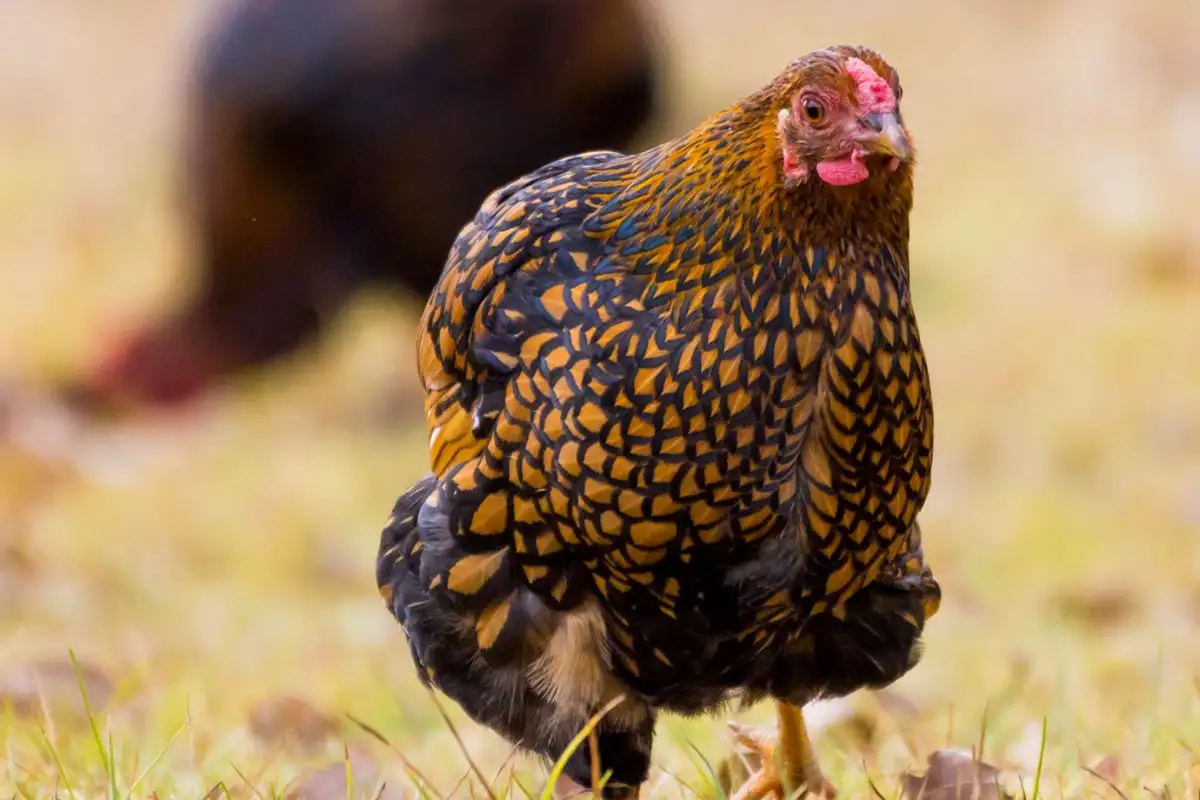
Packing means the birds aren't turning the surface. Heavy breeds, and especially feathered-footed breeds like Cochins and Faverolles, move less and dig less. They stand. The surface compacts and holds water longer than a surface that's been scratched open. Their foot feathering collects mud, which makes them stand more, which packs it harder. It's a loop. If you keep those breeds, plan a run with a lot of roof and a lot of coarse material on the ground, and expect to add that material in small doses fairly often rather than one big load twice a year. Same story inside the coop: heavy birds don't fluff the litter, they press it, so you top it up more frequently and in thinner layers.
The light flock does the opposite. Foraging drive is a breed trait, not a mood the bird is in that day. Leghorns, Andalusians, Anconas — they scratch with both feet, step back, and look. In a wet week they turn the top two inches into slurry and then keep working the same spots until they hit roots. Their litter gets flung into the corners, and you add material in bigger, less frequent pushes.
Neither one is a failure. They're two different breeds asking for two different runs, and if you build the wrong one you'll spend the season fighting the mismatch instead of enjoying the birds.
When the run can't get bigger, the breed is the lever
Most people can't pour more concrete or buy more fence. So here's the honest version of what's left.
If your run is fixed and small, breed choice does more for you than any layout trick. Heavier, calmer breeds tolerate confinement far better than light, high-energy ones. An Orpington in a small run stands around and looks content. A Leghorn in the same run paces the wire, and the wire loses.
I won't pretend that's a free lunch. Those calm heavy birds also concentrate their wear, pack the ground, and need more coop floor per bird. You're trading a worn-out perimeter for a packed center — and the packed center is slower to recover, because nothing has been scratching it open. If both flocks are in the same weather, the geometry just decides where the damage lands and how fast the ground comes back.
The last thing, and it's the one I'd want somebody to say to me before I ordered chicks. If you're choosing a breed and a run at the same time, don't size the run for the bird you want. Size it for the bird you'd regret.