Which Chicken Breeds Stay Quiet on a Town Lot With Neighbors 20 Feet Away
The quietest setup for a town lot with neighbors 20 feet away is no rooster, a handful of hens from exhibition or dual-purpose lines rather than high-production strains, and a run layout where every bird can see every other bird. Breed reputation matters far less than those three things, and the two traits that actually reach your neighbor's window are how much a hen vocalizes around laying and how calmly she tolerates being picked up. Those are separate traits, and neither one tracks body size.
I learned that the hard way, standing in my own side yard at 6:40 on a Tuesday morning with a coffee going cold in my hand, listening to a bird I had bought specifically because someone told me her breed was "quiet."
She was not quiet. She was a production-strain hen, and she had opinions about the nesting box.
That morning is the reason I stopped reading breed charts and started listening to my own flock instead. What follows is what I actually hear from 20 feet away, and what I do about it.
What Your Neighbor Actually Hears
Stand on your neighbor's side of the fence sometime. Not in your yard — theirs. You will hear three things, and only three.
The Egg Song and the Pre-Lay Announcement
This is the loudest recurring sound a hen makes. The pre-lay announcement comes first, a rising series of clucks that means she is looking for a box. Then the egg song, that long rhythmic cackling burst, comes after she lays. A production hen can run that whole performance for a couple of minutes. An exhibition-line hen of the same breed often does a short version and gets on with her day.
Here is the part that surprises people: it is not a size trait. The bantam in my flock — maybe a third the weight of my big girls — can out-volume every one of them when she is announcing. I have had large, heavy hens that cluck twice and walk off, and small hens that carry on like the sky is falling. How long and how often a hen performs the egg song is an individual trait. You cannot buy it off a breed chart. You find it out by keeping the bird.
Clucking Volume and the Contact Call
Hens talk all day. Most of it is a low, conversational burbling that does not carry past your own fence. That is the baseline, and it is not what gets you a text from next door.
The thing that carries is the contact call — the louder, sharper sound a hen makes when she is separated from the flock. Which brings me to the layout point, because I think it matters more than breed.
Hens That Hear but Cannot See Each Other
If your run wraps around a corner of the coop, or you have a fence with a solid privacy panel down the middle, you have created a flock where birds can hear each other but cannot see each other. That is a stress condition, and the sound of it is more noise. A hen who can see her flockmates settles down. A hen who can only hear them keeps calling.
I had a run that bent around the back of the coop. Three hens around the corner from the other two. The calling back and forth in the late afternoon was genuinely loud, and it stopped almost overnight when I cut a sightline through — just a section of welded wire instead of the solid panel, at hen height, so everyone could see everyone. Cheap fix. Big change in what crossed the fence line.
The Rooster Question, Answered Plainly
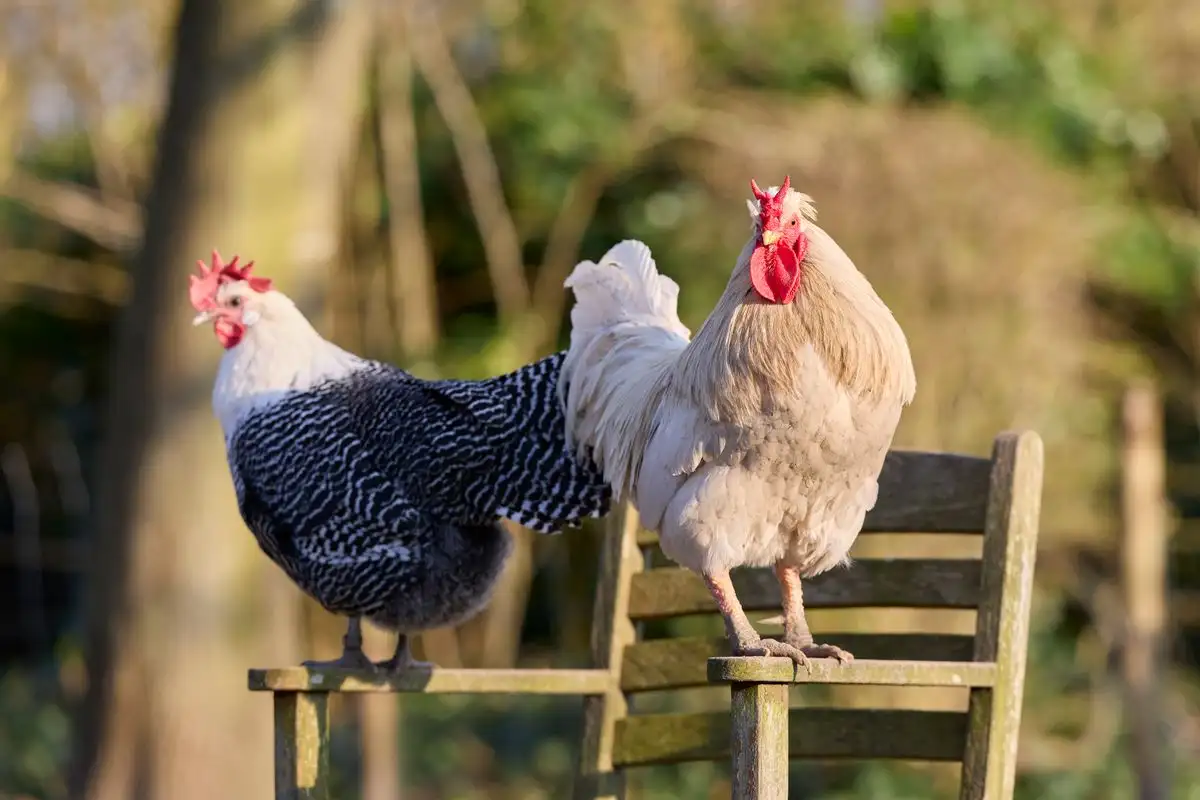
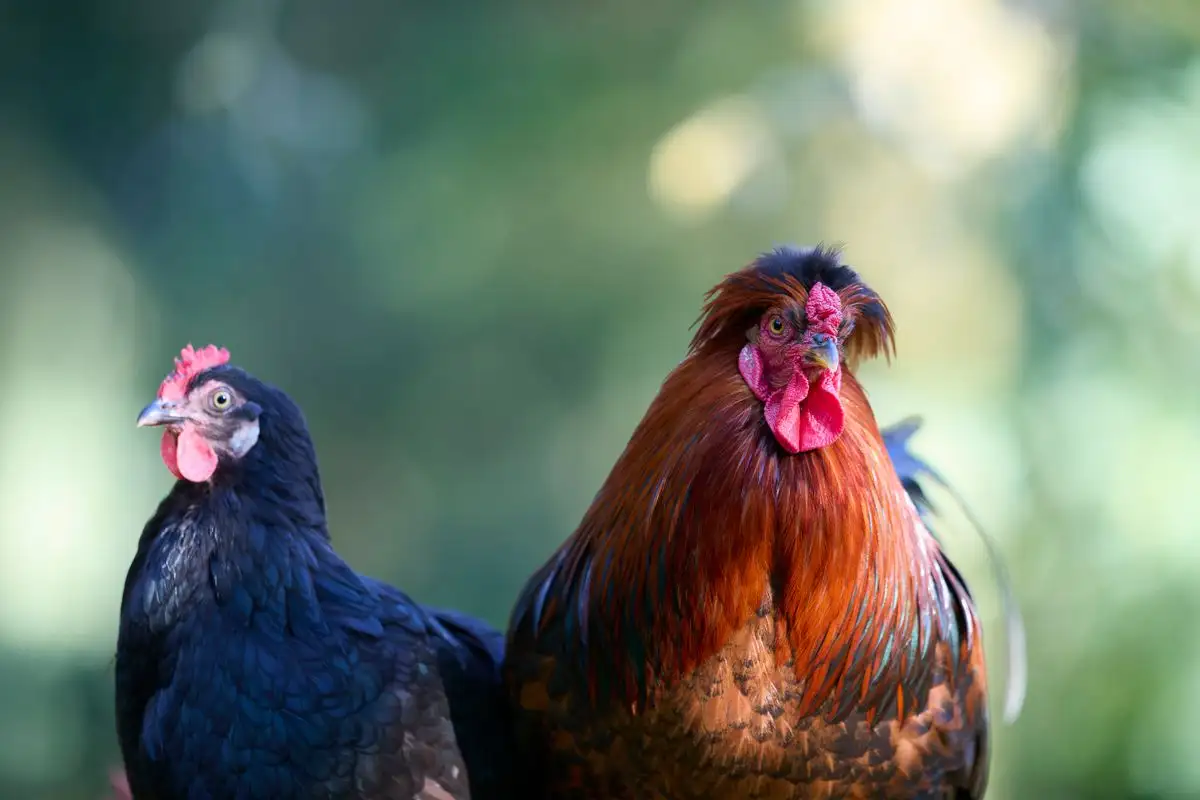
No rooster is dramatically quieter than a rooster. This is the single largest noise variable in a small yard, and it is not close. If quiet is genuinely your priority with neighbors 20 feet away, the answer is straightforward: keep hens only.
If you do keep a rooster, understand that crowing is triggered by light, not by sunrise. A coop near a porch light, a security light, a bright bedroom window, or a streetlight produces crowing at odd hours. I have heard a rooster start up at 2:15 in the morning because a motion light tripped. That is the mechanism — the bird is responding to the light cue, not being spiteful.
The practical version: if you keep a rooster, look at your coop at night and ask what light hits it. A dark coop on a dark side of the yard is the difference between a 5:30 crow and a 2 a.m. crow.
Docility and Catchability Are Not the Same Trait
This is the distinction that took me the longest to get right, and I think it is the one most breed lists get wrong.
Docility is how a bird behaves when she is held. Catchability is how hard she is to get your hands on in the first place.
A calm hen can still be hard to catch. I have a big, placid, slow-moving hen who will sit in my lap once she is up there — but catching her is a project, because she reads my approach and simply walks the other way, and she is faster than she looks. Meanwhile, I have a flighty, high-strung breed that panics if you look at her sideways — and once you have her, she goes limp and gentle. Two different traits. Breed reputation usually blends them into one word, "friendly," which tells you almost nothing.
Why this matters for a town lot: a hen that is hard to catch is a hen that runs, and a running hen makes noise. The catch itself is the vocal event. If you can walk up to a hen and pick her up without a chase, you skip the alarm calling entirely.
Where Temperament Actually Comes From
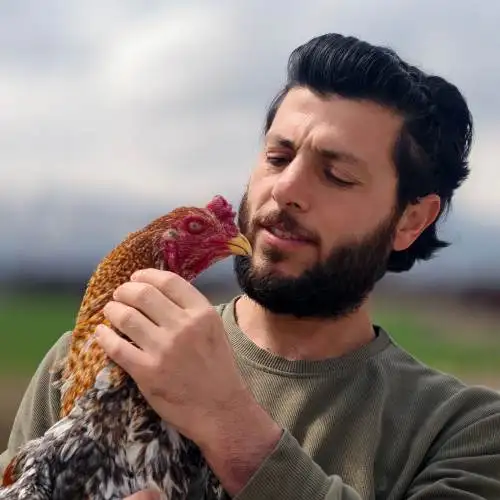
The first month matters. Birds handled calmly and often in their first weeks settle faster when picked up later. Not handled roughly — handled calmly. A chick I have picked up for ten seconds a day, gently, with my hand under her breast rather than grabbing from above, grows into a pullet who accepts hands.
I am not going to tell you it will fix a genuinely high-strung line. It will not. Genetics does set a range. But it sets a range, not a point, and early handling decides where in that range the bird lands. Two pullets from the same hatch, one handled and one not, will act like different breeds by the time they lay.
Production Strains Versus Exhibition Lines
A breed is not one temperament. A production strain of a given breed and an exhibition line of the same breed can be meaningfully different birds. Exhibition lines were selected for handling — birds that stand still while a judge picks them up. Production lines were selected for output. Output is loud. Handling is quiet.
Bantam lines tend to carry the same pattern. Bantams are often kept for show or as pets, so they have been selected for being picked up. That said, a bantam is still a chicken and a bantam hen still sings the egg song, and small birds are not automatically quiet birds. Do not let size fool you either direction.
What Docility Actually Looks Like When You Test It
You can get a read on a bird in about a minute, and you should do it before you commit.
Sit down near the flock. Low. Wait. A hen that comes toward you, even cautiously, is telling you something. A hen that puts the whole flock between you and her is telling you the other thing.
Then reach out slowly, hand low and from the front, not over the top. Watch what happens. Some birds freeze. Some step away. Some bolt. Bolt is the one that matters for a town lot, because bolt is the one that makes noise.
Finally, pick her up if you can, and hold her against your side with one hand over her wing. Count to ten. Does she settle, or does she keep struggling? Settling fast is what you want.
None of this is a breed test. It is a bird test. Breed tells you the prior odds. The bird tells you the truth.
Putting It Together for a 20-Foot Lot
If I were setting up again with neighbors 20 feet away, here is what I would do.
Hens only. No rooster. That is the whole game on noise.
Three or four birds, not eight. Fewer hens means fewer egg songs per day, and it means a flock small enough that everyone can see everyone else in a modest run.
A run with clear sightlines. No solid panel dividing the flock. If you must wrap the run around a structure, put wire, not solid material, at the corner so birds maintain visual contact.
A dark coop. No porch light, no security light aimed at the coop. Check it at night from the birds' side.
Buy from someone who handles their birds, or handle yours from week one. Ask the breeder which line it is — exhibition or production — because it genuinely changes what you get.
And accept that you will not know until you keep them. The breed chart gives you a starting point. The bird in your run gives you the answer, and she gives it at 7 in the morning, at full volume, whether you are ready or not.
I still have the hen from that Tuesday morning. She turned out to be fine. She just had a lot to say.