Bantams Aren't Just Smaller Chickens in a Small Yard
A bantam hen weighs roughly a quarter to a third of what the large-fowl version of the same breed weighs, and that single difference changes three things at once: how much floor space she needs, how much egg comes out of the nest box, and how much fence stands between her and something that wants to eat her. The first one improves. The second one shrinks. The third is the one that catches people out, because when the bird gets smaller the enclosure does not get smaller with it. In a small yard the perimeter is the constraint that actually decides what you can keep, and bantams do not shrink the perimeter. They raise the specification on it.
I have knelt at the bottom corner of a run built for full-size hens more times than I care to admit, looking at a gap I had walked past all winter. Two and a half inches of daylight between the bottom rail and the ground, where the hardware cloth had bowed away from the frame after a couple of frost heaves. A six-pound Wyandotte strolls past it and does not even slow down. There is nothing there for her. Then a bantam hen puts her head through it, then a shoulder, and then she is on the outside, and she never once hurried.
That gap is the whole article in miniature. Everything you read about bantams starts with floor space per bird, and floor space is genuinely the easy part. The hard parts are the ones that do not scale down.
The weight difference is not half, and that matters
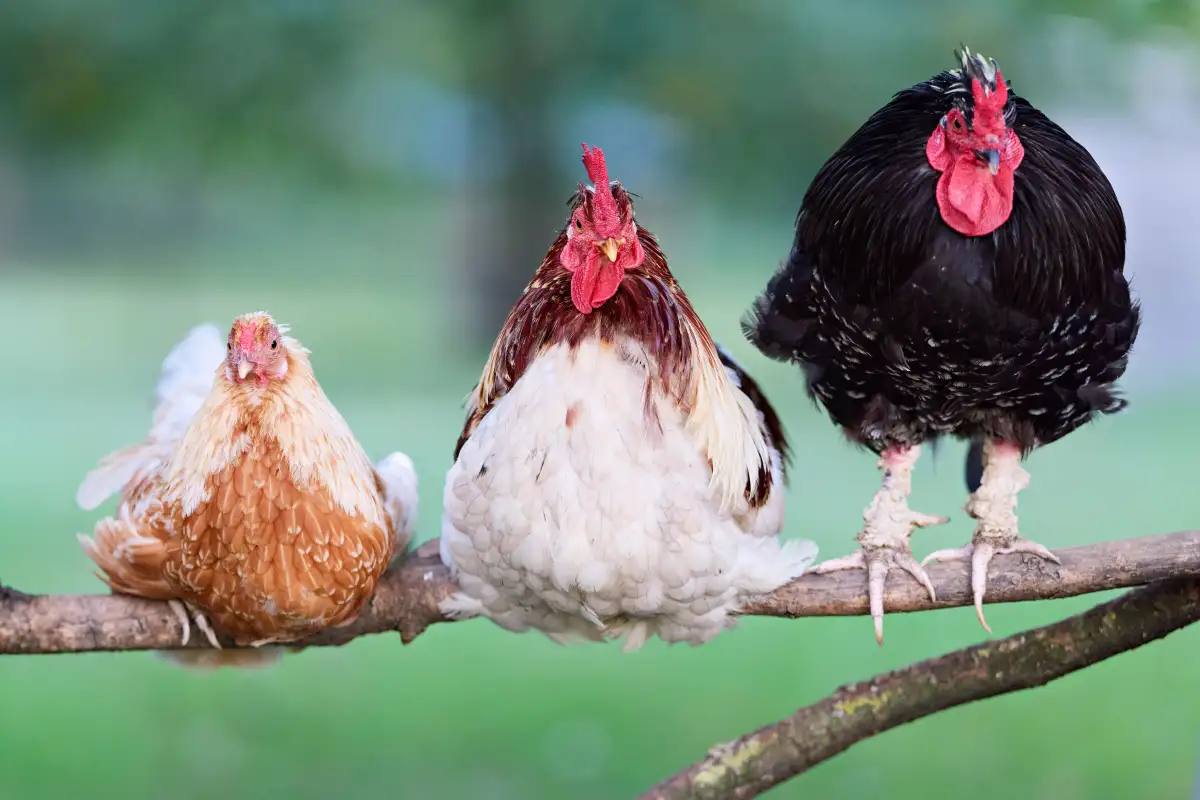
"Bantam" is a size class, not a breed. It covers hens from roughly a pound up to about two and a half pounds, with the smallest Seramas under a pound and the heavier miniatures — Cochin, Brahma, Wyandotte — landing up near the top of that range. The large-fowl versions of those same breeds run from about four and a half pounds in the light Mediterranean types to eight or nine in a standard Cochin. So you are talking about a quarter to a third of the weight, not half. I have had people tell me their bantam is "half the size" of their neighbor's Orpington, and when we actually put both on a scale it was closer to a third.
The published housing minimums follow that. Where a standard hen is usually given about four square feet inside the coop and eight to ten in the run, a bantam can be housed at something like two square feet inside and five in the run. That is a real saving, and I use those numbers — but only in a mild climate, in a run that is covered and dry, and only when the birds are outside most of the day. If your birds are shut in through a long winter, I would not go under eight square feet of run per bird no matter how small they are, because bantams are busier than standards, not calmer. A bored bantam is a bird standing on the run wire, picking at the seam of the roof.
Egg math eats the space savings
Here is the trade nobody puts on the tag. A large egg runs about two ounces. A bantam egg runs about one and a quarter to one and a half ounces, which puts a dozen of them in the peewee-to-small range — around fifteen to eighteen ounces a dozen against twenty-four for a dozen large. Three bantam eggs is roughly two large eggs in volume. So a cake that calls for three large eggs wants four, maybe five, out of a bantam flock, and if you are the kind of person who counts eggs by the dozen for a household, that gap shows up fast.
Now run the arithmetic the other way. Suppose you want thirty large-egg equivalents a week. Six standard layers on a good line will do that in a well-managed flock, in about twenty-four square feet of coop. To get the same thirty large-egg equivalents out of bantams you need roughly forty-five bantam eggs a week, which at four or five eggs per hen means ten or eleven birds, which at two square feet each is twenty to twenty-two square feet. Essentially a wash. Sometimes bantams come out a little ahead because some of them lay more often relative to their body mass, and sometimes they fall behind because a bantam flock contains three broody hens sitting on nothing.
I think this is the single most useful thing to know before you order: if eggs are the goal, downsizing the bird does not buy you the space you were promised. What bantams actually save you is feed consumed and yard damage done. Less scratching, less dust-bathing crater in the lawn, less mud tracked onto the coop floor, and less of a manure load in a small run. That is a real and underrated benefit in a quarter-acre yard. It is just not a benefit that shows up in the egg basket.
The one place the small egg wins is the kitchen. Bantam eggs carry a higher yolk-to-white ratio, so custard, pasta dough, and anything where richness is the point comes out noticeably better. I keep a separate dish of bantam eggs on the counter for baking and send the large ones to the skillet.
Flight, ground clearance, and the lid
Bantams fly. Not all equally — a Cochin bantam or a Silkie is a poor flier and mostly hops, while Old English Game, Sebright, Leghorn, Hamburg, and most of the Mediterranean bantams fly like they have somewhere to be. A light bantam hen can clear a four-foot fence from a standstill and a six-foot fence off a two-foot launch. That means the run needs a roof, or at least taut bird netting, and the netting has to be strung tight enough that a bird hitting it at speed does not sail it like a hammock. I have watched a bantam go up and over a run wall I had considered generous.
Ground clearance is the other half of it. A bantam standing up is under ten inches tall. She can walk under a coop raised on six-inch legs, under a pallet, under a garden gate, and through the space between the coop wall and the run fence that you never noticed because no standard hen ever fit. She can also shoulder open a loose pop door and squeeze through the gap above a nest box lip. When I build for bantams, the first thing I do is walk the whole structure at knee height with a tape measure, because that is the altitude where the failures are.
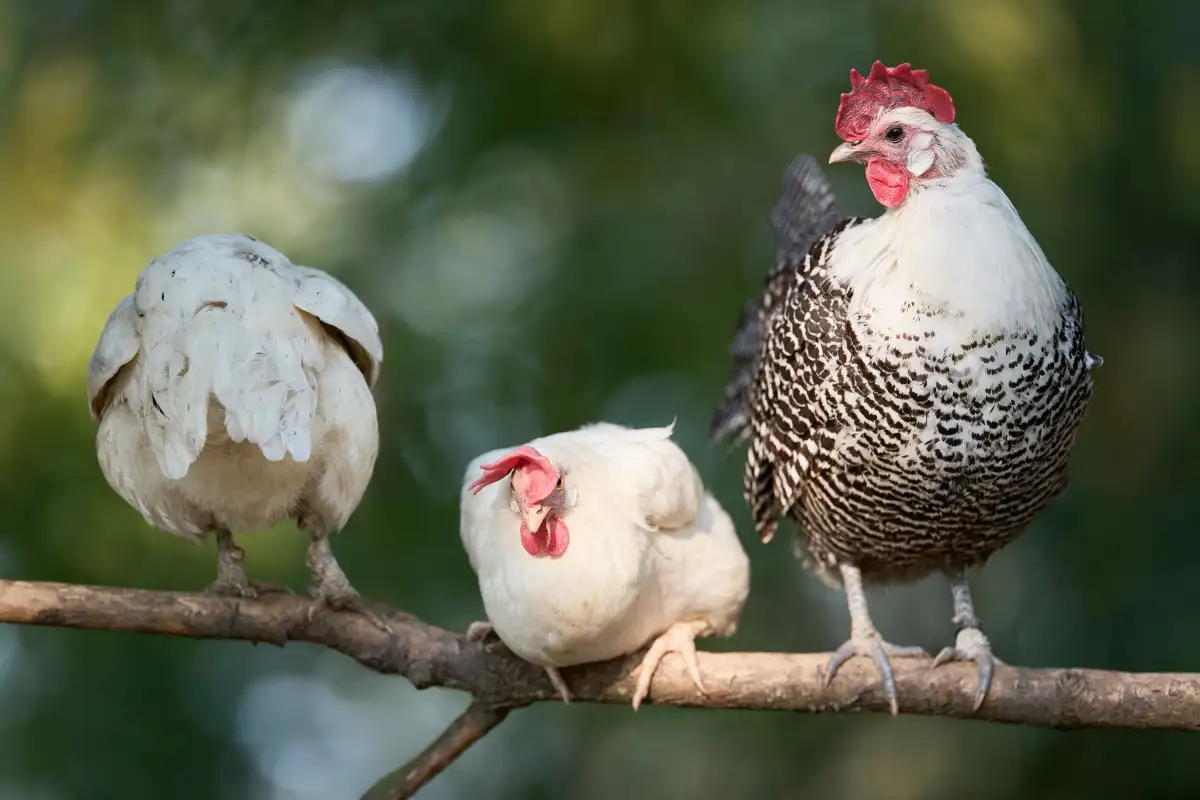
Roost height is usually the wrong thing to worry about. A bantam can fly to a roost four feet up without effort. The problem is that the top roost belongs to whoever is biggest, and if you are mixing sizes she will be on the low perch or on the floor no matter how well she flies. I put in two roost heights and a ramp, and I keep the lower roost the same width as the upper one so it reads as a real roost rather than a consolation step.
One more piece of the building, not the bird: a small body sheds heat faster than a large one, so a draft at perch height costs a bantam more than it costs her larger flockmates. That is a reason to spend the money on ventilation above the birds and solid walls at their level, not a reason to buy anything with a cord on it.
The fence scales with perimeter, not with the bird
This is the part I want you to take away if you take away nothing else.
Keeping a standard hen in is a different job from keeping a bantam in. A standard hen is stopped by two-by-four welded wire. A bantam walks through a two-inch opening without touching the sides, which means chain link is effectively a suggestion and most of the wire fencing sold at farm stores is decoration. Keeping predators out is a stricter job still. A raccoon's hand goes through two inches, a weasel goes through one, and a rat or a snake goes through whatever it wants. For bantams I use half-inch galvanized hardware cloth for the lower two to three feet, an apron of the same material buried and pinned out from the base, and something solid or netted overhead.
Now think about what that costs and how the cost behaves. Hardware cloth is priced by the square foot, and half-inch costs meaningfully more than one-inch or welded wire, so you are paying a premium on every foot of fence you run. And the fence you run is set by the perimeter, not by the floor area. A ten-by-ten run has forty linear feet of fence around a hundred square feet. A twenty-by-twenty has eighty linear feet around four hundred. The small yard is exactly the yard where each square foot of run comes with the most feet of fence attached to it.
So the honest summary is that you did not shrink the fence by shrinking the bird. You kept the same fence and made it more expensive, and you added a lid that an all-standard flock in a mild climate might have gotten away without. That is the bill for a bantam flock, and it is larger than the savings on bird count. I still think it is worth paying, but I want people to pay it knowingly rather than discovering it in February.
There is also a difference in what can take which bird. A hawk that would leave a full-size hen alone because she is more trouble than she is worth will take a bantam, and a fox or a raccoon that would have to drag a seven-pound hen can simply carry off a two-pound one. Predation pressure on a bantam flock is not the same pressure measured against a standard flock; it is a category up.
In a mixed run, the bantam is the bird that waits
If you keep bantams alongside standard hens — which works fine, and is how a lot of small yards end up — the bantam is at the bottom, and that is a function of reach and mass rather than temperament. Old English Game bantams are as scrappy a bird as exists and still lose to an eight-pound Brahma hen who barely means anything by it.
What it looks like on an ordinary afternoon: the standards on the feeder and the bantams standing two feet back, waiting, and then getting maybe a third of the time at the trough. The standards on the top roost at dusk and the bantams settling onto the floor or into a nest box. Bantam eggs laid under the coop instead of in the box because that corner is unclaimed. A bantam hen with a bare patch on the back of her neck that never quite grows back in.
What I do about it is all spatial, because the problem is spatial. At least two, ideally three, feeding and watering stations set far enough apart that no single bird can hold the middle ground and watch both. A visual break or two in the run — a pallet on its side, a sheet of plywood leaning against the fence, a stack of cinder blocks — so a small bird can move without crossing open floor in front of something bigger. Low perches and a ramp so "up" is available to a bird with a one-pound body. When I mix sizes I size the coop for the standards and then add a little extra, because if I size it for the average I have sized it for nobody.
Which bantams actually pay rent
There are two kinds of bantam and they behave differently. True bantams — Sebright, Serama, Japanese, Dutch, Nankin, Silkie, Polish, Old English Game — have no large-fowl counterpart and were never anything else. Miniatures — Cochin, Wyandotte, Orpington, Leghorn, Rhode Island Red, Plymouth Rock, Australorp, Sussex, Brahma, Hamburg — are scaled-down versions of large fowl, and most of them differ from their big counterparts in more than size.
The layers. Bantam Leghorn, bantam Rhode Island Red, bantam Australorp, bantam Plymouth Rock, and bantam Hamburg are the ones I would keep if I wanted eggs rather than ornament. They lay small eggs but honest numbers, and several of them lay right through a mild winter. Bantam Wyandottes and bantam Sussex are decent second-tier choices. One warning that matters more than any breed chart: show-bred lines have drifted toward type and away from production for a century, so a bantam Leghorn from a show line and one from a hatchery line are not the same bird in the nest box, even though they carry the same name.
The ornamentals and the broodies. Sebrights are hen-feathered and gorgeous and lay a handful of tiny eggs before quitting. Seramas are the smallest chickens in the world and among the least productive. Polish have crests that make them hawk bait and layers that make them a hobby rather than a supplier. Frizzles are a feather type more than a breed. At the other end, Silkie, Cochin bantam, Japanese, and Old English Game hens go broody constantly, and that is not a flaw if you use it — a lot of people keep bantam hens specifically to hatch and raise chicks for other breeds, because they will set on anything and they are small enough not to crush a large-fowl egg.
The decision, then, is not "smaller chickens for a small yard." It is this: bantams let you keep a flock where you otherwise could not, they damage the yard less, they are more interesting per pound, and they give you better eggs for baking than their size suggests. What they charge you is a finer-mesh fence with a lid on it, a run built to bantam altitude rather than bantam floor area, and a shorter column in the egg ledger than the bird count implies. Run the egg arithmetic before you order, run the tape measure at knee height before you build, and go to half-inch at the bottom two feet no matter how tall the fence is.