How to Shortlist Chicken Breeds for the Yard You Actually Have
Shortlisting a chicken breed begins with a tape measure, not a catalog. Before a single breed name goes on the list, measure the usable floor area of the coop and the run you already have, then answer four questions about the yard itself: how much of that space a bird can actually walk on, where flock noise carries, what the summer high and winter low do to the site, and whether birds already live there. Whatever survives those filters is the shortlist, and it is almost always shorter than three or four names. Everything after that is elimination.
I keep a 12-foot tape measure in the feed bin, and it lives there because the number in my head is never the number on the ground. My coop framed out as a six-bird house. Then I measured the interior with the nest boxes hung, subtracted the strip of floor the feeder and waterer sit on, subtracted the corner where the litter bucket and the ramp land, and got something closer to four birds. Same building. Same birds. Two different numbers, and only one of them is real.
Do that twice. Interior coop floor area, with the equipment in place. Enclosed run area, with the equipment in place. Two numbers, written down, on paper, before you look at anything else.
The space figures, and what they quietly assume
The numbers repeated most often for standard-size hens are 4 square feet inside the coop and 8 to 10 square feet in the run. What those numbers assume is that the run is a weather shelter, not a life. If your birds get out — supervised yard time, a tractor that actually moves, a fenced garden they patrol — the run is a staging area and 8 square feet is workable. If your birds are inside that run from morning to dark, every day, the run has become the yard. The 10-square-foot figure turns into a floor rather than a target, and keepers who run genuinely confined setups usually end up talking in terms of 15 and up. The coop figure changes character too. A coop that only has to be a bedroom can be tight. A coop that has to hold birds through a week of bad weather needs floor they can walk on when the run is a mud pit.
This is the filter that eliminates more candidates than any other, and it eliminates them before temperament ever enters the conversation. A 9-pound bird occupies more floor than a 4-pound one and more of the air above it. Eight square feet per bird is a different yard depending on what is standing in it.
Four questions, asked in order
Usable square footage, not total square footage
Walk the run with the tape and measure what a bird can put its feet on. Not the footprint of the frame. The ground that is not under a waterer, not under the dropping board, not the concrete pad you set the coop on, not the strip behind the gate that floods. In my last run, a third of the total area was unusable for a good part of the year, and I only found that out by standing in it during a wet week.
Sound, and what sits between you and everyone else
The honest way to answer this is to stand where the run is on a still evening and listen to the layers between you and the nearest person who is not you. Not the distance — the layers. A solid fence, a hedge, a garage wall, a stand of arborvitae. Mass in the path drops sound fast. My old run sat forty feet from a neighbor's deck with nothing but chain link between us, and an egg song crossed that gap like it was nothing. The same run behind a six-foot privacy fence was a different run entirely.
This is where the two big families split hard. The light Mediterranean types — Leghorns, Minorcas, Andalusians and their crosses — are the ones people describe as vocal, flighty and constant, and that reputation is not invented. The heavy dual-purpose breeds — Orpingtons, Wyandottes, Brahmas — tend to be calmer and quieter, though a broody hen of any breed can out-noise an entire flock, and a male bird is a separate sound problem entirely, not something you solve by picking a breed.
The two ends of the thermometer
Look at the site's worst week, not its average. Large single combs and loose, loose feathering shed heat, which is why the Mediterranean breeds came out of hot dry country and handle a hundred-degree afternoon better than a heavy bird. The same comb is the first part of a bird to suffer in a hard freeze. Pea combs, rose combs, small wattles and tight feathering hold heat better and are what the cold-climate breeds were built around.
Feathering on the feet is the other climate read. It looks wonderful in a catalog and it behaves differently in wet cold — mud and snow ball up in it, the bird tracks it into the coop, and the floor gets dirtier faster. In a dry cold that is a non-issue. In a wet cold, in a small run, it is a daily housekeeping cost you are signing up for.
What is already standing in the run
If birds already live there, you are not choosing a breed in a vacuum. You are fitting a new body into an established order with established space, and the number that matters is the one you measured five minutes ago. If your current birds already fill the run at 10 square feet each, no breed is the right answer. The answer is fewer birds or more run. Climate and sound filters apply to the flock you have as much as to the bird you are adding — if everything in the run is a light, loud, heat-adapted bird, a heavy cold-hardy addition is a mismatch on two filters at once.
What you can actually judge before the bird is in your yard
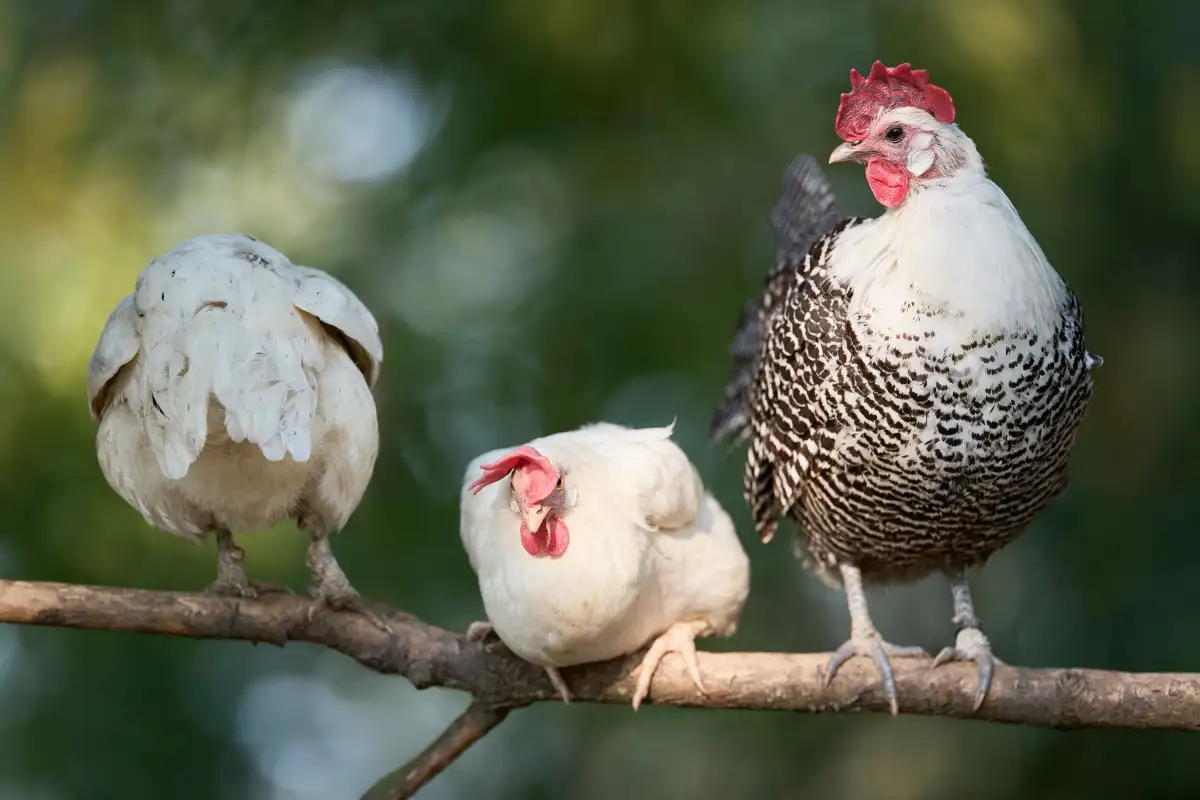
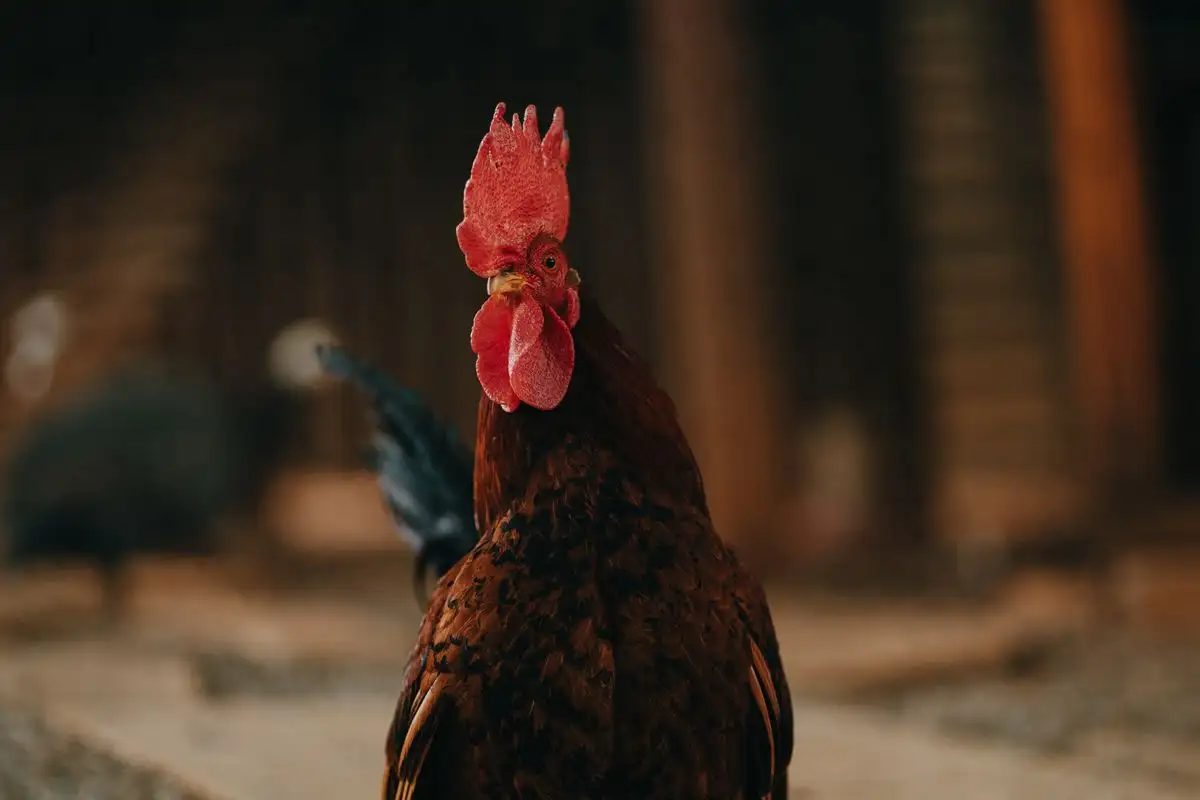
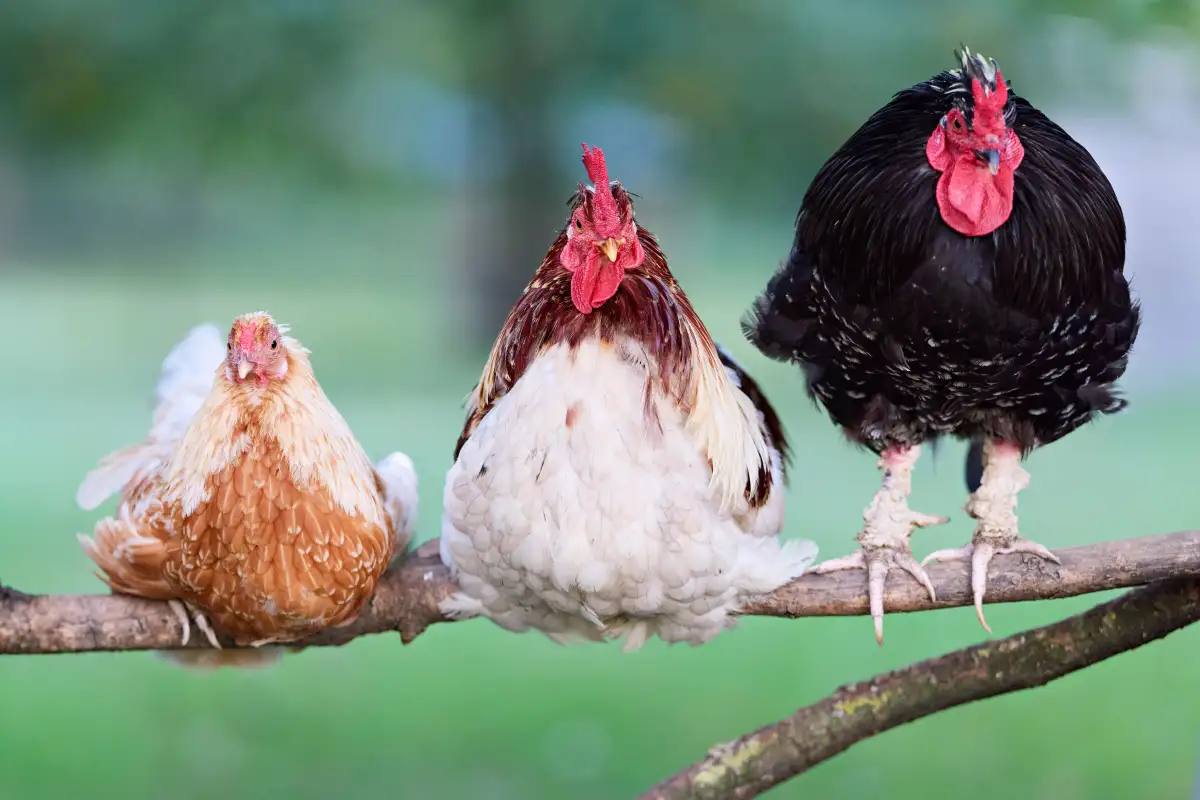
Body size, comb type, feathering, and activity level are all visible from the outside. You can read every one of them off a photograph and a description without trusting anybody's climate or anybody's opinion about temperament. That is the part most people skip. They research personality — the least portable trait a chicken has — and ignore comb and body, which are the most portable.
So do the reading in this order: weight class, comb type, foot feathering, crest or none, and posture in the photos. A bird photographed standing tall, chest up, off the ground is telling you something. So is one photographed sitting flat in the grass. You are not diagnosing anything. You are reading a body.
Same run, two different yards
Picture an 8-by-12 run. Put a Brahma in it. Nine, ten pounds, feathers on the feet, calm, low-flight, uninterested in being off the ground. That bird occupies the floor, and the bottom two feet of the run become the contested zone. The vertical space — the roost, the shelf, the top of the nest box — sits mostly unused because the bird does not go there.
Now put a Leghorn in the same 8-by-12. Four, five pounds, flies, perches high, active all day, works the vertical space you already built. The run behaves like more run than it measures, and the same square footage that felt tight for the Brahma reads as generous. She is also the bird whose alarm call carries through your kitchen window at six in the morning.
Neither bird is a problem. Heavy, feather-footed breeds need floor and dry footing. Light breeds need height and something to occupy them. Identical dimensions, two completely different sets of demands, and you can predict which set you are buying before the bird arrives.
Three names on the fridge
Cap the shortlist at three or four. Past four it stops being a filter and becomes a wish list, and you start reopening the catalog to relitigate a decision you already made. Write each name under the filter it wins on, and write the filter it loses on right beside it, because nothing wins all four. The heavy breed that handles your winter loses on floor space. The light breed that fits your run loses on sound. The bird that fits your existing flock loses on comb type in a hard freeze.
That is not a failure of the method. That is the method working. Selecting a breed is choosing which filter you can least afford to lose, and then living with the tradeoff knowingly instead of discovering it in February.
And write the two numbers at the top of the page, because they are the ones that change. Extend the run by four feet, or lose a bird, or move the coop to the shady side, and the filters shift. Run the four questions again. The shortlist was never permanent.