What Long-Time Keepers Check Before Adding Hens to a Flock
Before picking a breed, run the arithmetic on the coop you already have. An established flock can only absorb as many new hens as its roost line and its feeding positions will hold at the largest body size in the group, and newcomers arrive into far less trouble in pairs than alone. Breed temperament is real and worth choosing for, but it is the third question, not the first. Get the space and the numbers wrong and even a famously unflappable breed spends its first weeks on the coop floor while the resident hens keep the top of the roost.
I keep a tape measure on a nail inside the coop door. It gets more use in March than any other tool I own, not because I like numbers but because the coop only tells the whole truth at dusk.
Dusk is the only honest measurement
Go out about twenty minutes before the light goes. The birds are drifting in off the run, the pop door is still open, and you can hear the low mutter hens make when they're arranging themselves. Slide the door shut, clip a headlamp on, and count.
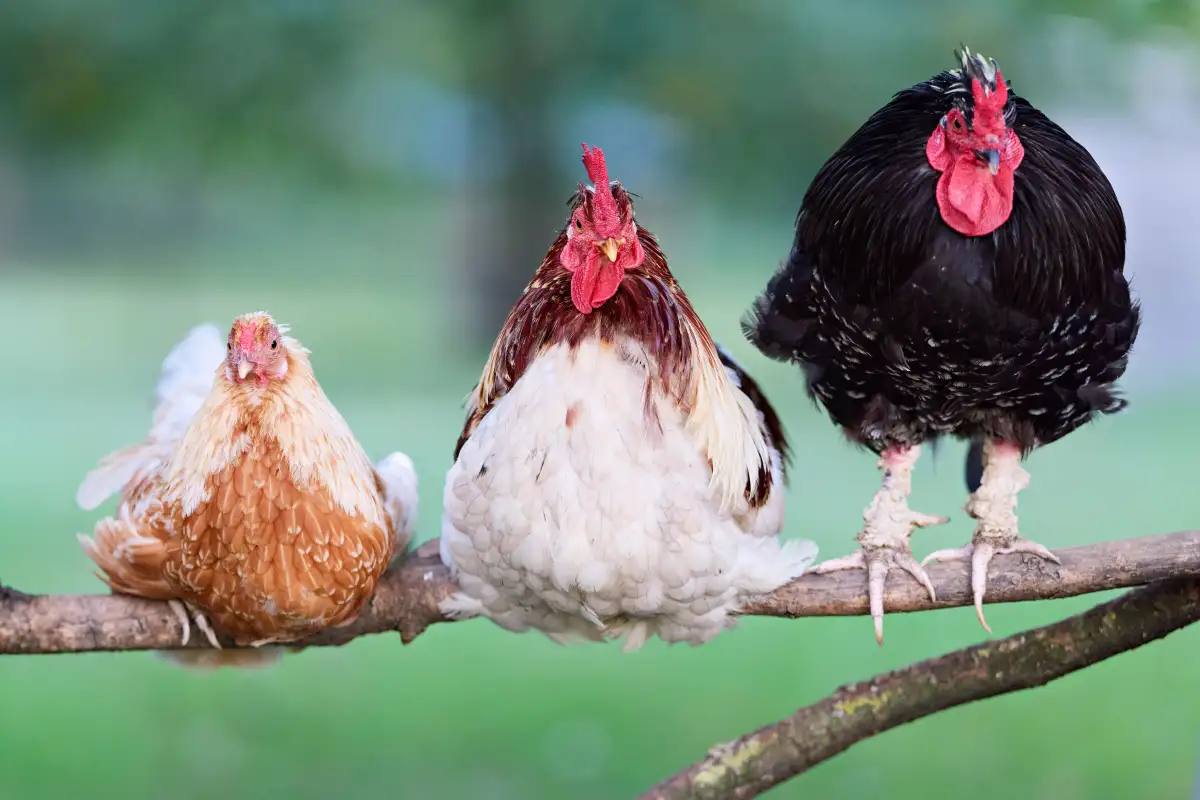
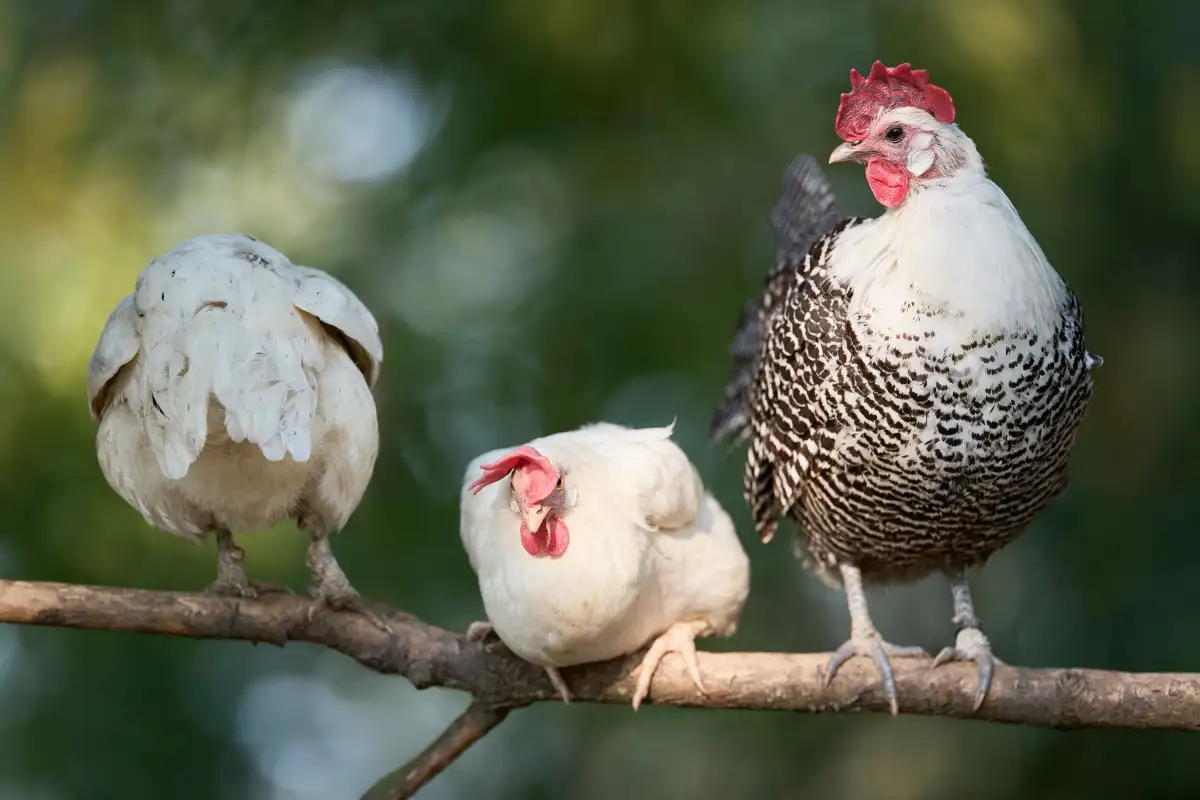
What you're looking at is not a row of evenly spaced hens. Five hens on a six-foot roost do not divide it into five equal sections. They sit where they want, leaving one wide gap in the middle and squeezing shoulder to shoulder somewhere else, and the gap you can see from the door is not free space. It's the distance two hens have agreed not to close. Nothing will sleep there.
So don't measure the roost. Measure the gap at the end, from the outermost hen's shoulder to the wall, because that is what a new bird is actually being offered. If it's narrower than she is, she isn't going to use it. She'll sleep on the floor for a while and try again next week.
This is why floor sleeping is almost never a personality problem. It's a bird who arrived to find the roost already full at the only end she could reach, or a bird too heavy to get up onto a high roost in the same shuffle as everyone else. Watch the last hen up at night for three nights running and you'll usually see the same one flapping and missing. That bird is also usually the one taking the worst of the daytime bumps, and the two things are the same problem.
The old rule of thumb is eight to ten inches of roost per hen, six to eight for bantams. Treat it as a floor, not a plan. A settled flock almost always uses more than the minimum, because hens with established positions don't crowd each other, and the space between them stops counting as usable.
Feeding positions, not feeder inches
The feeder is the same arithmetic wearing different clothes. What matters is not the total length of the trough. It's how many birds can stand at it with their heads down at the same time without touching.
A single hanging feeder with a lip gives you roughly three comfortable positions. A long trough gives you more, but only if it isn't shoved into a corner where one end sits against a wall. That end is a nervous position and a bird low in the order won't take it. Same with the waterer. Watch for two minutes at the busiest time of day, right after the pop door opens in the morning, and count the birds at the feed and the birds standing around waiting. The waiters aren't waiting because there's no room. They're waiting because the room is occupied by somebody who outranks them.
That's why adding a second feeder forty feet away does more good than buying a longer one. It doesn't add capacity so much as remove a chokepoint. A hen who can eat at a feeder the top bird isn't using will eat at normal times instead of grabbing mouthfuls at the edges of the day, and she'll go into the next reshuffle in better condition.
Why two is easier than one
A single new hen has no ally and no second body to divide the attention of the hen who has decided she's a problem. Bring two at a time and the resident birds can't chase both at once. One gets bumped, the other eats, and they have somebody to stand next to on the far side of the run. I've watched a lone pullet spend her whole first week cornered behind the waterer. I've watched a pair settle into the middle of the flock in about the time it takes a single bird just to leave the corner.
Three is sometimes easier than two, because three bodies spread the pressure further. But three is also three more birds competing for the same gap at the end of the roost, so it only works if the arithmetic up top actually supports it. In a tight small run, two is the number that usually goes right.
You'll hear people insist that odd numbers work better than even ones. I've never been able to confirm that, and I don't plan a flock around it.
Size and age first, breed second
The fastest way to make an introduction hard is to add a bantam pullet to a group of standard hens, or a big-bodied mature hen to a flock of young ones. What happens on the roost is decided mostly by mass and reach. Match body size before anything else, then match age, and only then start thinking about breed.
The birds that hold their place in an established group tend to be the older, large-bodied farm breeds. Australorps, Plymouth Rocks, Orpingtons, Wyandottes, Rhode Island Reds, Sussex. Those names come up again and again in this conversation for reasons that mostly aren't temperament. They're heavy enough to take a shoulder bump without losing the roost, they were built to be kept in mixed flocks of all sizes, and they don't spook at every noise. Confident and unflappable is the combination you want. Docile by itself is not the same thing, and a docile bird in a hard flock just becomes the bird at the bottom.
Breed reputation is an average, though, and you're buying individuals. Some of the calmest hens I've kept came from breeds people describe as flighty, and I've had more than one reputedly gentle hen turn out to be the one doing the chasing. If you're set on a particular breed, look for a line where the birds were raised in a group rather than in separate pens. Birds that grew up with company read another bird's body language faster, and that shows up in the first week.
What the reshuffle actually looks like
The first hour is the worst, and it will make you think you've made a mistake. There's a lot of noise, a lot of running, and the new birds will end up pinned somewhere they didn't choose. That part is normal and it burns itself out by dark.
The real sorting happens in the two hours before roosting time. That's when the order sets: who eats first, who goes out the pop door first, who gets the shady corner, which nest box is worth fighting over, and who gets which roost position. Pay attention to that last one, because roost position moves more than rank does. A hen can sit third in the order and still hold the best spot on the bar. Adding new birds reshuffles all five of those resources at once, not just the one.
By day three you'll know whether you have a problem that isn't going to resolve. The signature is one specific bird being singled out by several others, rather than general scuffling that moves around. General noise settles. A pile-on doesn't.
Most flocks are functionally settled in two to three weeks. Six weeks is usually when you notice you've stopped thinking about it. Expect it to take longer in a tight run and shorter in a big one, and expect it to take much longer in late fall or winter, when everyone is jammed into the coop with nothing else to do.
Signs the run has hit its social limit
You can count square feet all you like. The run will tell you when it's full regardless of how much floor space is technically unused.
Look for a hen who is at the edge of the feeder every time it's occupied, every time you happen to look, not just once. Look for bare feathers on the back of one specific hen's head and the base of one specific hen's tail, with nobody else showing the same thing. Look for a bird sleeping on the floor after everyone else has gone up. Look for a hen who is always on the end of the roost nearest the door, night after night, because that's the drafty end and it's the position nobody wants. Check the droppings board in the morning and see where the birds actually slept, which is often not where you assumed.
And look for the odd one out. The bird pacing the fence while everyone else dust bathes. The bird standing alone three feet from the group. The one who doesn't get to the waterer until afternoon. One bird on the outside is a warning. Two is an answer.
That's the part people miss about small runs. Unused floor space at noon doesn't mean anything. What limits a flock is how many comfortable positions exist on the roost and in the order, and a run can look half empty and still be completely full.
When the honest answer is no
Sometimes the right decision is not to add anybody this year. If the gap at the end of the roost is narrower than a hen, if there's exactly one feeding position, if you already have a bird who spends her days on the outside, adding birds doesn't fix that. It moves the bird on the outside down a rank and gives her company at the bottom.
The alternatives are unglamorous and they work. Wait until you lose a hen and the arithmetic opens up. Add in spring, when the flock is out on grass and there's room to get away from each other, rather than in November when the coop is the whole world. Or build a second roost bar and a second feeding position, which is usually cheaper than the season of chasing you'd otherwise buy.
I do that math standing in the coop door at dusk, headlamp on and tape measure in my pocket, before I open a single hatchery page. The breed matters. It just matters after the count.