How Do You Transport a Chicken to the Vet Without Causing More Stress?
A chicken already burdened by illness or injury doesn’t have the reserves to weather a panicked chase, a bright carrier, or a hot vehicle. Stress pushes its respiratory system toward failure faster than most owners realize, and a bird that arrives at the clinic gasping or in shock is harder to treat. The protocol that follows turns transport into a low-stress sequence built around two non-negotiable needs: stable breathing and steady body temperature. Everything — the carrier, the capture method, the timing of loading — supports that.
What You’re Trying to Do — Deliver a Bird That Can Still Compensate
A chicken headed to the vet is already in a fragile state. The aim of transport isn’t distance covered; it’s handing over a bird that hasn’t exhausted its physiological buffers on the way. The most frequent trigger for this search is a hen showing respiratory rales, a limping leg, or the stance of egg-binding, and the owner senses correctly that the trip itself could tip the balance. This protocol is built to preserve what the bird has left.
The Bare-Bones Protocol
- Prepare a dark carrier with generous ventilation, a solid floor, and nothing that rolls or shifts.
- Catch the bird in dim light using a two-handed scoop — never run a chicken under the sun.
- Load feet-first, support the keel, close the door without a slam.
- When moving more than one bird, load the calmest individual first and wait a full five minutes before adding another.
- Secure the carrier on the vehicle floor behind the front passenger seat and cover it with breathable dark cloth, leaving at least one vent panel fully exposed.
- Check breathing and comb color every ten minutes; if the bird pants or pales, adjust ventilation or temperature at once.
- Keep the carrier covered inside the clinic until you are inside a quiet exam room, then let the vet direct the unloading.
Tools and Setup — What You Need Before You Even Open the Coop Door
The carrier is the pivot point. A plastic cat carrier with side and top openings works for standard layers; a large breed needs a small dog crate with a solid bottom tray. Wire cages that leave every side exposed should be avoided unless wrapped — constant visual motion triggers panic-flapping that wastes oxygen and overheats the bird.
A folded towel or a thin rubber shelf liner on the floor gives the feet something to grip. Newspaper slickness is enough to cause splayed legs in a weak bird. If the day is warmer than 80°F, a frozen water bottle wrapped in a hand towel becomes a small, local cool source. In cold weather, a hand warmer placed underneath the towel — not touching the bird — adds gentle ambient heat without a draft.
A Step-by-Step Capturing and Loading Sequence That Protects Breathing and Body Heat
Catching Without Elevating Respiratory Drive
A chicken that gets chased has its heart rate and oxygen demand spike at the worst possible time. The safest approach is to catch at dusk or move the bird into a small, darkened area of the coop first. A red headlamp is useful; chickens don’t perceive red as daylight, so they remain calmer while you move.
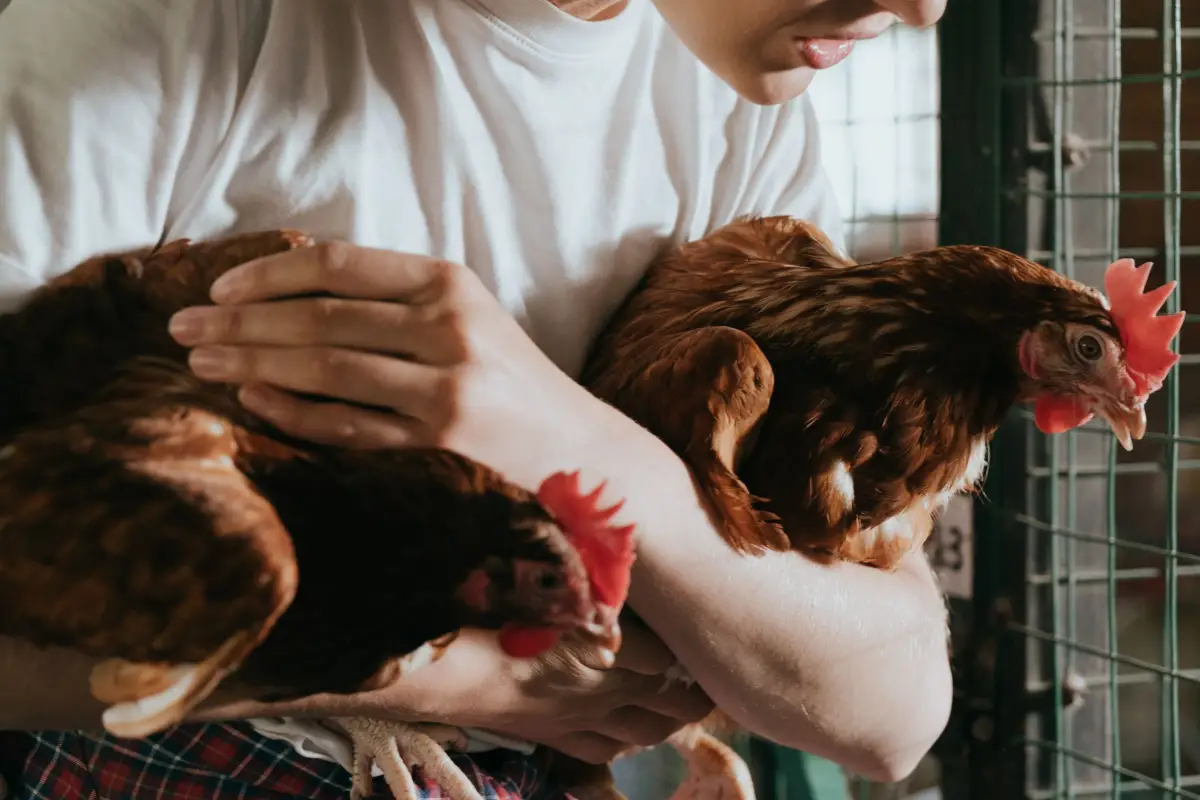
Stand behind and slightly to the side. Slide both hands beneath the body, palms cupping the breast on either side of the keel, thumbs resting lightly over the wings to keep them folded. Lift in one motion and immediately bring the bird against your torso. That contact signals the bird is supported, not falling, and it cuts down the frantic wing beats.
If the bird startles at the first reach, a lightweight towel draped over it triggers a temporary freeze. Work your hands under the towel, find the keel, and lift as described. The darkness alone often drops a bird’s struggle by half.
Loading the Carrier Without a Panic Response
Position the carrier so the bird doesn’t see the opening until it’s time. For a top-loading crate, lower the chicken feet-first, let the toes touch the pad, then release the wing hold while guiding the head clear of the rim. Close the lid quietly — a sharp noise at this point can cancel every calm step before it.
With a side-loading crate, present the bird’s feet to the entrance and guide it in. Pushing a chicken head-first into a dark opening provokes resistance and risks the neck. If the bird freezes at the threshold, back away for ten seconds and let the stillness do the work. Most will walk forward once the outside world stops moving.
Staggered Loading When You’re Moving More Than One Bird
Two birds loaded simultaneously often spiral into collisions, pecking, and trampling. Instead, load the calmer bird first and close the door. Wait five minutes — until the bird sits down or stops vocalizing. Then open the door just enough to add the second bird, feet-first. The presence of a settled companion cuts the newcomer’s alarm dramatically because chickens take behavioral cues from each other.
If there’s any risk of aggression, slip a ventilated cardboard divider into a larger carrier to keep them visually separated while sharing air. That prevents face-to-face conflict without compromising ventilation.
Securing and Covering the Carrier for the Road
Place the carrier on the vehicle floor behind the front passenger seat. That position minimizes side-to-side rocking and keeps the bird out of direct air conditioning or sunlight. Never put a carrier in an open truck bed or directly by a forceful vent; sick birds lose body heat rapidly to drafts.
Cover the carrier with a breathable dark fabric — a dark pillowcase or a double-layer cotton sheet — leaving at least one vent panel uncovered. Plastic traps humidity and should be avoided entirely. A chicken with respiratory compromise cannot afford stagnant, humid air.
Monitoring Breathing and Comb Color During Transit
Every ten minutes, lift a corner of the cover and observe breathing. A resting chicken breathes with beak closed, 12 to 30 breaths per minute. Open-mouth panting, tail bobbing, or neck extension signals respiratory distress. First, confirm vents aren’t blocked and sun isn’t baking the carrier. Then lower the vehicle temperature or direct airflow indirectly toward the carrier. If a damp towel can be draped over an exterior vented spot, that evaporative cooling helps without wetting the bird.
The comb is a vital signs display. A pink or red comb is baseline; a pale comb suggests shock or fear, while a bluish or dark comb warns of circulatory failure or heat stress. When a pale comb appears with steady breathing, simple quiet and darkness often reverse it. A blue-tinged comb with labored breathing requires immediate cooling and a call ahead to the vet.
Unloading So the Exam Starts From Calm
Do not uncover the carrier in the waiting room. The mixture of barking, chemical smells, and fluorescent light can shatter the hard-won calm. Place the covered carrier on a stable exam-room counter and let the vet or technician decide when to open it. Often they prefer to examine the bird while it remains in the bottom half, which is the best possible transition.
If the bird must be lifted out, repeat the scoop technique — no quick grabs, even when you feel pressed for time. Steady hands on the keel signal that the transport isn’t over yet; the bird responds to that consistency.
Checkpoints: How to Know the Protocol Is Working
- After capture: Bird is in your hands, wings pinned, beak closed, not thrashing.
- After loading: Bird sits or stands still inside the carrier; no banging against walls.
- Five minutes into transport: Lifting the cloth reveals eyes blinking slowly, possibly settled onto hocks, comb color normal.
- At the vet: Technician opens the carrier without the bird bursting out; the bird tolerates handling without a frantic escape attempt.
If Something Went Wrong
The Bird Escapes During Capture
Stop and let the darkness work. Crouch low and wait two minutes. The bird will move to a corner and freeze. Use a larger towel this time and avoid grabbing feathers — tail feathers pull out easily and add pain to an already frightened animal. Once covered, use the scoop lift again.
Open-Mouth Breathing or Tail Bobbing in the Carrier
Consider this a respiratory emergency signal. Check the vents, move the carrier out of any heat path, and lower the car temperature if possible. A damp cloth placed over a ventilated side of the carrier cools the air passing through. If the bird doesn’t settle within five minutes, phone the vet and alert them you’re bringing a chicken in respiratory distress.
The Bird Injures Itself While Thrashing
Sudden loud banging means the bird is flailing hard enough to hurt itself. Pull over, and in dim light, open the carrier just enough to assess. A bleeding wing tip or comb usually stops once the immediate pain registers, but be ready for a second flight. Apply gentle pressure with a clean cloth. Don’t attempt to bind a wing against the body; that tends to trigger more explosive movement. Call the vet for guidance before continuing the trip.
Aggression Between Two Birds in the Same Carrier
If you hear squawking and thumping after staggered loading, do not reach bare-handed into a dark carrier. Pull over, cover the carrier fully to create total darkness, and wait two minutes. Then, with minimal light, open the door just enough to slip a piece of cardboard between them as a divider. This usually resolves the conflict. If it doesn’t, separate the birds into individual carriers, even if one is a sturdy cardboard box with cut-out vents.
Frequently Asked Questions
What kind of carrier is best for a chicken?
A plastic cat carrier with top and side openings, or a small dog crate with a solid bottom. Darkness, ventilation, and a non-slip surface are what matter. A wire cage alone is too exposing unless fully draped.
How long can a chicken stay in a carrier?
Two hours total is a reasonable ceiling for a vet visit, including clinic wait time. Chickens do not need food or water on short trips. If the drive exceeds three hours, offer a few drops of water from a syringe at a rest stop, and only if the bird is bright enough to swallow.
Should I put food or water in the carrier?
No. Water spills, chills the bird, and makes ammonia from wet bedding. Food can lodge in the airway during jostling. Hydration is rarely needed for vet trips under two hours; if required, a syringe is the safer route.
Can I transport a chicken in a cardboard box?
A well-made box with large side vents works in a true emergency, but it has limits. Damp droppings weaken it, and ventilation is often marginal. If you must, double the bottom and cut at least four two-inch holes on each long side to ensure airflow.
What’s the safest way to catch a rooster that charges?
A large, thick towel held open as a blind is the most reliable tool. When the rooster lunges, drop the towel over him and then scoop from behind with both hands pinning the wings. A second person makes it easier, but the towel method alone works for nearly any rooster without the handler having to flinch.
After the Vet Visit — What Comes Next
A bird that travels under this protocol arrives at the exam table with a respiratory rate the vet can actually interpret, a body temperature that didn’t skyrocket, and a heart that didn’t race for half an hour on the highway. That baseline matters. The logical next step is to ready a hospital cage — dark, warm, and quiet — so the transition from carrier to recovery space is as gentle as the trip out of the coop.