The Hidden Diet Gaps That Slowly Ruin Egg Quality
An eggshell that dents instead of cracking clean, a yolk that spreads like a thin soup instead of holding a tall dome—these aren’t mystery ailments. They’re the result of gaps in the diet that compound over weeks. The two gaps that cause most of the trouble: calcium isn’t available when the hen builds her shell at night, and the omega-3 levels needed for a sturdy, deeply colored yolk haven’t been met for a long stretch. Disease usually isn’t the culprit. The fix is a supplement schedule that shifts with the hen’s age and production phase.
Here’s what stops the most common flaws fast.
Quick Triage for Failing Egg Quality
- Put oyster shell in a separate hopper, not mixed in the feed. Hens eat it in the late afternoon—exactly when shell formation pulls calcium from the bloodstream.
- Replace 5% of the daily ration with cold-milled flaxseed or chia. That supplies the omega-3s needed for yolk membrane strength and color.
- Confirm the vitamin D3 dose. Hens without ample sunlight need 3,000–4,000 IU per kilogram of feed; without it, calcium never makes it into the shell.
Step-by-Step Troubleshooting for Each Symptom
Thin or Brittle Shells: The Calcium Clock
The shell calcifies during a roughly 20-hour window that peaks at night. If all the calcium comes in the morning feed and gets excreted or stored elsewhere by evening, the hen faces a deficit during the critical hours. Total daily intake can look fine, but timing steals the result.
Check it: Press a thumbnail into the shell near the pointed end. If it gives way with a crinkle rather than a solid snap, the shell structure lacks density. Watch the birds after noon—if they’ve stopped eating the mixed ration by 2 p.m., they aren’t taking in calcium for the nighttime build.
Fix it: Offer oyster shell or limestone grit in a free-choice feeder accessible from midday onward. Shift the main ration’s calcium-to-phosphorus ratio to roughly 12:1 once the flock is past peak production. If shells don’t harden within 10 days, add 0.5% sodium bicarbonate to the water source during the afternoon to improve calcium transport.
Pale or Washed-Out Yolks: The Omega-3 and Pigment Gap
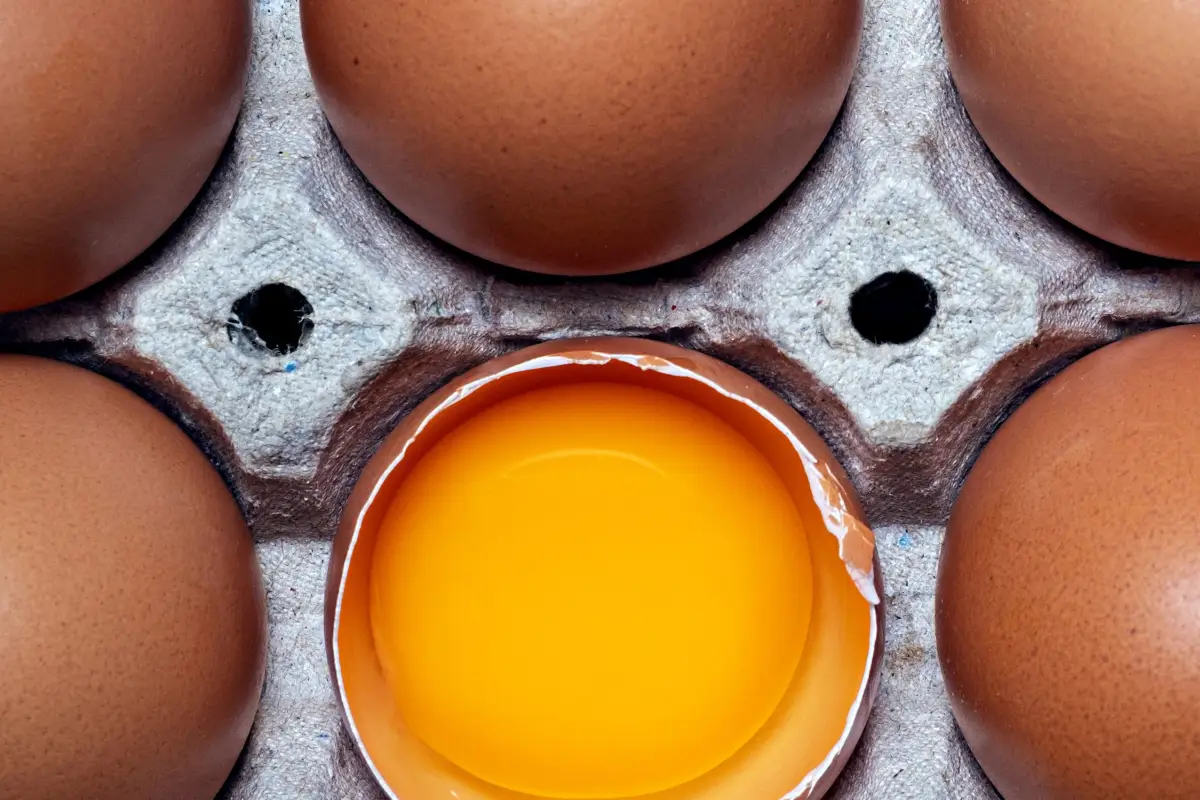
Yolk color depends on plant pigments (xanthophylls) and the structural integrity that omega-3 fats provide. A hen on a corn-soy diet with no green forage loses both. The yolk flattens on cracking and looks washed out.
Check it: Swirl a raw egg in a clear bowl. A sturdy yolk stays mounded; a weak one spreads into a thin disc in seconds. For a number, a DSM YolkFan score below 6 while the yolk sits flat at room temperature signals a clear omega-3 and pigment shortfall.
Fix it: Add 10% alfalfa meal or freeze-dried marigold petals for pigment, and 5% cold-milled flaxseed for omega-3s. Whole flaxseed passes through the bird unused. If the main complaint is yolk breakage, increase flax to 8% and check the feed bin for a sour, paint-like smell—rancid fats destroy antioxidants that protect yolk integrity.
Off-Flavors or Fishy Tastes: The Fat Quality Problem
Grassy, stale-nut, or outright fishy flavors trace back to oxidized fats in the ration. The usual trigger is an omega-3 supplement that went rancid—fish meal stored too long or canola meal past its freshness window.
Check it: Smell a fresh handful of the feed. A sharp, chemical odor signals oxidation. If a neighbor’s eggs on a different ration taste clean while yours don’t, the feed is the source, not the breed.
Fix it: Switch to a stable fat source; cold-pressed flax oil lasts longer at room temperature than fish oil. Supplement with 100 IU of vitamin E per bird per day or 0.02% rosemary extract in the total ration to halt further oxidation. Expect a 4-week lag before the off-flavor fully clears from the yolk.
Rubbery Whites and Watery Albumen: The Protein Profile Shift
When the thick white spreads like water the moment an egg hits the pan, the ovomucin protein network has weakened. This usually shows up in the second laying year as amino acid efficiency drops. Methionine is the first limiting factor.
Check it: Crack an egg onto a flat plate. If the thick albumen band rises only slightly above the yolk—less than the width of a chickpea—the protein supply is slipping.
Fix it: Raise crude protein to 16.5–17% for second-year layers, using fish meal or soybean meal. Target 0.38% methionine in the ration; synthetic DL-methionine or whey corrects it quickly. This is rarely a first-year problem, so skip it if the flock is under 18 months and other symptoms are absent.
Edge Cases That Fool the Standard Fix
Calcium timing is on point and shells still fail? Check the water. Total dissolved solids above 1,000 ppm or saline water blocks calcium metabolism, leaving shells thin and gritty no matter how much oyster shell is offered. A TDS meter on the water source and a switch to filtered or rain water can resolve it within a week.
Moldy feed from damp storage bins introduces mycotoxins—aflatoxin or ochratoxin—that attack the magnum gland. The result isn’t just thin shells; they come out misshapen, ridged, or speckled. Replacing the contaminated batch is the only reliable move. Binders like bentonite clay offer limited help but don’t make the feed safe to keep.
Phased Prevention Schedule from Onset of Lay Through Year Two
A pullet’s nutritional needs at first egg aren’t the same as a hen’s 14 months later. Align supplements to the production stage.
Weeks 18–29 (First Lay to Peak): Calcium demand spikes while the skeleton is still developing. Provide oyster shell free-choice from week 17, even before the first egg. Keep the main feed at 3.8–4.0% calcium and add 1,500 IU vitamin D3 per kilogram. Include 4% flaxseed from the start to prevent yolk weakness before it appears.
Weeks 30–52 (Post-Peak Maintenance): Shell thickness naturally declines. Switch to a coarser limestone grit in the feed to slow overnight calcium release. Increase free-choice oyster shell availability if shell weight drops below 5.5 grams for standard layers. Hold omega-3 at 5% flax; if color fades, add 2% marigold meal.
Year 2 (Molt to Late Lay): Protein and pigment repletion become the biggest challenge as hens divert nutrients to feather regrowth. Boost methionine to 0.40% and increase alfalfa meal to 12%. Watch for off-flavors—older hens process choline differently—so keep fish meal under 3% and rely on flax for omega-3s.
After any ration change, wait at least 14 days before evaluating results. Shell improvements show first; yolk color and taste take a full egg-formation cycle (about 10 days) plus another week to stabilize across the batch.
Frequently Asked Questions
How soon will new supplements fix thin shells?
Free-choice calcium with the correct D3 level firms shells within 7–10 days. The shell forms over nearly a day, so you’ll see gradual thickening, not an instant fix.
Can I feed my hens fish oil instead of flaxseed for darker yolks?
Fish oil supplies longer-chain omega-3s but oxidizes rapidly in warm conditions, giving eggs a fishy taste. Flaxseed provides ALA omega-3s more stably and improves yolk color without that risk.
Why do my yolks look pale in winter even with supplements?
Short daylight reduces green forage intake and vitamin D synthesis, which indirectly affects pigment use. Add a xanthophyll supplement and a UVB light in the coop for consistent color.
Is a calcium-phosphorus imbalance as important as total calcium?
Yes. Phosphorus above 0.45% in the layer ration blocks calcium absorption, leading to thin shells despite adequate calcium intake. Maintain a ratio near 12:1 Ca:P.
What if my egg shells are speckled or ridged, not just thin?
Speckled or ridged shells typically point to magnum gland disruption from mycotoxins, viral infection, or severe stress—not a mineral gap. If more than 5% of eggs are affected and feed replacement doesn’t work, get a veterinary diagnostic evaluation.
When to Escalate Beyond Diet
Most egg quality failures yield to calcium timing, omega-3 correction, and protein adjustments. If a cluster of symptoms persists, consider infectious bronchitis variants that target the shell gland, heavy metal tainted well water, or chronic overcrowding stress that elevates corticosterone and scrambles nutrient use. At that stage, pull pooled blood samples from 5–6 birds for a diagnostic lab serum chemistry panel and a feed mycotoxin screen. A hands-on assessment from an extension poultry specialist often cuts through weeks of guessing when the straightforward levers stop working.