The 6-Week Milestone: When Chicks Are Finally Ready for Outdoors
Chicks can start short, supervised outdoor sessions when their first true feathers push through, usually at 3–4 weeks of age. They are not ready to live outside full‑time until they are fully feathered and can hold their own body temperature—the reliable marker sits at about 6 weeks. A hardening‑off protocol that locks each new exposure to a specific feather‑development milestone stops the guesswork and prevents the stress, chilling, and respiratory illness that hit every year when people move chicks outside too early.
Start Here: Where Your Chicks Are Right Now
- You just received day‑old chicks. Your path is the full timeline: keep them in the brooder through the down‑only phase, introduce first outings when pinfeathers appear, and progress step‑by‑step to a permanent move at 6 weeks.
- Your chicks are already 3–4 weeks old and you want to know if they can go outside today. Skip the calendar and look at the bird. If you see pinfeathers on the wings and shoulders, start the first‑session protocol now.
- Your chicks are close to 6 weeks old but the coop isn’t predator‑proofed yet, or the weather is unpredictable. Use the outdoor‑session protocol to extend the transition safely. The readiness signs in this article tell you when the bird is ready—not the date.
- You live in a cold climate and the “6‑week rule” feels risky. Good instinct. The feather‑development approach works across climates because it focuses on the chick’s own thermoregulation. You may need to stretch the timeline and add overnight checks, but the same milestones hold.
Weeks 1–2: The Brooder‑Only Phase — Building the First Feather Trigger
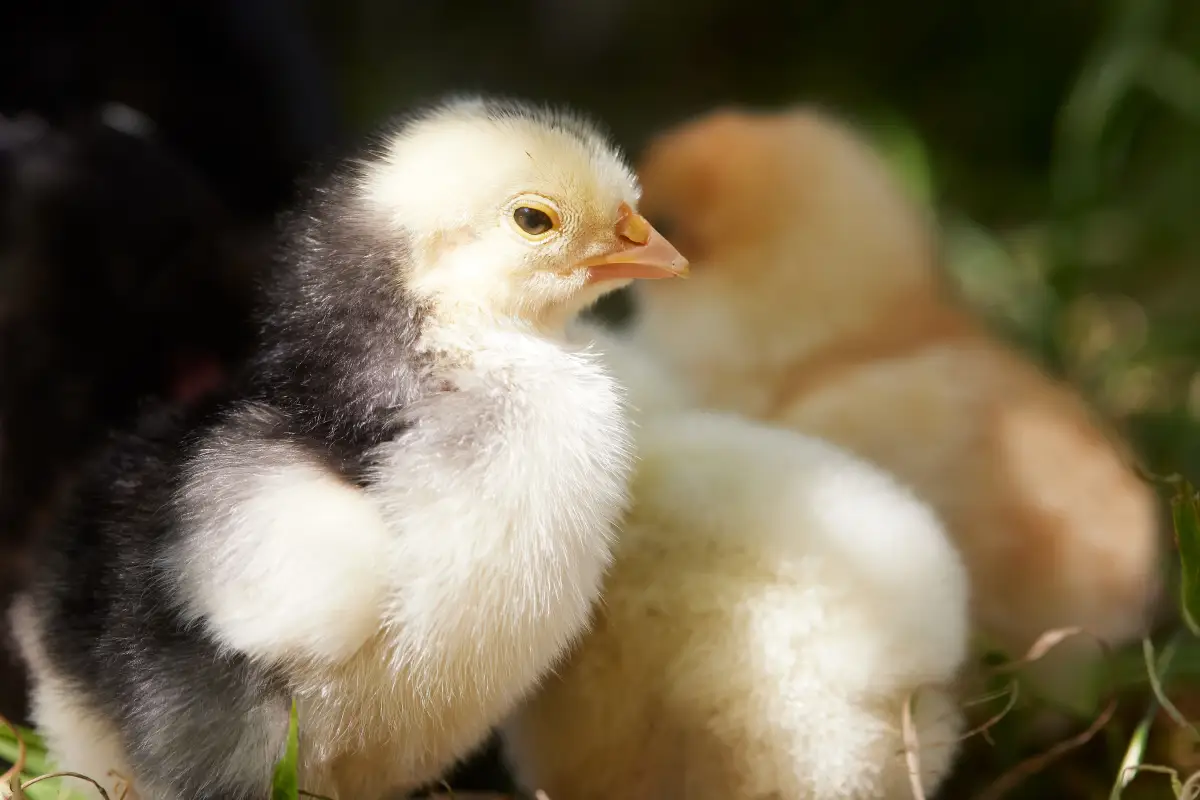
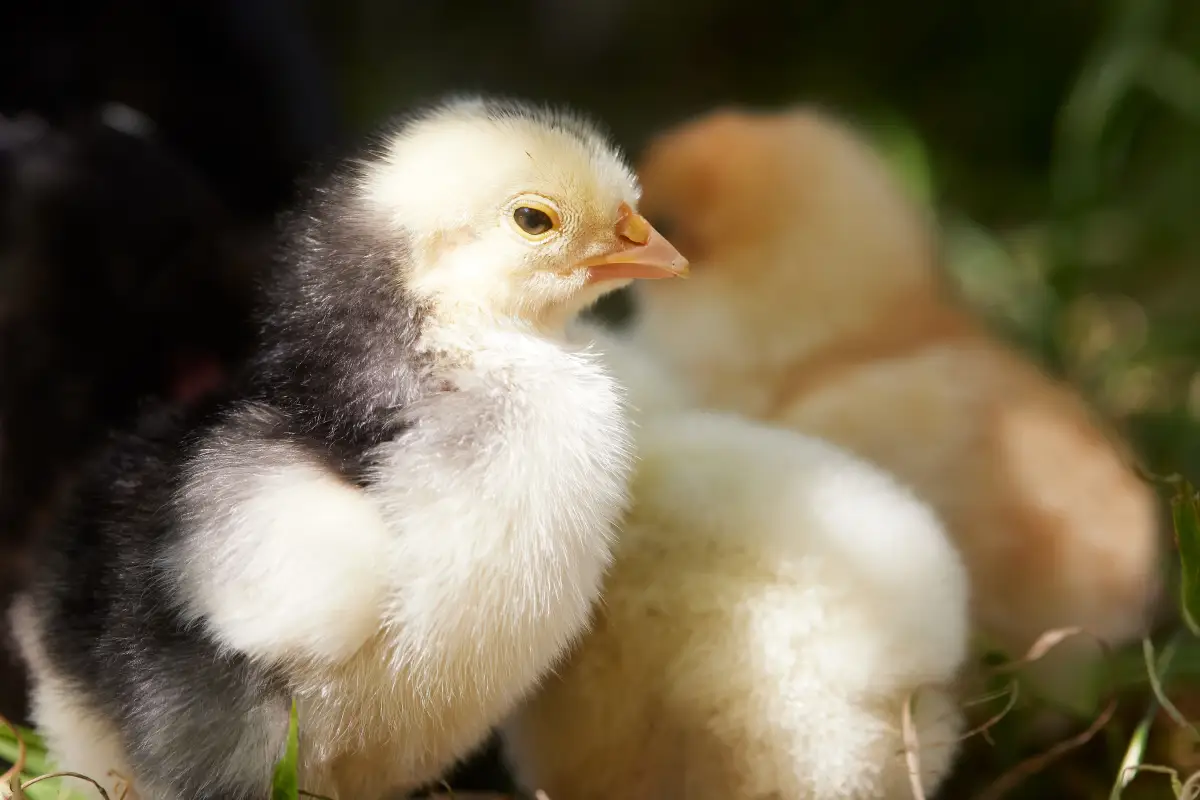
During the first 10–14 days a chick’s covering is down, which insulates poorly and traps no body heat. The goal here is steady growth and the start of feather development, not any outdoor exposure. Keep the brooder environment tight: a warm zone of 90–95°F under the heat source in week 1, reduced by roughly 5°F each week, with a cool end where chicks can self‑regulate. Feed a high‑protein starter (20–24% protein) and clean water at all times.
What to do: Observe the flock daily. Chicks that spread out comfortably under the lamp are warm enough. Piling together signals cold; panting or avoiding the warm zone means too much heat. Adjust the lamp height only when the behavior consistently calls for it.
Ready to move on when pinfeathers are clearly visible—tiny shafts breaking the skin on the wings and shoulders—usually by the end of week 2 or early week 3. That emergence is the first tangible sign that the feather coat is building and thermoregulation is beginning. When you see it, you have the green light to schedule a first outdoor session.
Weeks 3–4: Pinfeathers and First Supervised Outings
Once pinfeathers are present the chick can start holding a small amount of body heat, but it cannot keep itself warm for long in cold or wind. The objective now is to acclimate the chick to outdoor sights, sounds, and temperature swings in short, fully controlled bursts that never push it past what its feathering can handle.
Actions:
- Pick a day with an outdoor temperature of at least 65°F, no wind, and no rain.
- Use a completely enclosed, predator‑proof exercise pen or a portable run with a mesh top, set in a sunny spot that also offers shade.
- Begin with 10–15 minutes of supervision, then return all chicks to the brooder.
- Repeat on subsequent suitable days, adding 10–15 minutes to each session only if the chicks showed no distress during the previous one.
- Skip any day that is cooler, windy, or damp. No harm comes from waiting.
Readiness sign: After several outings, chicks explore the pen actively—scratching, pecking, maybe a dust‑bathe—and do not huddle in a corner, stand rigid, or keep up a constant high‑pitched peep. When you see relaxed, curious behavior through a 30–45‑minute session, it is safe to extend the daytime stay.
Week 5: Longer Outdoor Days and the First Overnight Check
By week 5 feather coverage is substantial: the body, back, and neck are largely feathered, although the head may still be patchy. The aim is to stretch outdoor stays through the whole daytime and to test whether the bird can tolerate outdoor temperatures without heat through one carefully monitored night.
Actions:
- On a mild, dry day (minimum 60°F outdoors), move chicks to the secure outdoor run after the morning feed and leave them there for 5–6 hours, then bring them back to the brooder.
- Reduce the brooder’s night‑time heat output if you have not already; a brooder temperature around 65–70°F is enough by now.
- When overnight lows forecast at least 55°F and the chicks have been active and comfortable during all‑day stays, run a one‑night trial: leave them in a draft‑free, predator‑proof coop or outdoor shelter. Use a radiant heat plate set to a low temperature only if you must; skip the heat lamp.
Readiness sign: Check before dawn. If chicks are up and moving, not huddled with fluffed feathers, and eat normally at first light, they passed the overnight check. Huddling, lethargy, or puffed‑up posture means they need the brooder at night for another week, or until weather improves.
Week 6 and Beyond: Making the Permanent Move
At six weeks, most breeds raised under average conditions are fully feathered and can maintain body temperature as long as overnight lows do not dip consistently below 50°F. The permanent move is a decision tied to bird behavior and the forecast, not a calendar date.
Actions:
- Review the five‑day forecast: overnight lows above 50°F, no prolonged rain or strong wind.
- Move the chicks to the permanent coop after a final day‑long outdoor stay that looked trouble‑free.
- Check on them after dark and again at first light. Calm, spread‑out sleeping means the transition is complete.
- In a cold climate where night‑time lows stay below 45°F, it is reasonable to wait until week 7 or 8, or to provide a safe radiant heat plate until the birds stop using it.
Readiness sign: Chicks sleep quiet and loose in the coop at night, are active and foraging within minutes of sunrise, and show no piling, shivering, or distress calling. Repeat that pattern over two or three nights, and the hardening‑off protocol has done its job.
Readiness Signs Recap: When to Advance
- Weeks 1→2: Pinfeathers visible on wings and shoulders → schedule the first outdoor session.
- Weeks 3→4: Calm exploration, no huddling or loud peeping during 30–45‑minute sessions → extend daytime outdoor time.
- Week 5: After an overnight trial, chicks are up and active at dawn, no cold‑stress signs → all‑day outdoor stays are safe; prepare for permanent night.
- Week 6+: Two or three quiet nights in the coop, scattered sleeping, no piling → permanent move is finished.
What to Ignore Right Now (Deferred Concerns)
- Introducing chicks to adult birds. This is not part of hardening off and risks injury if chicks are much smaller. Delay until 8–10 weeks and use a “see but don’t touch” integration pen first.
- Completing a fully weatherproof coop before chicks ever step outside. The priority now is a predator‑proof run and basic shelter. Weatherproofing for your climate becomes relevant when the birds stay out overnight permanently—after the 6‑week milestone.
- Electrolytes and supplements during the first outdoor sessions. Unless chicks show clear heat‑stress signs, plain water and starter feed cover their needs. Over‑supplementing can reduce water intake. Reserve electrolytes for a specific stress spike, like a long transport or a sudden heat wave during a session.
- Worming and external parasite treatment. The hardening‑off window involves too little pasture time for a significant parasite load to build. Parasite management becomes relevant after permanent outdoor housing, usually around 8 weeks, and should be guided by a fecal exam, not a calendar.
Legitimate Accelerators
A few situations can safely shorten the timeline:
- A broody hen raising chicks. The hen supplies body heat, calls the chicks under her when needed, and gradually weans them. Chicks under a broody hen often explore outside for short bursts as early as 2–3 weeks and can integrate into the flock sooner, provided the area is safe.
- An outdoor brooder with a radiant heat plate. Placing a heated hover or plate inside the coop from day one lets chicks self‑regulate exposure to outdoor air while always having a heat refuge. This setup can cut a week or more off the hardening‑off period because chicks build cold tolerance faster while retaining a heat source.
- Warm, stable climates with nighttime lows above 55°F from the start. Here the temperature gap between indoors and outdoors is small, so the protocol often completes closer to 5 weeks. Feather‑development milestones still apply; the temperature‑driven obstacles are simply lower.
Frequently Asked Questions
Can chicks go outside at 4 weeks if they are feathered?
Yes—for short, supervised sessions when the body and wings are well feathered and the outdoor temperature stays above 65°F. But they cannot stay outside overnight or for hours at a time. At 4 weeks the belly often remains bare, and that patch loses heat fast when they stop moving.
What outdoor temperature is safe for 6‑week‑old chicks?
A fully feathered 6‑week‑old chick can handle nighttime lows down to about 50°F without extra heat if the coop is dry and draft‑free. If lows dip into the 40s, add a radiant heat plate or move them back to the brooder at night, especially for bantam or smaller breeds.
Do I need to harden off chicks if it’s summer?
Yes—the feather milestones still gate the overnight stay. Summer shortens the process because mild air lets you run longer sessions from the start, but the chick still needs full feather coverage before it can stay outside all night.
What if a cold snap hits right when I plan to move them permanently?
Postpone the move. A fully hardened chick can handle a mild dip, but a sudden plunge below 40°F is a real risk. Wait until the forecast stabilizes and nighttime lows return to the bird’s proven comfort range.
The End Goal
A fully feathered, acclimated flock that sleeps quietly in the coop at night and forages actively during the day—no supplemental heat, no stress signals, no second‑guessing. For the most common starting point—day‑old chicks in a brooder—the first concrete action is to watch for the first true feathers and, on the next calm, warm day after they appear, open the run for 15 minutes.