Stop Ignoring These 5 Early Signs Your Chicken Is Sick
Five early signs show up before a chicken looks sick: a bird that keeps to itself, a comb that fades from red to pale pink, droppings that turn watery, a refusal to eat or drink, and a quiet sneeze. Act when you see them—don’t wait. This decision tree spells out exactly when to isolate.
Spotting one sign is not enough. Combine signs into clusters: if a bird is isolating and its comb is pale, that’s two signs—isolate without delay. This guide sorts what you observe into clear go/no-go actions, so you stop guessing and start problem-solving.
Why Subtle Signs Demand Immediate Sorting
Chickens hide weakness. A bird that looks “off” is already compensating for a problem. The root cause is usually an early infection—bacterial, viral, or parasitic—that will progress without intervention. Nutritional gaps and environmental stress can mimic the same picture. Recognizing these signs early is your advantage; the decision tree keeps you from hesitating.
Act Now: The Isolation Quick-Start
When you see one of the five signs, move through these steps immediately.
- Separate the bird into a clean quarantine pen with a heat lamp. A dog crate with wood shavings works. Keep it draft-free and away from the flock.
- Offer warm water with poultry electrolytes and a small dish of moistened feed. Do not force feed.
- Record the sign you observed and check for additional signs every hour for two hours. If a second sign appears or the bird worsens, call a poultry vet.
Breaking Down Each Sign—And the Exact Isolate Trigger
Use this rule: one sign means watch closely and prepare to isolate if no improvement within hours. Any two signs together means isolate now. Each sign below gets its own decision point.
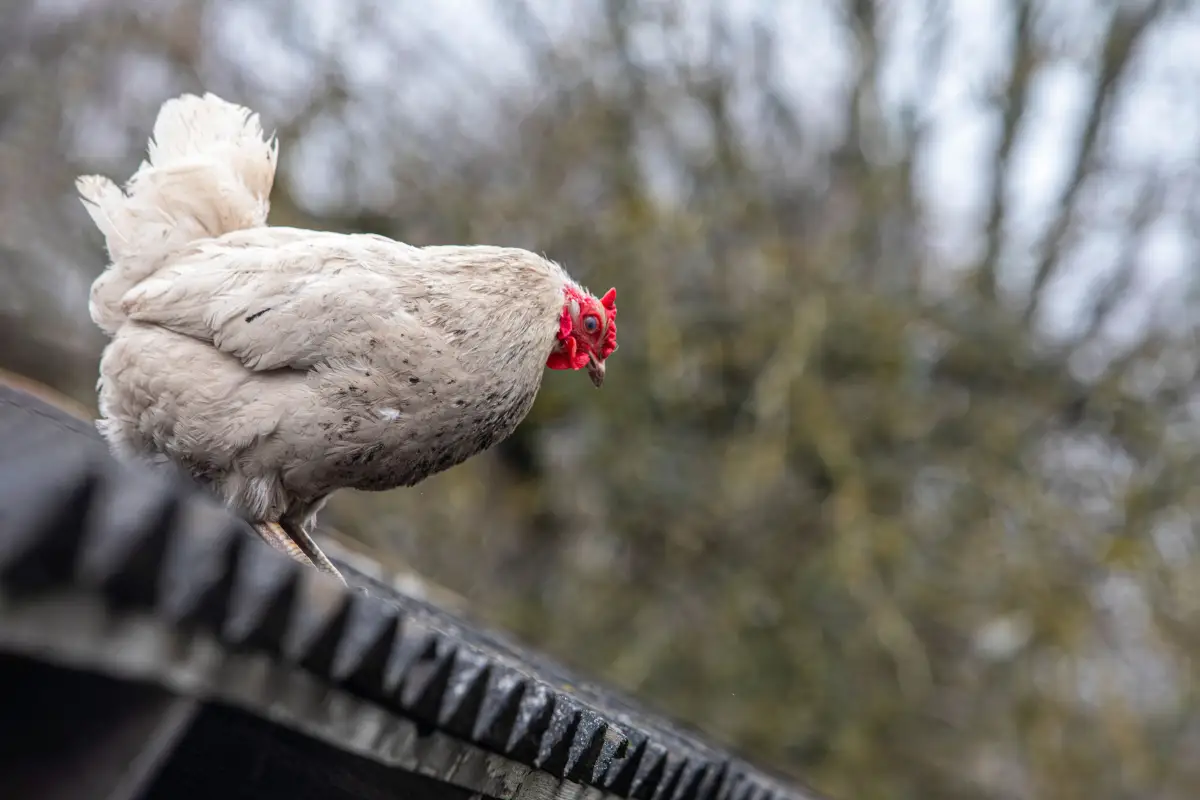
A Bird That Stands Apart From the Flock
What it means: A bird that stays away from the group is conserving energy. Infection, parasites, or egg-binding are common causes.
How to confirm: Offer scratch grains. A bird that won’t come over even for treats is deliberately isolating.
Action:
- Isolate if this is the second sign. If it’s the only sign, move the bird to a quiet pen and offer high-value treats.
- Check the vent for an egg if she is a hen that has been on the nest.
- If isolation lasts more than 4 hours with no improvement, treat as a sick bird and implement full quarantine.
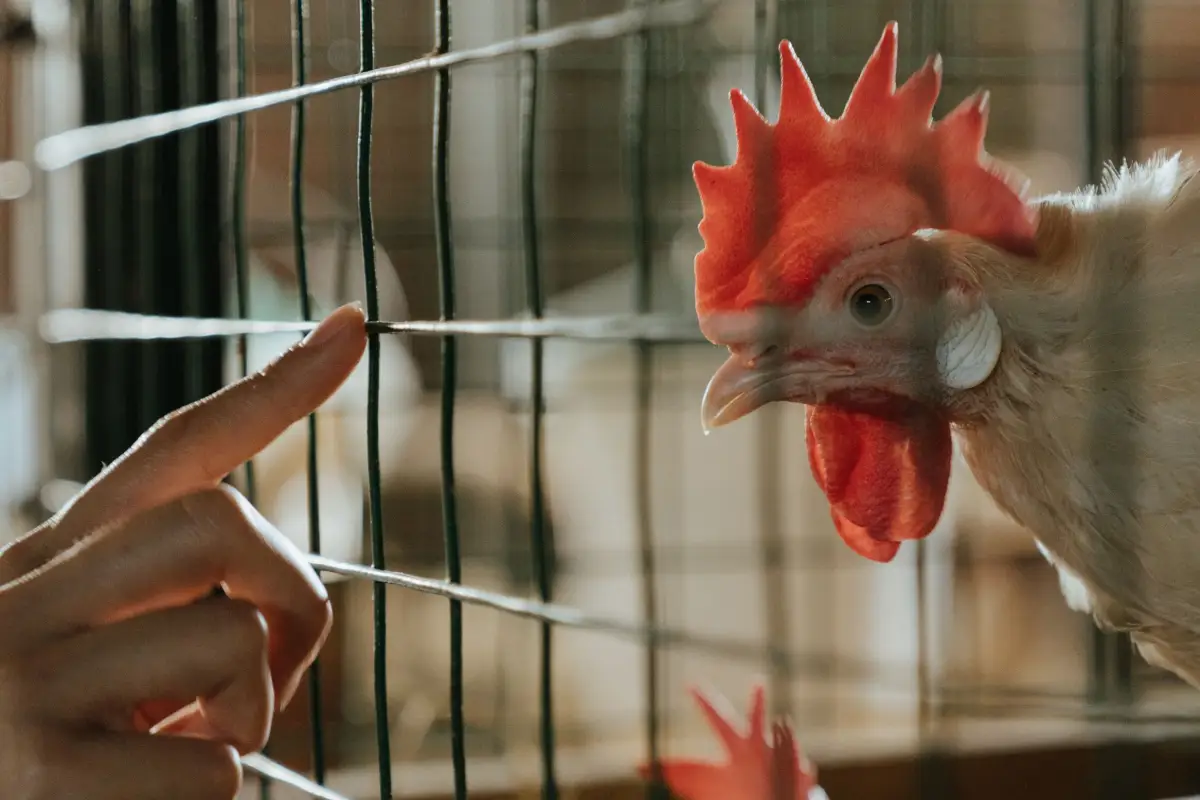
A Comb That Goes Pale, Shriveled, or Dull
What it means: Good circulation keeps a comb red. Dehydration, anemia from mites or worms, and early circulatory failure drain color. A shriveled comb can also accompany a laying slowdown.
How to confirm: Compare the comb to three healthy birds. Pale pink, smaller size, or dry texture signals a problem.
Action:
- Check for mites around the vent and feather bases. If found, treat the whole flock with permethrin dust.
- Give electrolytes immediately—a dehydrated bird can fade fast.
- If the comb is pale AND the bird is isolating, isolate and monitor. A pale comb on an active hen may be temporary, but don’t dismiss it if it persists.
A Sudden Change in Droppings
What it means: Watery, green, yellow, or blood-tinged droppings can point to coccidiosis, enteritis, worms, or toxic plants.
How to confirm: Put paper towels under the roost overnight and check in the morning. If several birds show the same change, the cause is environmental.
Action:
- Isolate immediately if droppings are watery AND the bird is isolating or pale. Two signs trigger action.
- If droppings are the only sign, pull free-range access for 24 hours and feed only plain ration. Dietary mistakes often self-correct.
- If runny droppings persist past 48 hours, take a fresh sample to a vet for a fecal float.
Refusing Feed and Water
What it means: A bird that won’t eat or drink may have crop impaction, sour crop, oral lesions, or a systemic illness.
How to confirm: Feel the crop first thing in the morning. It should be empty. Hard and full signals impaction; squishy and fluid-filled signals sour crop. Look inside the beak for plaques.
Action:
- Isolate if reduced intake appears with any other sign. A bird that stops eating is crashing.
- For impaction, gently massage the crop and give a few drops of olive oil; withhold solid food for 12 hours. If it doesn’t clear, seek veterinary help.
- A bird that drinks excessively but doesn’t eat needs electrolytes and a diagnosis.
Quiet Respiratory Signs: Sneezing, Rales, Tail Bobbing
What it means: An occasional sneeze or faint click may be dust, but tail bobbing means labored breathing. Infectious bronchitis, Mycoplasma, and ILT start with these subtle sounds.
How to confirm: Listen inside the coop at night. A soft, repeated click or wet sound is not dust. Tail bobbing is a clear sign of respiratory effort.
Action:
- Isolate immediately if respiratory signs appear with any other early sign. Respiratory diseases spread fast.
- Increase coop ventilation and reduce dust.
- Do not start antibiotics without a vet’s swab and culture. Support with warmth, electrolytes, and soft feed in the meantime.
When Two Signs Collide: Recognizing Disease Patterns
Some clusters demand targeted action—don’t treat these like single-sign events.
- Isolation + watery, bloody droppings: Coccidiosis. Treat all birds with amprolium in the water.
- Pale comb + lethargy + weight loss in a young bird: Marek’s disease. No cure; isolate permanently and consider testing.
- Respiratory sounds + swollen face or eyes: Mycoplasma or Coryza. Requires veterinary antibiotics and strict biosecurity; birds become carriers.
- Reduced appetite + pasty vent + huddling: Coccidiosis or enteritis in chicks; add a heat source and medicated feed.
When you hit a cluster, skip the “watch and wait.” Isolate, get a diagnosis, and treat.
Preventive Husbandry That Keeps Early Signs From Appearing
Prevention is the shortest path to a healthy flock.
- Quarantine new birds for 30 days with separate equipment.
- Feed a complete ration for the bird’s age; kitchen scraps are treats, not diet.
- Keep the coop dry, ventilated, and ammonia-free.
- Deworm based on fecal egg counts, not a calendar. Overuse breeds resistance.
- Vaccinate for Marek’s at hatch.
Frequently Asked Questions
Can a chicken recover without treatment? Sometimes, if the cause is mild stress or a short feed disruption. But if no improvement happens in 24 hours, the bird’s condition can deteriorate quickly. Isolate and support to be safe.
How long do I isolate a bird with only one sign? Isolate for 24 hours with supportive care. If the sign disappears and the bird is active, return it. If a second sign appears, extend isolation and contact a vet.
What if I can’t afford a vet? Control what you can: clean quarantine, warmth, electrolytes, parasite treatment, and safe feed. Many issues resolve with that. But a bird that refuses all food and water for 24 hours needs professional help or humane euthanasia.
Is it safe to eat eggs from a chicken showing early signs? Wash eggs thoroughly. Eggs from a bird with mild digestive upset are generally safe if cooked. Discard eggs from any bird on medication unless the withdrawal time has passed.
When Home Care Isn’t Enough
If the bird does not eat on its own after 48 hours of isolation and supportive care, or develops neurological signs (head tilt, circling), you are past what home treatment can fix. Contact a poultry veterinarian or your state diagnostic lab. A necropsy on a bird that dies can give you the information needed to protect the rest of the flock—often the fastest way to stop an outbreak.