Backyard Chicken Nutrition: Extension-Approved Feeding Guide
The right chicken feed is not a universal formula. It begins with a single question: what are your birds producing at this moment? Egg synthesis, feather growth, and body maintenance pull different nutrients from the diet. This guide lays out a decision sequence—built from extension research—that connects production goals, forage access, and life stage to the feed that fits. Instead of static nutrient percentages, you get five branch points that steer you toward a precise match for your flock’s current condition.
The Three Forces That Shape Feed Decisions
Feed choice sits at the intersection of three variables: the bird’s metabolic demand, the environment’s nutritional contribution, and the feed’s composition. Ignore one, and you get either overpriced feed or underperforming birds.
Metabolic demand is the foundation. A hen laying an egg draws calcium and protein differently than a chick building bone or a rooster maintaining condition. The environment—forage quality, insect loads, kitchen scraps—can supply some of these but not consistently. Feed then becomes the tool to close the gap between what the bird needs and what the environment actually delivers. The decision tree’s purpose is to measure that gap and choose a commercial feed that fills it, then fine-tune with supplements.
What Is Your Flock Producing Right Now?
The first branch is production output. Eggs, meat, growth, or maintenance each demand a different nutrient profile.
Egg production calls for a layer ration—16–18% protein and 3.5–4% calcium. That high calcium builds eggshells and is the reason layer feed must never go to chicks or roosters. Excess dietary calcium damages kidneys in non-laying birds over time.
Meat birds (Cornish Cross or fast-growing hybrids) require 20–24% protein throughout the grow-out phase to support rapid muscle accumulation. Dual-purpose breeds being raised for both meat and eggs will move from a high-protein grower to a layer-type feed at point of lay.
Mixed flocks—layers plus roosters, pullets not yet in production, or bantams—create a conflict. Layers need high calcium; non-layers cannot tolerate it. The standard extension advice is to feed an all-flock ration (18–20% protein, about 1% calcium) and provide a separate free-choice oyster shell station. Birds will self-regulate calcium intake.
How Much Is the Environment Contributing?
Forage, insects, and table scraps add nutrients, but the amount is unpredictable. In peak insect season, a free-ranging bird can cover a noticeable share of its protein needs from bugs. In winter or on a packed-dirt run, that contribution drops to near zero.
Extension fact sheets treat environmental input as a bonus, never a substitute for a complete feed. When calculating how much bagged feed to offer, assume your base diet must meet all requirements. Monitor eggshell quality and body condition—thin shells or weight loss signal that environmental contributions are insufficient, and the base ration or calcium supplement must increase.
Choosing a Feed Format That Fits the Life Stage
Feeds are formulated for specific growth phases. Switching at the wrong time causes preventable development problems.
- Starter (0–6/8 weeks): 18–20% protein, crumble texture. Needed for rapid tissue and feather growth.
- Grower (6/8 weeks to point of lay): 16–18% protein, pellets or crumbles. Protein steps down as growth slows but skeletal development continues.
- Layer (from first egg onward): 16–18% protein with 3.5–4% calcium. Initiate at around 18 weeks—not earlier. Penn State Extension warns that early layer feeding can interfere with bone maturation.
- All-flock / flock raiser: 18–20% protein, low calcium (about 1%). The safest default for mixed-age flocks when paired with separate calcium for layers.
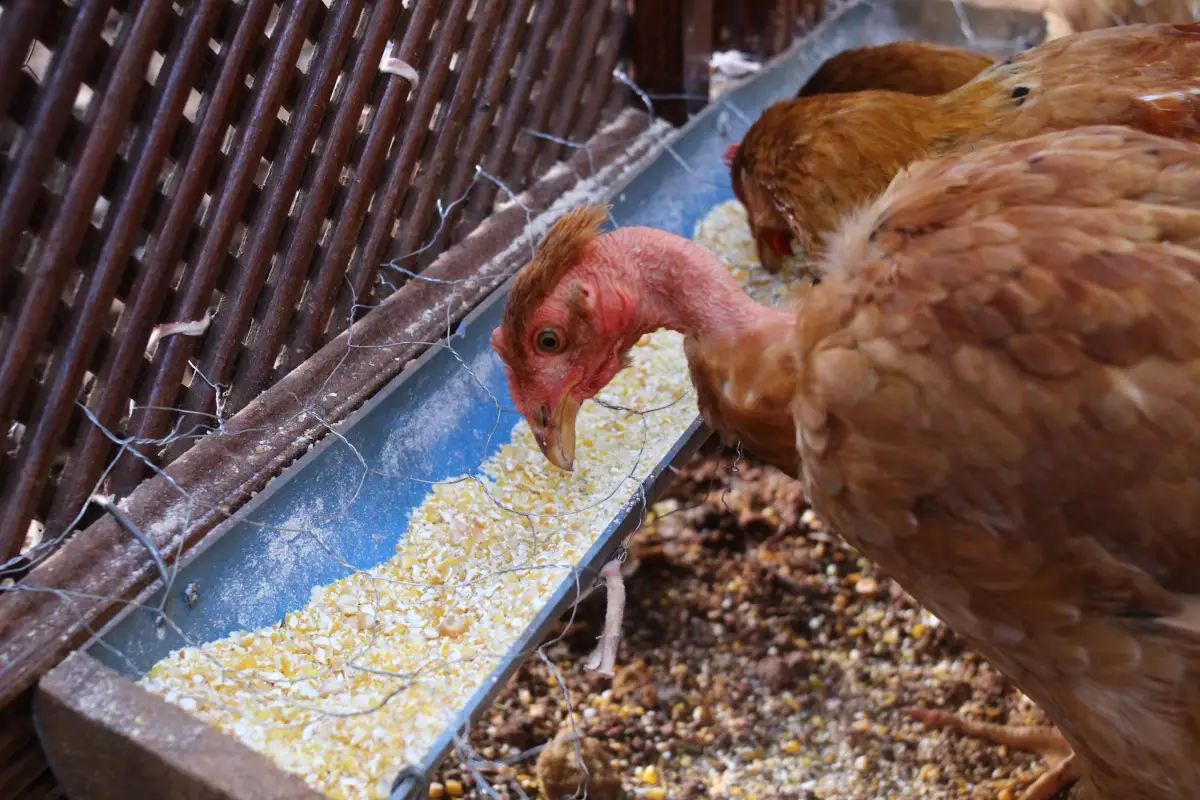
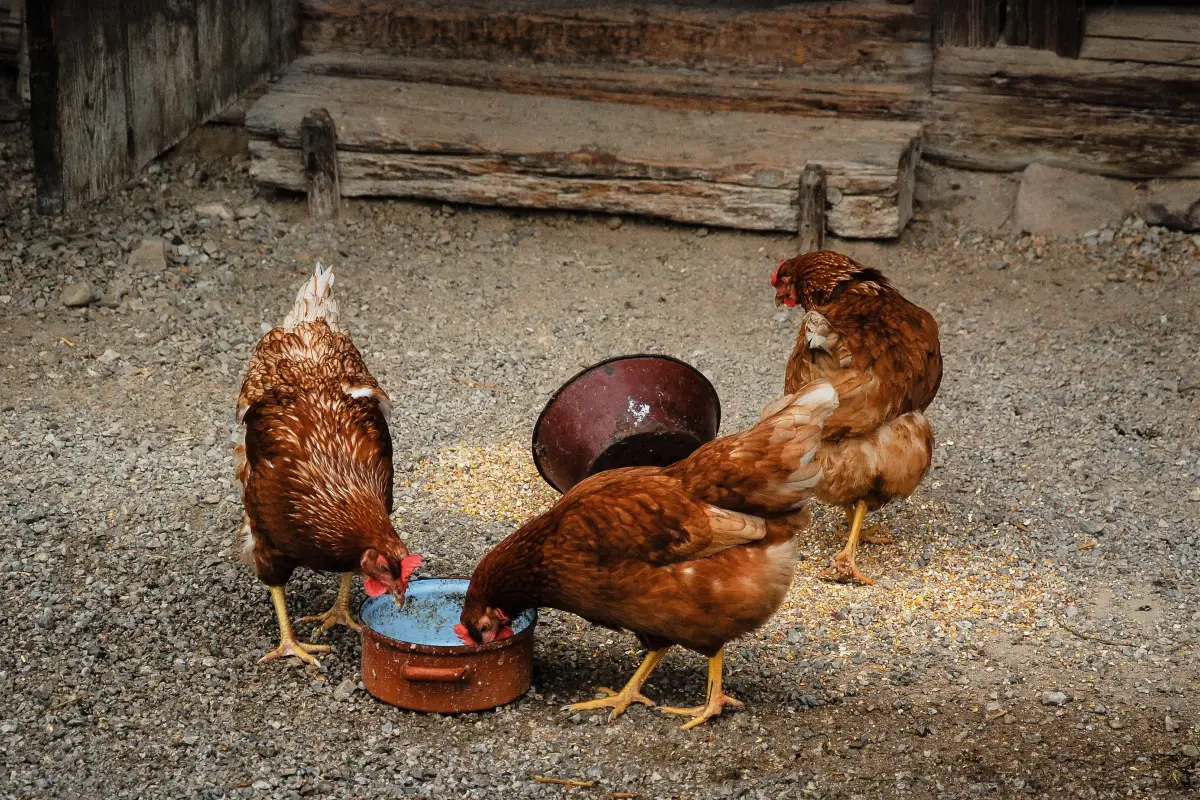
Feed form also affects intake. Pellets reduce sorting and waste; crumbles are easy for young birds; mash requires careful management. For most backyard operations, pellets or crumbles give the most consistent consumption.
Closing the Nutrient Gaps with Targeted Supplements
Two supplements have near-universal backing from extension guidance: calcium and grit.
Calcium: Layers need 3.5–4% in the total diet. If the base feed provides less—as with all-flock formulas—free-choice oyster shell or limestone chips fill the gap. The University of Minnesota Extension notes that individual intake varies, so offering it separately lets each hen consume according to her demand.
Insoluble grit: Birds without access to small stones need supplemental grit to grind feed in the gizzard. Crushed granite or similar, in a separate hopper, serves that function. Do not substitute soluble grit (oyster shell) for insoluble grit—it dissolves and acts as calcium, not a grinding agent.
Vitamins, electrolytes, and omega-3 boosters are niche add-ons, not staples. Use electrolytes during heat stress or recovery from illness; add omega-3 sources only if you are specifically targeting yolk enrichment.
Adjusting for Stress, Season, and Health Events
Nutritional demands shift with molt, temperature, and health. The decision tree must react.
Molt: Feather regrowth is protein-intensive. Temporarily increase protein to 20–22% by switching to a grower or all-flock feed for 6–8 weeks. Return to layer feed after the molt completes.
Heat stress: Carbohydrate digestion generates metabolic heat. Scratch grains amplify that load. During heat waves, withhold scratch entirely and offer feed during the cooler morning and evening hours. Plenty of cool water is mandatory; electrolytes are an option only in extreme, prolonged heat.
Cold weather: Birds need extra energy to maintain body temperature. A small evening ration of cracked corn—a tablespoon per bird at most—provides overnight thermal fuel. Do not replace the base feed with corn.
Illness or parasites: Health challenges raise protein and micronutrient demands. A temporary upgrade to a higher-protein feed (like a grower) supports recovery until the flock stabilizes.
How a Suburban Layer Flock Runs Through the Decision Path
A typical backyard scenario: six laying hens in a 200-square-foot run with partial grass, Pacific Northwest climate. The keeper wants steady eggs.
Run the tree:
- Production goal is eggs, so the feed candidate is a layer ration.
- Forage contribution is modest—insects in summer, almost none in winter. The environment is a bonus, not a reliable nutrient source.
- All birds are adult layers, so the feed type holds.
- A 16% protein, 3.5% calcium layer pellet is selected. Because individual calcium intake varies, a free-choice oyster shell hopper is added. Insoluble grit is supplied since the run’s stone access is limited.
- Seasonal adjustments: in winter, a tablespoon of cracked corn per bird at dusk; during molt, a switch to 20% protein all-flock feed for eight weeks.
This path sidesteps the most common errors: fixed year-round feed, guessing on calcium, and ignoring seasonal stress.
The Three Most Common Feed Decisions That Backfire
Layer Feed in a Mixed Flock Creates Kidney Risk
Layer rations carry 3.5–4% calcium, while roosters, pullets, and chicks need roughly 1%. Chronic oversupply leads to kidney damage and early mortality. The solution is an all-flock feed plus a separate calcium source—no exceptions.
Counting on Forage to Replace Bag Feed
A yard with grass and bugs is not a complete diet. Reducing or eliminating commercial feed because “they have plenty to forage” causes protein deficiency, thin shells, feather pecking, and production crashes. The rule: keep a full-feeding of balanced ration at all times and treat forage as the extra.
Feeding One Feed Year-Round, Ignoring Molt and Temperature
Molt is a nutritional event; without additional protein, hens take far longer to refeather and resume laying. Scratch grains in a heat wave compound thermal stress, while a lack of extra energy in bitter cold drives weight loss. The feed that worked in April may be wrong by September.
Feed Decision Reference Table
| Decision Point | Goal | Key Action |
|---|---|---|
| Production Priority | Identify primary output | Choose feed type: layer, grower, or all-flock |
| Forage Contribution | Assess environmental intake | Maintain complete base feed; adjust supplements if needed |
| Life Stage | Match age and development | Switch from starter to grower to layer on schedule |
| Nutrient Gaps | Supply missing calcium and grit | Provide free-choice oyster shell and insoluble grit |
| Seasonal Stress | Adapt to molt, heat, or cold | Boost protein during molt, reduce scratch in heat, add energy in winter |
Frequently Asked Questions About Backyard Chicken Feeding
Can I feed my chickens kitchen scraps instead of commercial feed?
Scraps are a supplement, not a replacement. They rarely provide balanced protein and calcium. Limit scraps to 10% or less of daily intake to avoid deficiencies.
What’s the difference between layer feed and all-flock feed?
Layer feed is high in calcium (3.5–4%) and moderate in protein for eggshell formation. All-flock feed is lower in calcium (about 1%) and higher in protein (18–20%), making it safe for all ages and sexes. If you use all-flock, you must supply a separate calcium source for layers.
Do I need to give my chickens grit if they free-range?
Free-ranging birds often ingest small stones, but providing insoluble grit separately ensures reliable digestion—especially in confined runs or during frozen ground conditions.
How can I tell if my feed is providing enough calcium?
Thin or soft eggshells are the primary symptom. Address it by offering free-choice oyster shell and verifying the layer feed label shows at least 3.5% calcium.
Can chickens live on scratch grains alone?
No. Scratch is high-carb, low-protein, and vitamin-deficient. It’s a treat, not a diet. Long-term scratch feeding leads to obesity and egg production decline.
What to Do Next
Chicken nutrition is a live decision loop, not a fixed formula. Start with your flock’s current production goal. Match the feed to the life stage, account for environment and seasonal stressors, and keep calcium and grit available. The most actionable tool is observation: thin shells, slow laying, or dull feathers tell you a decision point needs revisiting. Today, check your feed bag against the job your birds are actually doing.