3 Seasonal Feed Adjustments for Better Eggs and Flock Health
Three targeted feed shifts—a molt‑time protein jump, a pre‑winter energy load, and summer electrolyte management—keep hens laying and healthy through the year’s stress points. This month‑by‑month cheat sheet shows exactly when to start each shift, what to add, and when to return to baseline. The timing matters as much as the feed itself; starting a high‑protein ration three weeks too late can extend a hard molt by a month, while pushing electrolytes before daytime highs cross 85°F can do more harm than good. Use the windows below to move from reactive scrambling to a steady seasonal rhythm—and to give your flock the kind of consistent care that a well‑read calendar makes possible.
Which Feeding Shift Matches Your Flock Right Now?
- Feathers everywhere, eggs nearly gone (late‑summer molt): Your girls are funneling every gram of protein into new plumage. Jump to the Late‑Summer Protein Ramp for the exact four‑week window that cuts molt recovery in half.
- Nights are dropping into the 30s and you’re burning through feed: They’re not eating more for fun—they’re shivering away calories. Head to the Pre‑Winter Energy Load to see when to switch from layer pellets to a higher‑fat, higher‑carb winter blend.
- First heat wave hit and eggshells are suddenly paper‑thin: Heat stress is robbing them of calcium and electrolyte balance. The Mid‑Spring Electrolyte Shift map gives a seven‑day rebalancing protocol.
- You want the whole calendar before the year runs away from you: Start with the Late‑Summer Protein Ramp and work through winter and summer in order—the sections are written to follow the natural flock year.
Late‑Summer Protein Ramp for Molting Hens: August–October
The annual molt is the single biggest nutritional drain on a laying hen. Feathers are 85–90% protein, mostly keratin. A hen replacing her entire coat while still producing eggs—if she does at all—can slip into a negative nitrogen balance within two weeks. The intervention isn’t complicated: raise total dietary crude protein to 18–22% for three to five weeks, starting the day you see the first flight feathers on the coop floor. Catching that moment early is one of the most reliable ways to ease a hen through the molt with less stress and faster recovery.
Exact Timing Window
- Start trigger: When two or more hens show bare patches or you sweep up a small fistful of feathers, not just a stray few.
- Month range: Late August through mid‑October across most of the U.S.; shift earlier for older flocks or heavy layers like Leghorns that molt hard.
- Stop trigger: When pinfeathers on the neck and back have fully unfurled and the flock has returned to 80% of pre‑molt lay.
What to Feed
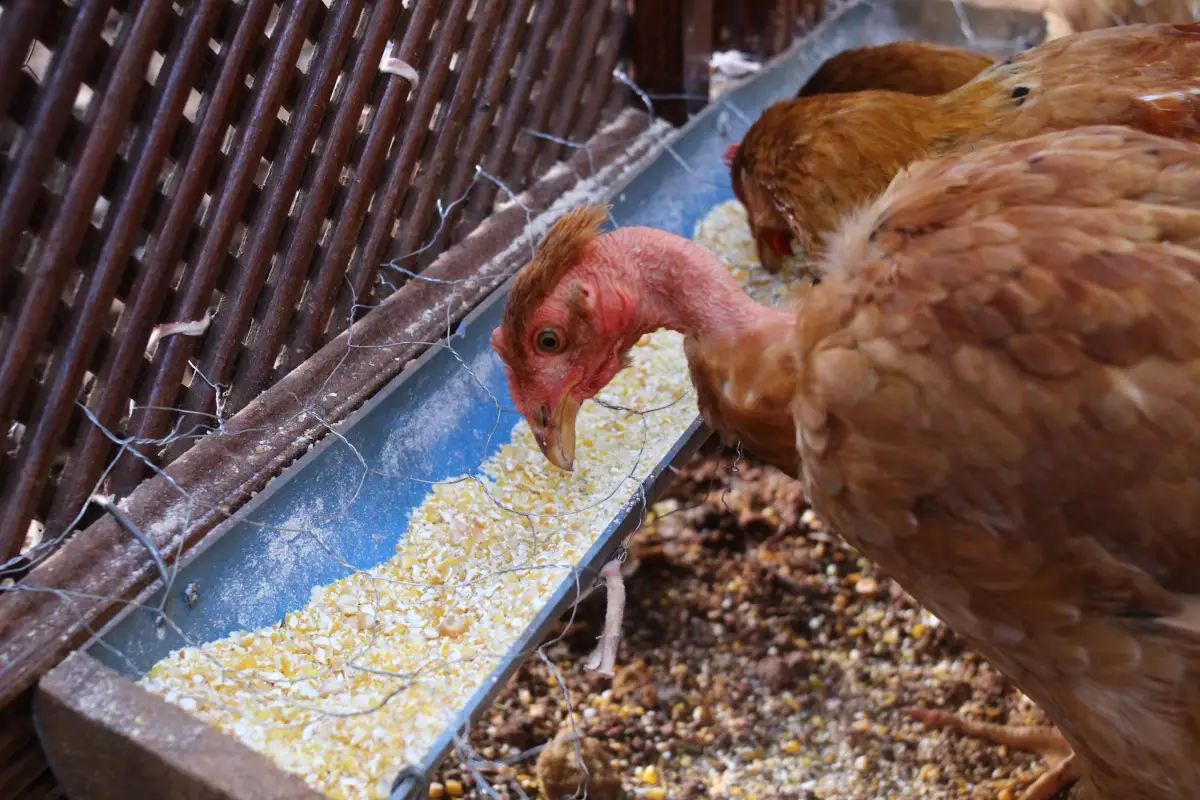
Swap the standard 16% layer feed for a 20% game‑bird starter or a blend that hits 20% protein without pushing calcium above 2.5% (excess calcium during molt can stress kidneys). In small flocks, keep layer feed as the base and add a measured portion of high‑protein supplement: black soldier fly larvae (35–50% protein), dried fish meal (60%), or lightly cooked organic soybeans. A free‑choice dish of these alongside the regular feeder allows each hen to self‑regulate while you watch intake. This self‑selection respects the fact that not every hen hits the molt at the same intensity—some will need more, some less, and they usually get it right if given the chance.
Observable Sign You’re Ready to Move On
New feathers cover the back completely, no skin visible, and egg production climbs for five consecutive days before you gradually taper back to layer feed over one week. That steady taper prevents a sudden production drop from a rapid protein reduction.
Pre‑Winter Energy Load for Cold Nights: November–February
Cold snaps demand more metabolizable energy—a 20°F drop below 32°F can raise maintenance calorie needs by 25%. The goal isn’t to fatten the flock but to shift the diet’s energy density just enough that they maintain body condition without stripping fat reserves. Starting too early (September) just adds excess weight; starting too late (December after the first hard freeze) means they spend two weeks playing catch‑up with shivering. The birds know what they need; your job is to put the right energy in front of them at the right moment.
Exact Timing Window
- Start trigger: Overnight lows forecast to stay below 35°F for more than three consecutive nights.
- Month range: November through February for most temperate zones; may shift to October for the upper Midwest or northern New England.
- Stop trigger: After the last hard frost, when daytime highs consistently top 50°F and the ground is workable again.
What to Feed
Keep the base layer ration but increase the fat content through whole grains. Offer cracked corn as a scratch grain (7–8% fat vs. 4% in most layer pellets) fed in the late afternoon so the thermic effect of digestion generates warmth through the night. Add a small amount of black oil sunflower seeds (40% fat) to the daily ration—about one tablespoon per three hens keeps calorie load manageable. If a flock is losing weight despite free‑choice feed, upgrade to a 20% protein all‑flock pellet with added soy oil or animal fat, but only under direct observation because high‑fat diets can sour in feeders quickly. The comfort of feeling a plump keel muscle under the feathers in the cold is the best reassurance that the energy balance is holding.
Observable Sign You’re Ready to Move On
Flock body condition scores remain at 3 on a 1–5 scale (keel bone slightly rounded, fat pad minimal) through the last cold week. No hen feels sharp‑keeled, and egg production holds steady even after a sudden 10°F drop.
Mid‑Spring Electrolyte Shift for Heat Stress: May–July
Heat stress disrupts acid‑base balance faster than any other seasonal challenge. Panting blows off CO₂, blood pH rises, and calcium transport to the shell gland falters. Electrolyte supplements—sodium, potassium, chloride—restore the ionic gradient, but the window for effective use is narrow. Adding them before the flock truly needs them can upset gut osmolality and trigger watery droppings. When you get the timing right, you’ll see a flock that pants less and stands taller in the heat, and that quiet resilience is the payoff for watching the thermometer closely.
Exact Timing Window
- Start trigger: Three consecutive days with afternoon temperatures above 85°F and humidity above 60%.
- Month range: May through July across much of the U.S.; earlier in the Deep South.
- Stop trigger: When overnight lows drop below 65°F for a full week and daytime highs stay under 82°F.
What to Feed
Use a poultry electrolyte powder mixed in drinking water according to label directions for heat stress—not the maintenance dose. Look for a product that delivers sodium chloride, potassium chloride, and sodium bicarbonate without added dextrose above 2% (sugar draws water into the gut and worsens diarrhea). For a home formulation, combine 1 teaspoon salt, 1 teaspoon baking soda, and 1 teaspoon potassium chloride (NoSalt) in one gallon of water, refreshed daily. Offer this water alongside plain water so birds can choose. Feed calcium sources heavily during heat waves—free‑choice oyster shell or crushed eggshell in a separate dish—because shell quality drops within 48 hours of panting episodes. Giving them a separate calcium dish keeps the buffering capacity up without forcing every hen to consume extra calcium she may not need that day.
Observable Sign You’re Ready to Move On
Eggshell thickness returns to pre‑heat wave levels (no visible ridges or translucent spots when candled) and birds drink electrolyte water only occasionally, preferring plain water most of the day.
Signs Each Adjustment Is Working
- Protein molt ramp: Pinfeathers open fully within 14 days of starting high‑protein feed; bare backs fill in completely by week three.
- Winter energy load: Body condition scores stable at 3 across multiple cold snaps; no hen loses more than 5% of body weight over a two‑week freeze.
- Electrolyte shift: Shell quality improves within 4–5 days of introducing the electrolyte water; respiratory rate at roost time (panting) drops below 25 breaths per minute.
Worries You Can Postpone
- Exact protein formulas. Most small‑flock keepers don’t need to calculate amino acid profiles. Start with a known 20% game‑bird feed and watch feather regrowth. When you want to mix your own milled ration from scratch, then you pull out the lysine‑to‑methionine ratios.
- Brand‑specific electrolyte mixes. Generic poultry electrolytes work for heat stress; specialized blends become relevant only if you’re managing a commercial flock or a bird with a diagnosed cardiac condition.
- Weighing every hen weekly in winter. Body‑condition scoring by palpation is faster and accurate enough. Weighing becomes useful only if you’re tracking a specific health issue.
- Transitioning to a completely different feed line for summer. A shift in water additives and calcium management covers 90% of heat‑stress needs; a full summer‑specific feed is an extra expense that pays off only if your region sees 100°F days for six weeks or more.
Shortcuts That Cut Recovery Time
- Feather‑support grit: offer granite grit free‑choice a week before the molt protein ramp. Grit helps grind the extra protein feed, but often gets overlooked during the switch.
- Evening lighting for molt: add one hour of supplemental light in the coop starting the first week of molt. It nudges the endocrine system to finish molt faster and resume laying sooner, without putting the flock into a premature lay cycle.
- Molasses‑free electrolytes: when using a commercial electrolyte, choose a brand without molasses or sucrose. Free sugars fuel gut pathogens during heat stress and can turn a wet litter into an infection risk within two days.
Quick Answers to Common Seasonal Feeding Questions
Can I just feed cat food during molt for protein?
Dry cat food often hits 30% protein but carries far too much phosphorus and fish‑meal ash for a laying hen’s kidneys. A few kibbles as a treat once a week won’t hurt, but a steady intake risks gout. Stick with game‑bird starter or insect‑based protein.
When should I completely stop offering layer feed in winter?
Almost never. Layer feed still provides the calcium base even when production slows. Reduce the portion if obesity becomes an issue, but don’t remove it entirely. The hens will self‑limit calcium if they have free‑choice oyster shell.
Is a heated waterer enough to manage cold stress without changing feed?
Water is critical, but hydration alone won’t replace the calories burned to stay warm. Heated waterers prevent dehydration, yet you still need to up the energy density as soon as nighttime temps dip into the 20s.
Can I use the same electrolyte formula for all my poultry?
Yes, chickens, turkeys, and ducks all tolerate the same poultry electrolyte ratios. Just watch ducks for over‑drinking because their water play can dilute the concentration if they spill heavily.
Once you’ve moved through a full year with timed feed adjustments, egg production becomes less of a guessing game and more of a dependable rhythm. The first step for any keeper facing feathers on the floor right now: pick up a bag of 20% game‑bird starter and mark your calendar for the date of the first molt sighting—next year’s protein ramp depends on it.