If Your Chickens Are Trapped in the Coop All Day, Read This
If your chickens are trapped in the coop all day, the worry starts fast—feathers on the floor, a pecked egg, birds that look more tense than settled. The fix is not a single toy. It is a system of enrichments that speak directly to the natural behaviors confinement blocks. This guide shows you how to build that system, one layer at a time, so vices like feather pecking and egg eating never get a foothold.
Why Confinement Turns Curiosity into Damage
Three forces converge when chickens are stuck inside for long stretches: spatial restriction, blocked routine, and the need to peck. In a free-range setting, a hen spends the bulk of her daylight walking, scratching, and investigating the ground. Even wild junglefowl keep up those patterns in cold months—they scratch through dry leaf litter, find dusting spots under overhangs, and hop onto low branches between foraging bouts. Their day has a rhythm, and that rhythm does not vanish when a coop door stays shut. It presses for an outlet.
Without structured alternatives, the beak goes where it shouldn’t. A bored chicken redirects its scratching and pecking onto a flockmate’s feathers. Once blood or a broken egg is discovered, those vices can sweep through the flock in hours. Preventing that outcome means giving each bird a legitimate target for its most ingrained daily rituals, not just a distraction, but a genuine replacement.
The Enrichment Matrix: Four Pillars for Cooped-Up Chickens
Forage Feeding
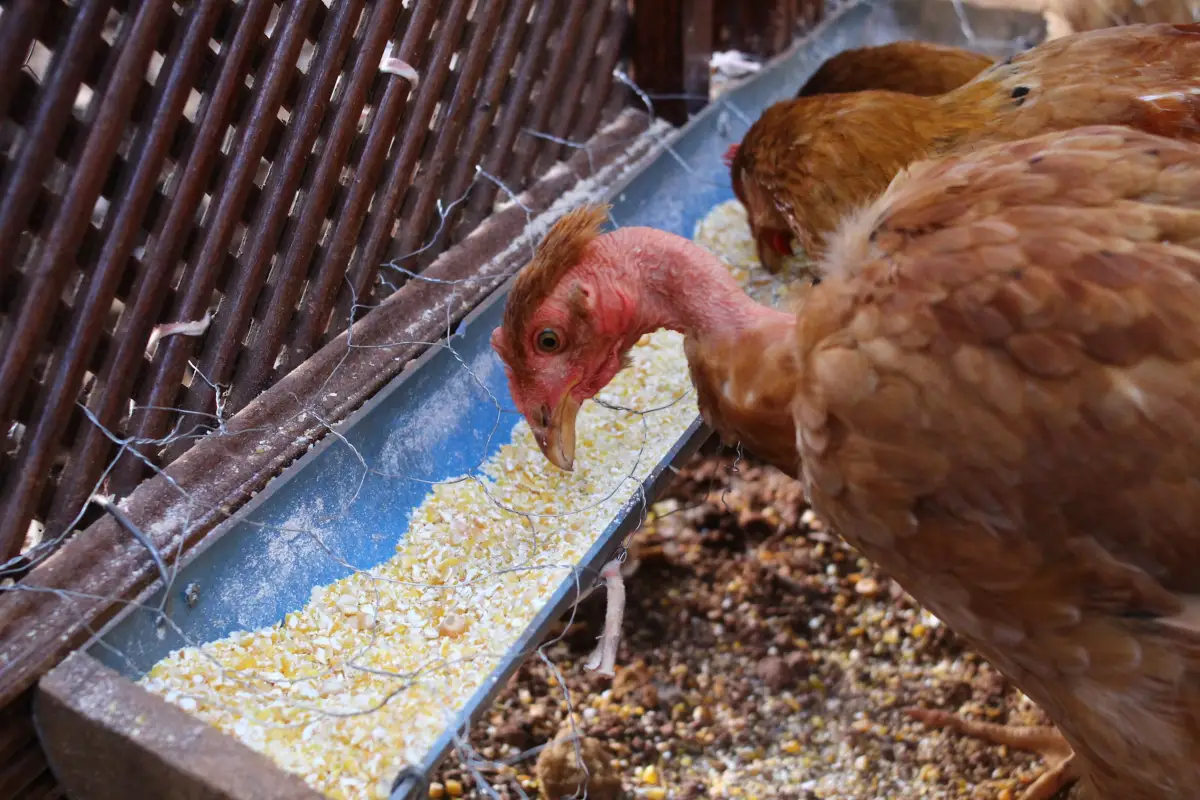
Foraging is not about filling the crop—it is about filling the hours. A static feeder empties in minutes; a deep litter of chopped straw with scattered grains turns one meal into a half-day project. Sprinkle whole oats, a few mealworms, or a handful of scratch into that bedding, and the same birds that would have stood idle now scratch, search, and peck for hours.
Add a hanging vegetable—a cabbage, a head of romaine, or a chunk of pumpkin—suspended from a rope at head height. That vertical element forces a different set of movements: peck, pull, step back, repeat. Change the offering daily so the novelty itself becomes part of the enrichment. Done well, forage feeding covers the largest slice of the behavioral pie.
Dry Dust Baths
A dust bath is a comfort behavior with real physiological weight. In the wild, chickens find fine, dry soil even in winter, often under overhanging branches where the ground stays powdery. They fluff, roll, and shake soil through their feathers, triggering a cascade of calming signals while maintaining skin and feather condition. Without it, that ruffling energy often redirects into feather picking or egg pecking.
Place a shallow container inside the coop or in a protected run corner. Fill it with dry sand, a little wood ash, and a dusting of food-grade diatomaceous earth. It needs to be large enough for two birds to bathe at once—a plastic mixing tub works well. Keep it protected from moisture so it stays loose and inviting. When hens use it regularly, you will see a visible drop in nervous, repetitive pecking.
Perches and Vertical Space
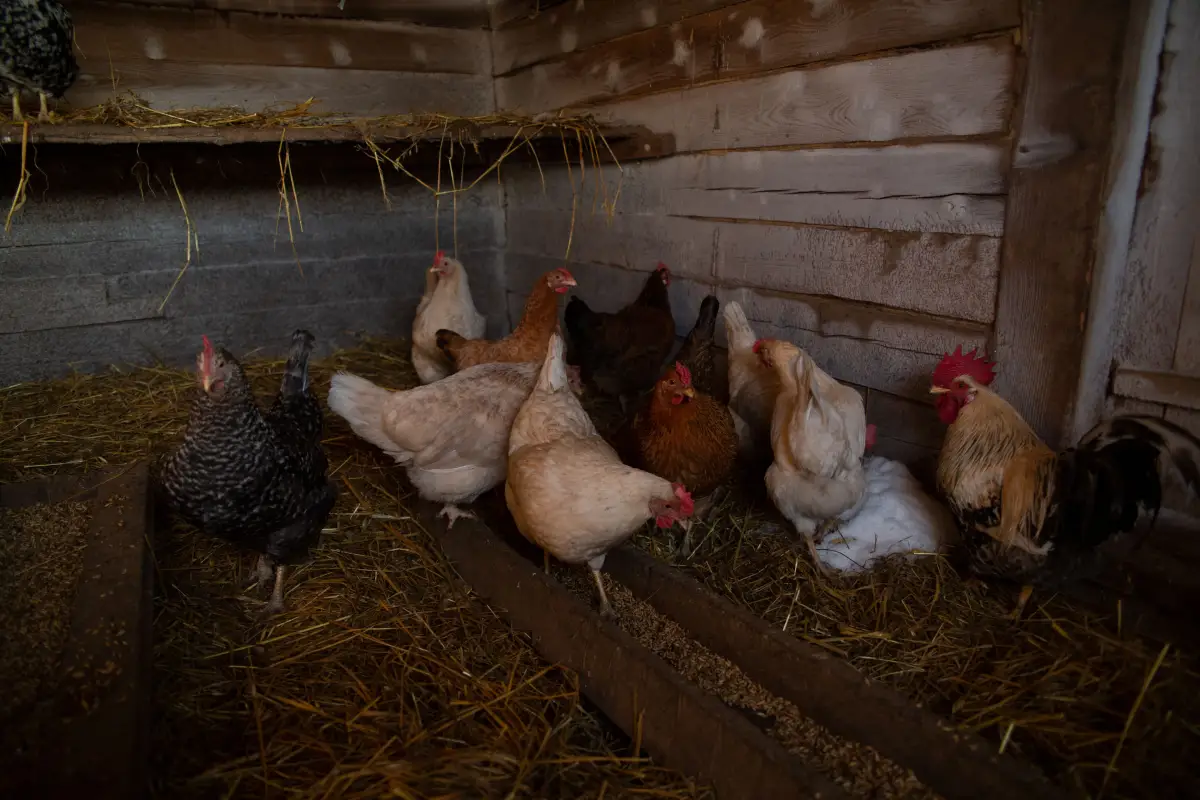
Roosting is not just a nighttime need. Chickens use elevated perches during the day to scan, rest, and escape lower-ranking flockmates. A flat, crowded coop forces every bird onto the same plane, which magnifies stress and invites aggression. Installing multiple perches at different heights—a low bar for heavy breeds, a higher branch for lighter layers, a flat shelf for resting—creates a three-dimensional living space.
A simple ladder made of untreated 2×4s, a straw bale staircase, or a securely mounted shelf gives birds choices beyond pacing a floor grid. That small change shifts their attention from survival-mode vigilance to exploration, and that shift alone reduces the friction that feeds vices.
Object-Based Novelty
Chickens are wary of new things, but once their caution passes, they are deeply curious. A mirror at head height, a xylophone pecking toy, a pile of dry leaves with a few mealworms tucked inside—these are not permanent fixtures. They rotate in every few days to keep the environment from going stale.
This pillar works best when it supports the other three. A mirror near the dust bath draws birds in to investigate and then triggers bathing. A treat-stuffed pinecone hung in the forage zone extends feeding time. Novelty alone won’t rescue a barren coop, but layered over forage feeding, dust baths, and perches, it prevents habituation and keeps the whole matrix effective.
Applying the Matrix: A Small Flock’s First Snowed-In Week
Imagine four hens in a 4-by-6-foot walk-in coop with a roofed run now buried under snow. Before enrichment, the birds huddle, peck at each other’s vents, and a cracked egg appears on day two.
Start with the dust bath. A mixing tub of dry sand and wood ash goes in near the pop door. Within an hour, two hens bathe, and the vent-pecking pauses. Next, lift the feeder and scatter morning grain deeply into a fresh 6-inch layer of chopped straw. The hens scratch and search for hours. Install a roosting bar at 18 inches, and they alternate between perching and foraging. By midday, a hanging cabbage is tied to the run’s roof beam, and a mirror is placed beside the dust tub. On day three, the scratch is swapped for a pile of dry leaves and mealworms. By week’s end, eggs remain unbroken, feather condition holds steady, and the flock’s posture shifts from huddled stillness to alert, exploratory activity.
Where People Break the Framework
Expecting One Item to Fix Everything
A hanging cabbage bought a few hours of peace, but when it was gone, the empty hours returned. Single-item enrichment fails because chickens habituate. The matrix approach requires at least three different enrichment types active at the same time, with one element changing every few days. Relying on a single cabbage or a treat ball leaves the door open for vices the moment the novelty wears off.
Skipping Dust Baths in Wet Weather
In damp winter climates, a dust bath seems like it will just clump. That assumption leads owners to omit it entirely, leaving birds without their primary comfort ritual. A covered, dry container inside the coop solves the moisture problem. Without it, birds often redirect their need to ruffle and preen onto their own feathers or rounded eggs, and the cycle is hard to break once it starts.
Neglecting Vertical Space
A small coop does not mean a flat coop. When perches are missing, subordinate birds cannot retreat, and chronic low-level aggression erodes health over weeks. A single high perch near a window or under a heat lamp gives those birds a way to step out of conflict. That one addition lowers ambient tension far more than its physical footprint suggests.
Quick Reference: The Enrichment Matrix
| Pillar | Goal | Key Action |
|---|---|---|
| Forage Feeding | Stretch feeding time to hours | Scatter grains in deep litter, rotate hanging vegetables daily |
| Dry Dust Baths | Satisfy skin-care and comfort drive | Provide a permanent dry sand/ash tub protected from moisture |
| Perches and Vertical Space | Reduce social stress, add movement | Install perches at varied heights; add a ladder or shelf path |
| Object-Based Novelty | Prevent habituation through change | Rotate mirrors, treat toys, leaf piles every few days |
Frequently Asked Questions
How do I stop my chickens from feather pecking when they’re cooped up all day?
Add a dry dust bath and switch to scatter feeding in deep litter—those two steps address the root motor drives behind pecking. If the behavior continues, check for injuries, protein deficiency, or overcrowding, and add vertical perches so lower-ranking birds can retreat.
Will a hanging cabbage really prevent boredom?
It helps, but only as one piece of a larger system. A cabbage engages pecking and pulling for hours, but once it is gone, the bird needs another outlet. Rotate it with broccoli heads, pumpkin chunks, or a leafy bundle to maintain variety.
Do I need a dust bath if the coop floor is dry?
A dry floor is not the same as a fine, loose bathing substrate. Compacted bedding does not offer the texture chickens seek for their full bathing sequence. A dedicated container with sand and ash gives them exactly what they need and keeps the behavior contained.
What’s the most common mistake with winter chicken enrichment?
Assuming one item—a cabbage, a toy, a treat ball—is enough. Effective enrichment relies on variety across at least three of the four pillars at once, with regular rotation to prevent habituation.
Start with the Most Overlooked Pillar
The enrichment matrix—forage feeding, dry dust baths, perches and vertical space, and rotating novelty—gives confined chickens legitimate outlets for the instincts that idle time turns destructive. If your birds are trapped today, begin with the pillar most coops neglect: a dry, accessible dust bath. That single addition often quiets the very pecking that made you search for this answer.