Egg Eating & Feather Pecking: Fix Them Before It's Too Late
Egg eating and feather pecking rarely appear out of nowhere. They are data points — behavioral outputs that flag a system drift. The immediate reaction is often a punitive or deterrent tool: hot sauce on an egg, anti-peck spray, separation. Those moves may alter the behavior temporarily, but they treat the output, not the input. A diagnostic sequence that isolates the environmental variable — space, protein, calcium, enrichment, parasites, light — is the only way to narrow causation to something fixable. The process below organizes the most common presentations into a branching logic. Start by matching what you observe to a specific variant, then trace the pathway to its root.
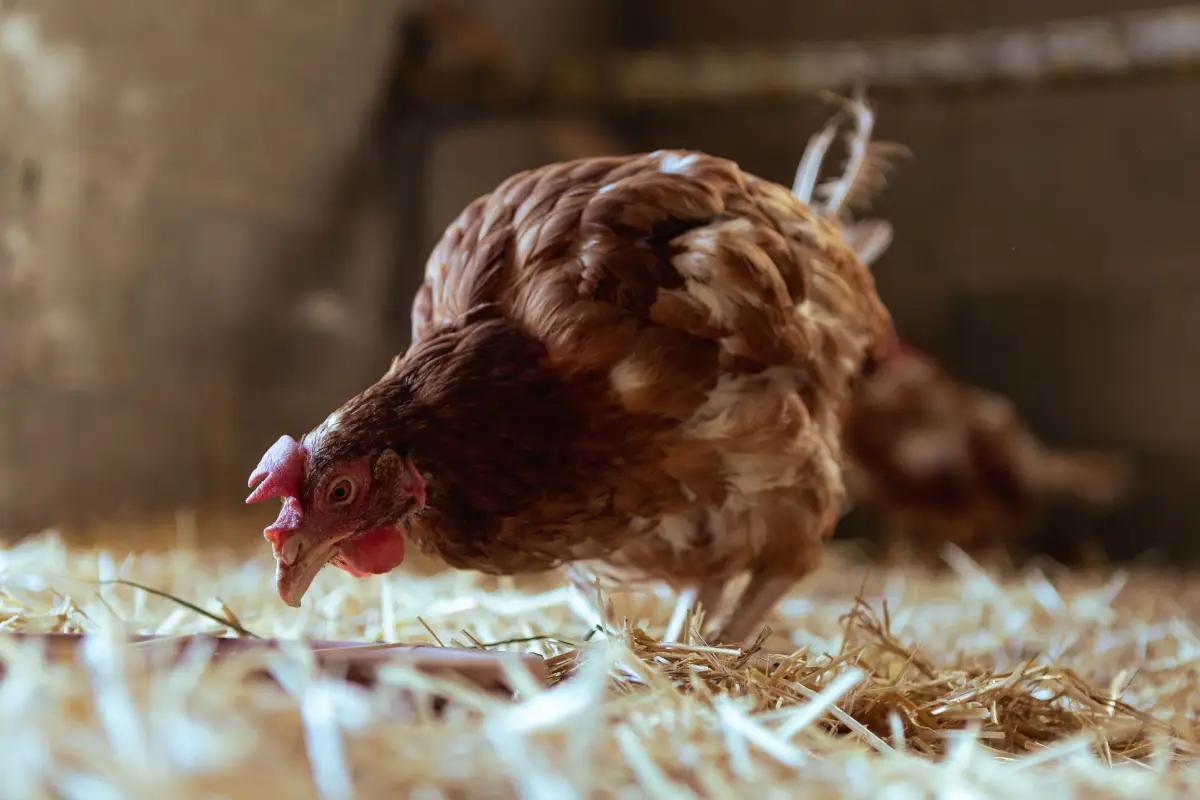
What the Flock Is Actually Showing You
Three primary patterns dominate, each with a separate starting node in the diagnostic flow. Match the closest description.
- Non-bloody feather pecking: Birds direct repetitive pecks at flockmates, focusing on the back, tail base, or breast. Feather shafts are broken, outline is ragged, but the skin stays whole. The target may withdraw but is not in acute pain. This is the most common form and the one most tightly correlated with space and diet.
- Vent pecking or blood-drawing pecking: Pecking at the vent area, especially after a hen has laid, or at emerging pin feathers that contain blood. Once skin breaks, the flock’s attraction to red escalates the risk of cannibalism. This variant narrows the cause list to a few specific triggers — often prolapse, lighting intensity, or extreme crowding.
- Egg eating — habitual breaking: A hen deliberately pecks open intact eggs in the nest and consumes contents. It may spread by observational learning. The distinction from a one-time taste after an accidental break is persistence; this bird returns to the nest seeking eggs to open, not just scavenging a broken one.
Select the section below that matches the presentation you are dealing with, then proceed through the listed causes in order of probability.
Feather Pecking Causes, Ordered by Likelihood
Feather pecking is a foraging redirect. The bird’s genetics program it to spend most of its waking hours pecking and scratching. When the environment fails to accommodate that drive, the pecking lands on feathers instead of litter. The diagnostic checks that follow are sequenced from most common to least.
Space constraint as the primary driver
Confirmation: Calculate the interior and run square footage per bird. A standard dual-purpose hen requires a minimum of 4 sq ft indoors and 10 sq ft in the run. For lightweight layer breeds, the threshold is 3 sq ft indoors and 8 sq ft in the run. Roost space matters separately: less than 8 linear inches per bird forces competition at night, which spills into daytime aggression. If any of these numbers is below the threshold, space is the lead hypothesis. Observe the flock during the pre-roost period — bullying escalates visibly when birds jostle for position.
Correction: Enlarge the run footprint by extending fencing, or cull to reduce density. Add roost bars so that upper and lower options exist. Insert vertical baffles — hanging strips of feed sack or straw bales — to break sight lines and allow escape routes. Increase feeder and waterer stations to one per 8 birds, placed at a distance from each other to reduce queuing pressure.
Result timeline: A measurable drop in pecking frequency within one week. The pecking that remains shifts to the substrate if other variables are adequate.
Methionine and protein shortfall
Confirmation: Read the guaranteed analysis on the feed tag. A 16% protein layer ration is sufficient for maintenance only; birds in molt, under cold stress, or engaged in feather pecking need feed with 18–20% crude protein. The amino acid methionine is the rate-limiting factor for feather keratin synthesis. If the tag lists methionine below 0.38%, or omits it entirely, deficiency is likely. Birds will obsessively search for feathers, and shed feathers may be found chewed in the droppings.
Correction: Switch to a 20% all-flock or grower feed. If methionine is low, add a synthetic DL-methionine supplement at 1–2 lb per ton of feed equivalent, or dose at roughly 0.1% of the daily ration by weight. Provide a bowl of cooled, chopped hard-boiled egg for three days as a rapid protein infusion — cooked egg does not trigger the egg-eating recognition circuit the way raw egg does. Offer feather meal in a separate pan for two weeks to directly address the drive.
Result timeline: The urgency to peck feathers diminishes over 10–14 days. New feather growth during the subsequent molt will be complete, without fault bars.
Environment barrenness — a foraging vacuum
Confirmation: The run contains no deep litter, no scattered grain, no manipulable objects. Birds stand idle for long periods, and pecking is aimed at stationary flockmates rather than the ground. Even in spacious runs, a uniform surface of packed dirt yields redirected pecking. The diagnostic clue is the absence of substrate-directed pecking.
Correction: Install 4–6 inches of carbon-rich litter — wood shavings, straw, leaf mold. Scatter whole oats, BSF larvae, or scratch grains into the litter once or twice daily to drive foraging. Hang a whole cabbage, a suet cage with alfalfa, or a commercial pecking block at beak height. Rotate enrichment items weekly to prevent habituation. A turf tray with sprouted wheat or barley provides living forage for confined runs.
Result timeline: Within 24 hours, the ratio of ground pecking to feather pecking shifts dramatically. Social pecking declines as the flock’s foraging budget is absorbed by the environment.
Parasite burden — mites and lice
Confirmation: Examine several birds after dark, focusing on the vent, under the wings, and the base of the neck. Use a bright flashlight. Northern fowl mites appear as rapidly moving dark specks; lice are larger, pale, and deposit egg clusters (nits) cemented to feather shafts. Birds that self-groom obsessively and peck at their own skin are a stronger signal for parasites than birds that only peck others.
Correction: Apply a permethrin-based poultry dust or spray to all birds and the coop interior, respecting egg withdrawal periods. Repeat the treatment at 7–10 days to catch the next mite generation. Deep-clean the coop, focusing on roost crevices where mites aggregate during the day. Maintain a dust bath with wood ash and food-grade diatomaceous earth as a preventive.
Result timeline: Pruritic pecking subsides 48–72 hours post-treatment. Feather condition stabilizes once the parasite load drops below the itching threshold.
Light quality and photoperiod stress
Confirmation: Artificially lit coops with photoperiods exceeding 16 hours, or using cool-white or fluorescent bulbs, create a chronic low-grade stress. Flicker that is imperceptible to humans registers to birds and increases arousal. If pecking intensifies during the brightest portion of the day or in the weeks after a lighting upgrade, light is a candidate. Measure hours of light and bulb temperature; 2700K–3000K LED is the target.
Correction: Cap the daily photoperiod at 14–16 hours total using a warm-spectrum LED on a timer. Swap any fluorescent or cool-white bulbs immediately. For heat-driven pecking in summer, maximize ventilation, add exterior shade cloth, and supply cool water with electrolytes during heatwaves.
Result timeline: Agitation-driven pecking often drops within 3–5 days of correcting the light spectrum and duration.
Egg Eating Causes, Ordered by Likelihood
Egg eating is resource acquisition. The bird is solving a problem — a calcium gap, an egg that shouldn’t have broken, or competition for a nest site. The habit persists when the environment rewards it.
Shell fragility from nutritional imbalance
Confirmation: Examine fresh eggs. Thin, rough, or soft shells point to inadequate calcium mobilization. Check that the layer feed is within date and lists 3.5–4% calcium. Verify that oyster shell or limestone is offered free-choice in a separate feeder — not mixed into the ration, because hens self-regulate intake based on shell gland demand. Low vitamin D3 blocks calcium absorption even when calcium is abundant; confirmed by pale yolks and poor shell quality in birds with limited sun exposure.
Correction: Place a dedicated oyster shell hopper where all birds can access it. If D3 is suspect, ensure the feed includes a D3 supplement (typical rate is 2,000–3,000 IU/kg) or allow outdoor access. For persistent thin shells despite these measures, switch to a feed formulated for older layers, which often includes higher calcium and adjusted phosphorus ratios.
Result timeline: Shell thickness improves over 10–14 days as the shell gland deposits more calcium carbonate. Once eggs no longer break spontaneously, the trigger for exploratory eating vanishes.
Nest box inadequacy — design and number
Confirmation: Egg eating concentrates in specific boxes. Count nest boxes: fewer than one per 4–5 hens creates queuing that leads to breakage and egg discovery. Boxes with hard, unpadded floors or placed in bright, busy areas see higher breakage. Eggs laid on the floor indicate that subordinate hens are avoiding contested nests; these eggs are more likely to be broken.
Correction: Add boxes to achieve a 1:4 ratio. Install roll-away nest inserts so the egg disappears underneath after laying. Pad each box with 2–3 inches of soft nesting material — pine shavings over a foam pad work well. Darken the interior with burlap curtains and position boxes away from roosts and feeder traffic. Place dummy eggs in new boxes to signal safety.
Result timeline: Accidental breakage stops immediately with cushioned, roll-away designs. Deliberate eating fades over days as the supply of accessible intact eggs dwindles.
Learned behavior cascading from a single event
Confirmation: One bird developed the habit after tasting a broken egg, and now proactively breaks open intact eggs. Observation will show the same hen entering boxes frequently, leaving with yolk residue on her beak, and returning soon after. Other birds may copy the behavior by watching. The habit is reinforced daily because each opened egg provides a high-value reward.
Correction: If the individual can be identified, isolate her in a separate pen where no eggs are available. If isolation is impossible, install roll-away nests to remove egg access for the entire flock. Collect eggs at least three times daily. Taste-aversion methods — an emptied eggshell refilled with strong English mustard, with a small hole — may interrupt the sequence for some hens, but the environment must also be corrected or the bird will find another way. Close the nutrition gap that made the original broken egg appealing.
Result timeline: Access denial combined with nutritional correction extinguishes the habit in 1–2 weeks. A stubbourn hen that continues after all measures may need permanent removal.
Boredom intersecting with nest competition
Confirmation: The run lacks enrichment, and birds idle near nest boxes during peak laying hours. Hens queued for a favoured box may peck at eggs already laid there. This pattern overlaps with mild feather pecking in the same flock. The diagnosis is confirmed if adding enrichment and nest boxes eliminates both behaviors.
Correction: Follow the enrichment protocol described under feather pecking — deep litter, scattered feeds, hanging objects — and add the recommended number of well-padded nest boxes. Distribute boxes across the coop rather than clustering them.
Result timeline: Nest-area loitering decreases within 2–3 days. The combination of less traffic and redirected foraging removes the opportunity for idle egg pecking.
Resets That Address Multiple Root Causes
Several environmental adjustments have a broad effect because they realign the system with the bird’s behavioral biology. They are worth applying early, but only after the diagnostic branch has narrowed the search. Applying them without a confirmed cause squanders time when the true problem is, for example, a heavy mite load or a methionine deficit too deep to correct with casual adjustment.
- Deep litter at scale: Six to eight inches of carbon material creates a living floor that absorbs waste, hosts decomposer microbes, and provides unlimited foraging. Both feather pecking and egg-eating boredom drop when birds spend their day turning litter.
- Free-choice calcium permanently separated from feed: This is the single highest-return, lowest-effort intervention for egg eating. It also prevents birds from seeking calcium in feathers when shell demand spikes.
- Feed reformulation upward: If the base protein is below 18%, move to a 20% ration. All-flock feeds with a separate calcium source support a mixed-age flock without the restrictiveness of layer-only pellets.
- Warm-dim lighting: Exchange bright cool-white bulbs for a 9–13 watt warm LED on a timer that caps light at 14–15 hours. The subdued spectrum reduces overall arousal and has a measurable effect on pecking frequency.
- Rotational pasture access via electronet: Even limited hours per week on fresh ground changes the birds’ entire behavioral budget. Forage intake lowers the feed protein requirement and satisfies the pecking drive simultaneously.
When these resets fail: If a physical parasite population is established, no amount of litter or lighting change will address the pruritus. If a single hen has developed a compulsive egg-breaking routine and nest access persists, the habit continues until that individual is managed separately. Use the universal adjustments as the second move — the first move is the specific diagnostic check that rules out the most likely cause for the variant you see.
Prevention as System Design, Not a Checklist
A husbandry system that prevents these behaviors does not add interventions — it removes the conditions under which they emerge. Each structural choice matters.
- Genetic starting point: Breeds selected for calm temperament and robust foraging (e.g., certain heritage dual-purpose lines) enter adulthood with a lower baseline for redirected pecking. Avoid lines known for extreme flightiness if they will be confined.
- Litter from day one: Chicks reared on solid floors with litter develop neural patterns for substrate pecking that wire them away from feathers permanently. Wire-floor rearing deprives them of that critical learning window.
- Seasonal nutrition ramps: Adjust protein upward during fall molt when feather synthesis demands it, and in winter when maintenance energy increases. A static feeding program is a design flaw.
- Nest architecture: Roll-away designs, dark placement, and sufficient count are not add-ons — they are the base specification. Floor eggs and breakage become rare when the architecture supports the behavior.
- Parasite surveillance: A monthly after-dark physical check on a sample of birds is a zero-cost monitoring program that catches mite surges early.
- Space headroom: Overstocking creeps up over time as birds grow or the flock expands. Recalculate the square footage per bird seasonally; a 10% addition in bird numbers can push a borderline density into pecking territory.
Escalation: Building a Case File for a Specialist
When the diagnostic flow has been followed — space, protein, calcium, enrichment, parasites, light, and nest box variables all checked and corrected — and the behavior still persists, the next step is to assemble a data set that lets a poultry veterinarian or extension agent spot interactions that are invisible in isolation. Collect these points before making contact:
- Flock structure: headcount, ages, breeds, sex ratios.
- Housing plan: coop floor area, run area, litter material and depth, number and design of nest boxes, roost length and configuration, artificial lighting schedule and bulb type.
- Nutritional inventory: exact feed brand and analysis, all supplements, feeding method, availability of grit and calcium separately.
- Behavioral chronology: first appearance of the behavior, whether it spread, which individuals are involved, time of day it peaks.
- Physical inspection results: body condition scores, feather loss patterns, skin lesions, presence or absence of parasites on night exam.
A case built this way bypasses guesswork. An expert can see that, for instance, 18% protein combined with 3.5 sq ft per bird and a single nest box for 15 hens creates a cascading reinforcement cycle that each variable alone would not produce. Where all targets are met and a single bird continues habitually breaking eggs, culling is a legitimate management tool — it does not indicate a husbandry failure if the system itself is sound.
FAQ
What stops a chicken from eating its own eggs?
Cessation requires two things: correcting why she started (thin shells, nutrition gap, cramped nest) and removing the opportunity to repeat the behavior. Roll-away nests that move eggs out of sight are the most reliable physical intervention. Mustard-filled dummy eggs can create temporary aversion, but they fail if the environment keeps offering accessible eggs.
Why do chickens peck feathers out of each other?
The pecking is redirected foraging. Tight space, low dietary protein (especially methionine), and a barren environment are the three leading causes. Measure floor area per bird and check the feed tag for methionine content; together they explain most cases. If the behavior started suddenly after no husbandry change, consider a new stressor — a predator visit, a bulb swap, a temperature spike.
Can feather pecking turn into cannibalism?
Yes, and the transition is rapid once blood appears. The flock’s attraction to the color red means a single wound can trigger a group attack. Immediate wound coverage with a blue or purple antiseptic spray (which obscures the red) and temporary isolation of the injured bird are required. Then correct the environment; the underlying trigger is usually crowding or excessive light.
What’s the fastest home fix for an egg-eating hen?
There is no fast fix independent of husbandry. Collecting eggs three times daily is a stopgap. Some birds sample a mustard-filled egg and stop for a while, but the effect is unreliable. The fastest lasting resolution comes from fixing the shell quality and nest box design, then cutting off egg access until the habit extinguishes.
How do I know if mites are causing feather pecking?
Examine birds at night with a flashlight. Look at the vent and under wings for moving specks (mites) or white egg clusters on feather shafts (lice). Birds pecking at their own skin more than others’ feathers strongly suggests parasites. If the physical exam is clean, redirect the investigation to space, diet, and enrichment.