5 Things You Need to Know Before Installing Electric Poultry Netting
Get these five points right before you sink a single post. New users ignore grounding, let grass short the fence, or mismatch voltage to the run. That turns a good net into a useless ribbon. Voltage, grounding, vegetation, layout, and existing fences — here’s what you need to know, focusing on what first-timers get wrong.
Nets Worth Buying
Three dependable options for different budgets and experience levels.
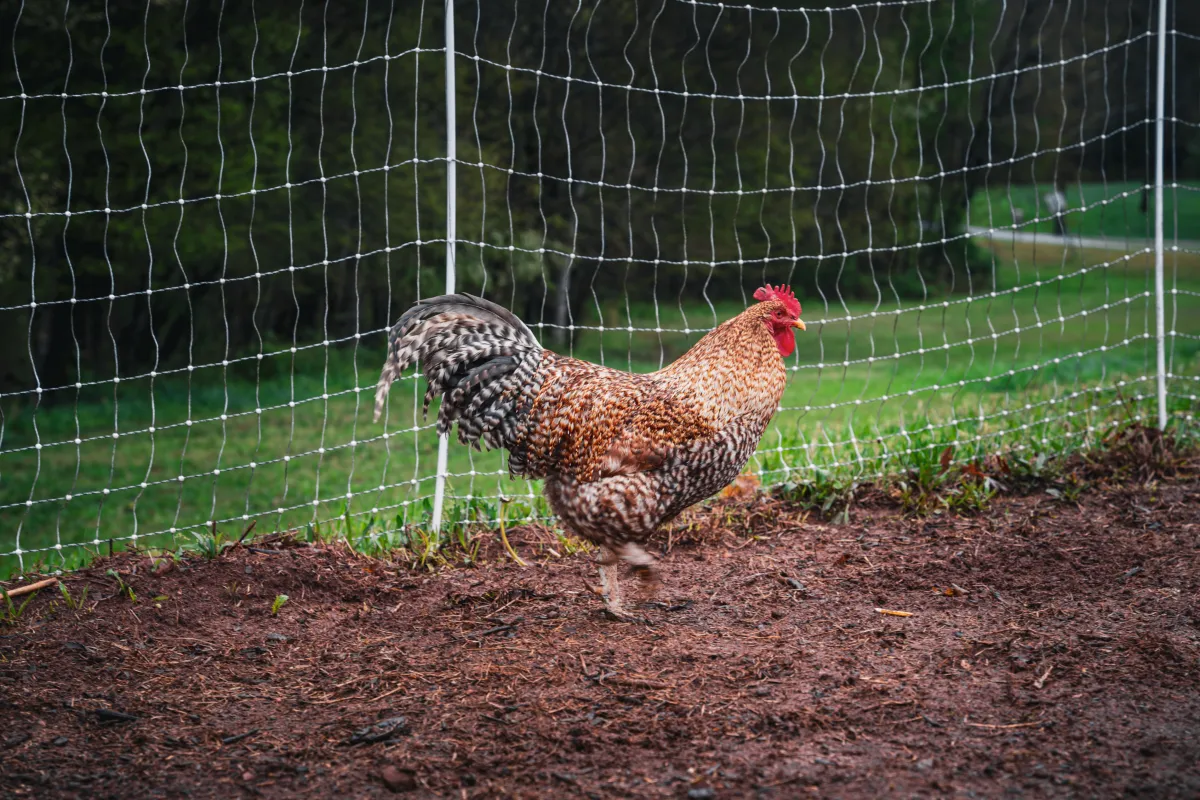
- Best overall: Premier 1 ElectroNet 9/42/6. Robust, pre-assembled, 42-inch height. Double-spike posts, built-in strain relief. It stops most predators cold. Limitation: costs more and the weight makes frequent moves a chore.
- Best budget: Kencove 9/42/6. Similar spec, lower price. Conducts well, solid post spacing. Limitation: posts may not hold up in rocky ground, and strands are slightly thinner.
- Best for beginners: Premier 1 PoultryNet Plus 12/48/3. 36-inch, lightweight, forgiving. Easy to handle while you learn. Limitation: only 36 inches tall. A determined dog or coyote can clear it.
Power That Bites
Electrical basics — the difference between a working fence and a prop.
Voltage That Actually Works
You need at least 3,000 volts at the farthest point, measured with a digital tester. Feathers insulate, so less just tickles. A plug-in energizer rated 0.25–0.5 joules handles a few hundred feet. Solar units often drop below threshold on cloudy days. Standout strength: the right energizer makes a flimsy net a real deterrent. Main limitation: undersize it or skip testing, and you’ll only discover the fence is dead after a predator walks through.
Grounding That Finishes the Job
One rod stuck in the dirt 12 inches won’t do it. Install at least three 6-foot copper ground rods, spaced 10 feet apart, in moist soil. That completes the circuit. Standout strength: solid grounding keeps the fence hot even in dry spells — the charge pulses through the earth. Main limitation: sandy or arid soil resists; add more rods or use a bentonite slurry. Most first-time failures trace back to poor grounding, not a bad energizer.
What Happens at Ground Level
The part most people skip until the fence quits.
Keep Vegetation Off the Wire
Any weed, grass blade, or branch touching the bottom strand bleeds voltage straight into the dirt. Maintain a 12-inch clear strip directly underneath. Cut or spray weekly during wet seasons. Standout strength: a clean line keeps the fence reliable without constant fixes. Main limitation: fast regrowth demands attention every week; ignore it and the netting becomes decoration.
Temporary vs. Permanent Setup
Portable netting suits rotational moves — fresh forage, disease control — but step-in posts wear out faster. Permanent runs use steel T-posts and maybe a buried wire for diggers. Standout strength: portability keeps birds on clean ground; permanence means less weekly labor. Main limitation: moving stresses the polywire and connectors, leading to breaks. Permanent netting can tangle in deep snow and resists reconfiguration.
Mixing Old Fence and New Netting
Working with whatever perimeter you already have.
Tie It In Without Shorting
Electric netting can plug gaps or subdivide inside an existing woven-wire fence. Offset the net a few inches from metal T-posts. Run a separate energizer or connect to an existing hot line. Standout strength: the combination gives a physical plus psychological barrier. Main limitation: metal objects too close cause arcing; a single fallen branch can kill the entire charged line.
How to Decide Within a Group
- Power That Bites: If voltage dips, add ground rods before you upgrade the energizer. Bad grounding, not a weak charger, is usually the culprit.
- What Happens at Ground Level: Moving the net weekly? Go lightweight and plan on extra trimming. A fixed run? Invest in robust corner posts and anchor permanently.
- Mixing Old Fence: When the existing fence is metal, offset the netting with insulated stand-offs and test each line separately. Multiple energizers on a shared ground can interfere — isolate them.
Questions First-Time Users Actually Ask
Can I use a solar energizer with poultry netting?
Yes, if you have full sun and a battery that holds charge. Overcast climates or winter often drop voltage below 3,000 volts at night. In those conditions, a plug-in unit works every time.
Does the netting work without electricity?
No. Raccoons and foxes learn quickly that an unenergized net is just a physical obstacle they can climb or push through. Always energize.
Will weeds fry the energizer?
They don’t damage the unit, but they drain the pulse so the fence becomes useless. Birds are unprotected, and you might blame the charger when the real problem is vegetation contact.
How many joules for a 100-foot net?
0.1–0.25 joules is enough if grounding is solid and the wire is clean. If you plan to expand, buy a 0.5-joule unit now — it handles more fence with less maintenance headache.
Start With This Setup
For a small flock on a quarter-acre, take an ElectroNet 9/42/6, a 0.25-joule plug-in energizer, and obsessive grounding with a clear weed-free strip. Nail those three and you sidestep most new-user failures. After the system is proven, add solar or expand at your own pace.