Stop Losing Chickens to Chicken Wire: What Mesh Actually Works
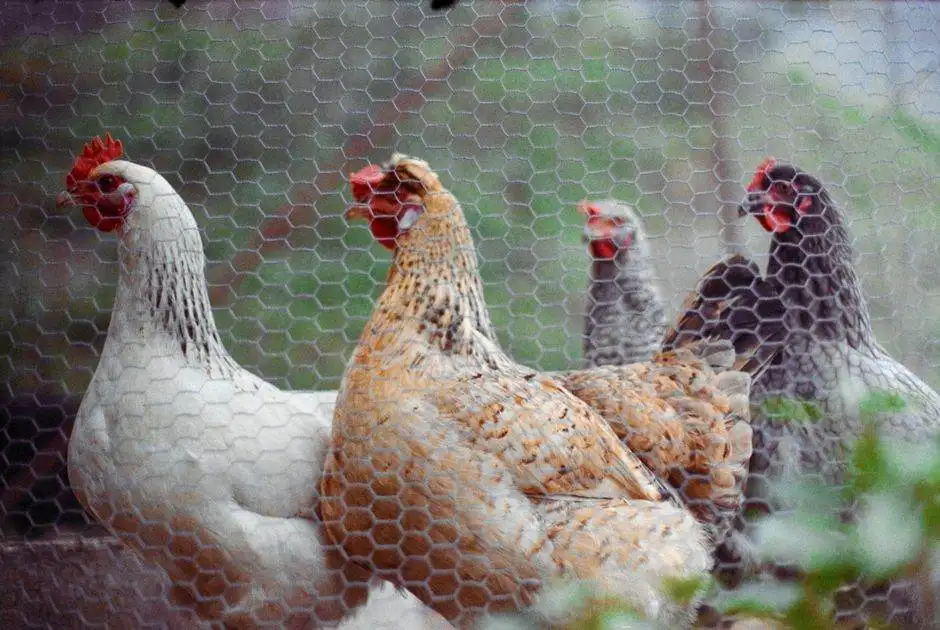
If you keep losing chickens to predators, look at the wire mesh. Because chicken wire — despite its name — fails against the tooth force of a raccoon, the claw strength of a fox, and the slinking body of a weasel. The solution is hardware cloth: welded wire with openings small enough and a gauge thick enough to defeat the predators that actually kill birds. This is not opinion. It’s the result of matching mesh specifications to predator capabilities, and it’s what every agricultural extension and experienced producer will tell you.
Quick Reference: Mesh vs. Predator Type
| Scenario | Winner | Why |
|---|---|---|
| Securing a run against raccoons, foxes, or coyotes | Hardware cloth | Thin chicken wire can be torn open by determined predators; 1/2" 14–16 gauge hardware cloth resists chewing and clawing. |
| Stopping weasels, rats, or snakes | 1/4" hardware cloth | Chicken wire’s 1" openings allow small threats to slip through or reach in. |
| Overhead protection from hawks or owls | Chicken wire (or aviary netting) | Hawks do not tear wire; 1" mesh is sufficient and lighter. |
| Temporary daytime run when supervised | Chicken wire | Low cost for short-term containment when predator risk is managed by presence. |
| Underground barrier against digging animals | Hardware cloth | Must withstand soil moisture and physical stress; chicken wire rots and tears easily. |
When the Main Threat Is Raccoons, Foxes, or Coyotes
Hardware cloth is the only choice here. A raccoon’s jaws produce enough bite force to snap a bird’s neck and crush its skull; the 20- to 22-gauge twisted wires of chicken wire are roughly the same thickness as a paper clip. Under repeated chewing, those wires bend, the opening widens, and the predator pulls through. Foxes and coyotes use the same tactic with teeth and claws.
Every credible publication from cooperative extension programs recommends 1/2-inch hardware cloth for permanent poultry enclosures. The wire — 14 or 16 gauge — does not yield to a persistent bite, and the half-inch apertures deny a grip.
Yes, hardware cloth costs more and is heavier to handle. But money spent on the right mesh is cheaper than replacing dead birds, and frustration is free.
Where Weasels, Rats, and Snakes Are the Real Problem
Small predators bypass chicken wire without any effort. Weasels and rats slip through 1-inch openings. Snakes glide through even more easily. Once inside, they kill birds or eat eggs before you know they were there.
For these threats, mesh size is everything. Hardware cloth with 1/4-inch openings stops all of them. The gauge also matters — rats can gnaw through thin metal — but the primary failure with chicken wire is that the holes are simply too big.
Using 1/4-inch hardware cloth reduces light and ventilation slightly, and it costs more than the 1/2-inch version. Accept those trade-offs or accept dead chickens.
Deterring Hawks and Other Aerial Predators
Hawks strike from above; they don’t tear through wire. A chicken wire ceiling interrupts their dive and redirects them elsewhere. The wire does not need to resist strong forces — it only needs to be present.
This is the one situation where chicken wire is a valid material. It’s lighter and easier to install overhead than heavy rolls of hardware cloth. If hawks are your only aerial threat and the run’s perimeter is secure against climbing mammals, chicken wire overhead works.
The catch: chicken wire overhead provides zero defense against a raccoon that climbs a nearby tree and drops onto the run. That’s a perimeter issue, not a ceiling issue, but it means you must be honest about which predators you actually face.
Temporary or Supervised Setups
A daytime run used only when someone is nearby can use chicken wire. The risk of a predator attack in ten minutes of inattention is manageable, and the wire’s job is containment, not armor. Lightweight rolls are portable, easy to cut, and cheap enough to discard after a season.
Give up security for cost and speed when the human presence provides the real protection. But the moment supervision ends, the wire must change.
What Both Meshes Do Equally Well
Stop comparing these. Both materials must be stapled or screwed firmly; loose mesh invites predators to find a weak spot. Both will rust eventually — galvanized coatings slow corrosion, but weld joints go first. Neither product stops a bear or a 150-pound dog that charges at full speed; you need electric fence or solid panels for that kind of threat.
Bendability around corners, the need for periodic tightening, and the universal requirement for proper attachment are the same. Don’t waste time on these factors.
Non-Negotiables: When Only One Mesh Is Acceptable
- Raccoons or foxes live nearby. Use hardware cloth. No chicken wire product withstands their bite force.
- You must exclude mice, weasels, or snakes. Use 1/4-inch hardware cloth. Chicken wire openings are an open door.
- The mesh goes underground as an apron. Use hardware cloth. Chicken wire corrodes quickly in soil and tears under pressure.
- Budget is the binding constraint and there are zero large predators. Chicken wire can contain birds — but verify that no raccoon, fox, or weasel ever appears.
Pricing Notes: What Cheap Mesh Really Costs
Chicken wire looks attractive at $15–$25 per 4×50-foot roll. An equivalent roll of 1/2-inch hardware cloth runs $50–$80. That difference multiplies for large runs. But the pricing calculation is incomplete until you factor in a single overnight loss of three laying hens. Their replacement cost alone often exceeds the material savings.
If cash is tight, use hardware cloth on the bottom three feet of walls and as a buried skirt — where most attacks happen — and reserve chicken wire for upper sections where predators cannot reach without climbing.
FAQ
Can I double up chicken wire to make it stronger?
No. Stacking two layers of thin wire does little to stop tearing. A predator that can bend one layer will bend both in the same spot. Hardware cloth is the solution.
What gauge hardware cloth stops raccoons?
14-gauge is the strongest commonly available and is recommended where raccoon pressure is high. 16-gauge works when installed tightly and securely, but 14-gauge provides a real margin of safety.
Will hardware cloth rust underground?
Galvanized coatings protect it for years, but the heat-affected zones at welds rust first. PVC-coated hardware cloth lasts longer in wet soil. Inspect buried sections annually and replace any compromised areas.
The Bottom Line
For the typical backyard flock, the main threat is raccoons or foxes, and the material that stops them is hardware cloth. Decide by asking one question: what is the strongest predator jaw my mesh must defeat? If the answer is bigger than a squirrel, chicken wire is a mistake.