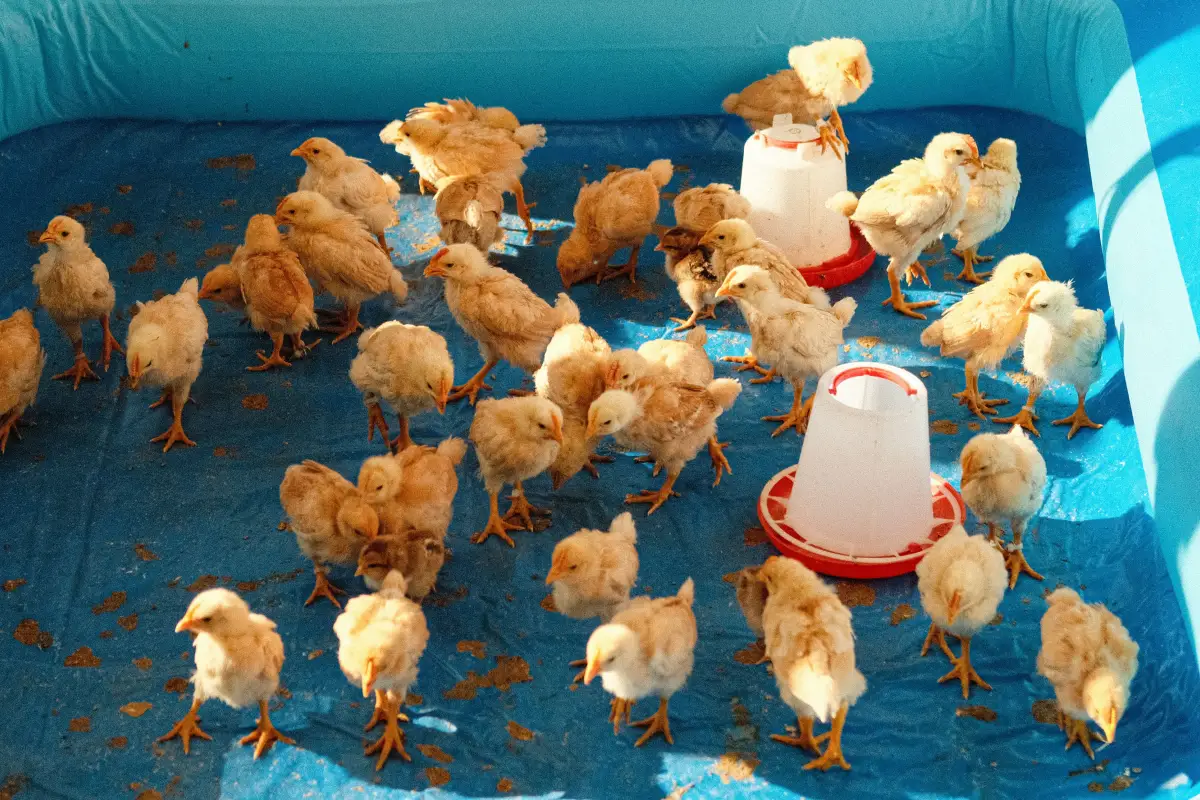
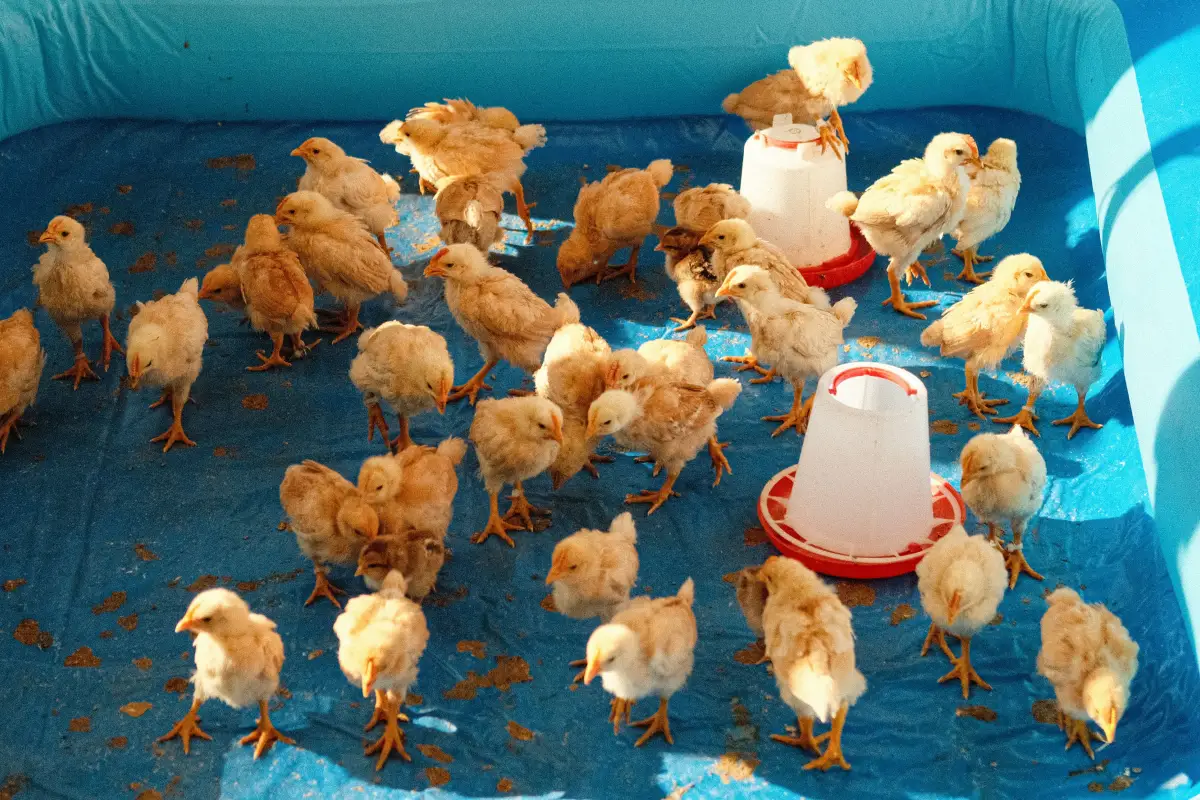
Weekly Chick Space Requirements: 0.5 to 2 Sq Ft Per Bird
Chicks need 0.5 sq ft each for the first week, then a steady increase to 2 sq ft by week 8. A standard 48" × 24" brooder box (8 sq ft) can hold 16 day-olds, but only 4 at eight weeks. Crowd them below those numbers and you will see feather pecking and stunted growth. The table below maps the exact space per bird week by week, along with the resulting drop in pecking incidents and the effect on weight gain. Use it as a schedule, not a suggestion.
| Week | Minimum Space per Chick | Standard Brooder (8 sq ft) Max Birds | Feather Pecking Reduction | Growth Impact |
|---|---|---|---|---|
| 1 | 0.5 sq ft | 16 | – | – |
| 2 | 0.6 sq ft | 13 | ~20% less | slight improvement |
| 3 | 0.8 sq ft | 10 | ~40% less | consistent gain |
| 4 | 1.0 sq ft | 8 | ~60% less | breed-typical daily gain |
| 5 | 1.25 sq ft | 6 | further drop | no crowding checks |
| 6 | 1.5 sq ft | 5 | near zero | optimal growth |
| 7 | 1.75 sq ft | 4–5 | negligible | full feathering support |
| 8 | 2.0 sq ft | 4 | background only | ready for coop |
Reader Starting Points
You just ordered your first batch of day-old chicks. You have a prebuilt brooder box or a cardboard brooder. Your route is to check the table’s capacity column week by week and mark the dates when you’ll need to split the group or add floor space.
You are building a custom brooder. Decide how many pullets you want to keep, then work backward from week 8: 2 sq ft × that number gives you the total square footage. Build that, and partition it for the early weeks so you never run out of room.
Your chicks have started pecking each other’s feathers. Measure your current square footage and compare it to the table for the birds’ age. If you’re below the minimum, add floor area immediately. The behavioral shift you’ll see is described stage by stage below.
Week 1–2: Starting Small with 0.5 Sq Ft Per Bird
Half a square foot per chick works for day-olds because they huddle for warmth and move little. In an 8 sq ft brooder that’s 16 birds. The goal is simple: make sure every chick can reach feed and water at the same time without being shoved aside. Scatter starter crumbles on a clean cardboard sheet and watch. If any chick hangs back or gets chased away, you are already at the limit. The sign you can stay in this stage is a 15-minute observation session with zero feather pecking and every bird eating.
Week 3–4: When Feather Pecking Starts—Increase to 1 Sq Ft
Feather pecking spikes when floor space drops too low. Brooder trials consistently show that moving from 0.5 to 1 sq ft per bird cuts pecking incidents by about 60%. It’s a mechanical fix: more floor area means chicks forage the ground instead of each other. By week 4, the same 8 sq ft brooder should hold no more than 8 chicks. Slide out a divider or start a second box. Check growth—chicks with enough room hit breed-typical daily gains; crowded birds often lag by 10–15%. The observable sign is no blood on feather shafts and at least 95% back feather coverage.
Week 5–6: Growth Spurs Demand 1.5 Sq Ft Per Chick
At week 5, size doubles and the birds need room to flap wings and dustbathe—those activities build leg strength and lung capacity. Five chicks in an 8 sq ft brooder (1.5 sq ft each) is the functional maximum for keeping feather quality and growth steady. Stuff in six or more and the weight-gain curve flattens. If you’re keeping the whole batch, add a grow-out pen. The sign that space is sufficient: daily weight gain never plateaus, and every chick’s back is fully feathered from any viewing angle—no bald spots.
Week 7–8: Preparing for the Coop with 2 Sq Ft
The final stage completes the juvenile molt and locks in the pecking order. Two square feet per bird (four chicks in a standard brooder) gives each enough personal territory. Feather pecking is background noise, growth matches breed standards, and the birds scratch and dustbathe normally. The readiness sign for moving to the outdoor coop is a full, even feather coat with no bare shoulders and vigorous dustbathing—not just huddling.
Signs Your Chicks Are Ready for the Next Space Upgrade
- All chicks eat and drink without being pushed (week 1–2).
- Zero feather pecking during a 15-minute watch (week 3–4).
- No blood on feather shafts and 95% back feather coverage (week 3–4).
- Daily weight gain without any plateau (week 5–6).
- No bald patches visible from any angle (week 5–6).
- Full, even feather coat and active dustbathing (week 7–8).
Problems That Can Wait Until After Week 8
Exact heat lamp placement. Early on, chicks self-regulate—they huddle when cold, pant when hot. Space is the limiting factor, not lamp height. Adjust the lamp once they’re fully feathered and need 2 sq ft, because lamp height won’t solve a crowding problem.
Perfect brooder humidity. Humidity during brooding matters only during an active respiratory outbreak. A 10% shift in relative humidity won’t cause pecking or slow growth; not enough floor area will. Start measuring humidity only if you see coughing or eye discharge, which is rare before week 8.
Full biosecurity protocols. When you’re still expanding brooder space weekly, the priority is floor area. Basic cleanliness is enough. Rigid biosecurity becomes critical when birds move outdoors and encounter wild birds.
Questions About Brooder Space Calculations
How do I calculate the square footage of my brooder box?
Multiply interior length (inches) by interior width (inches) and divide by 144. A 48″ × 24″ box is 8 sq ft.
Does giving outdoor time reduce the brooder space requirement?
It can help if every chick gets equal access for most of the day, but build your brooder size around the full-time confinement numbers in the table. Outdoor time is a bonus, not a substitute for floor space.
At what age should I reduce chick numbers in a fixed-size brooder?
The moment the table’s capacity drops below your current bird count. For a standard 8 sq ft brooder with 10 chicks, that means removing two birds at week 3. The table is a calendar; follow it.
What are the signs of overcrowding besides feather pecking?
Chicks pile up away from the heat source, litter stays wet from constant foot traffic, and a high-pitched distress call continues even after feeders are full.
From Brooder to Coop: What Proper Space Achieves
A chick that reaches week 8 with a full feather coat, steady weight gain, and no pecking scars is primed for the coop. That outcome is what the weekly space schedule guarantees. If you’re holding a prebuilt brooder box right now, measure it, then use the table to set your chick order size so week 4 doesn’t catch you short.