Why Won't My New Chickens Fit In? (Fix These 4 Issues)
New chickens rarely fail to integrate because the flock is mean. They fail because the physical space forces competition. Drop birds into an open rectangle with one feeder and one roost bar, and you’ll see chasing, feather pulling, and floor‑sleeping within hours—no matter how “calm” the breed. The fixes that actually work don’t rely on waiting. They change the environment so aggression has nothing to latch onto.
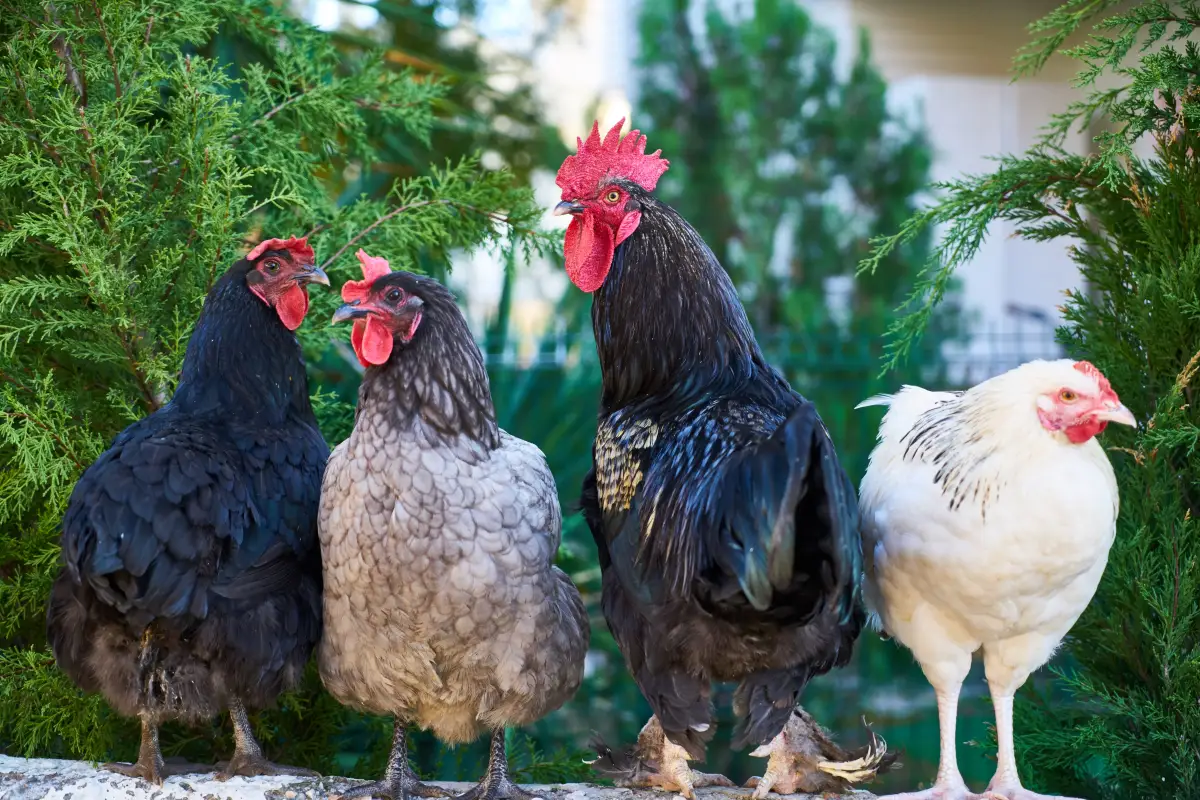
This article sorts integration failures into four concrete symptoms: constant fighting, feather loss, refusal to roost, and blocked access to feed or water. For each, the remedy is a physical adjustment—adding hiding places, splitting resources, or rearranging the coop interior—not “giving it time” and hoping the flock sorts itself out.
Pinpoint the symptom ruining your integration
Which of these matches what you see? Each points to a specific section below.
- Constant chasing and fighting: New birds stay pressed against a fence or in a corner all day. Pecking draws blood or pins them motionless.
- Feather loss and bare patches: Missing feathers on backs, necks, or vents. You find scabs, broken quills, or reddened skin.
- Refusal to roost at night: At dusk, new birds huddle on the floor or try to sleep outside. They ignore roost bars entirely.
- Can’t reach food or water: New birds loiter near the feeder but get shoved away. They look thin or their droppings are dry.
If none of these fit—a bird is lethargic, sneezing, or has loose droppings—you’re probably looking at illness, not integration trouble. Jump to the escalation path at the end.
When fighting won’t stop: rearranging for peace
Persistent fighting usually means the run is too open. Chickens need to break a line of sight to de‑escalate. Without that, a chase continues until someone gets hurt.
The run has no hiding places
How to confirm: Watch the new birds. If they spend the entire day crowded against a single wall, the space is a visual arena with no cover.
Fix: Add at least three physical barriers—pallets leaning against a fence, a wooden A‑frame, two hay bales. Space them so a chased hen can disappear around a corner. Rearrange the layout every few days during integration to keep the environment unfamiliar to all.
Expected result: Chasing drops off within hours. Pursuit collapses the moment the target ducks out of sight.
Feeders and waterers force face‑to‑face competition
How to confirm: Stand‑offs happen at the feeder or waterer, especially during peak feeding. Count the stations: if you have one or two, and the flock is over eight birds, it’s a choke point.
Fix: Set up feed and water in three or more locations, at least 10 feet apart. For a flock of 8–12, run two 3‑gallon waterers and three treadle feeders. Put one station in a zone new birds already feel safe using.
Expected result: Resource squabbling fades within 48 hours. Birds distribute themselves across stations naturally.
The run is simply too small
How to confirm: Measure. If the run is under 8 square feet per bird and you just added members, crowding will force aggression regardless of temperament.
Fix: Expand the footprint temporarily with portable fencing, or supervised free‑range time. If that’s not possible, pull the most aggressive individuals into a time‑out pen for the afternoon to thin the density.
Expected result: Sustained chases stop. What remains is ordinary pecking order jostling.
Feather loss without an obvious predator: what the pecking order is really costing
Feather loss during integration is either dominance pecking (head, back of neck) or stress‑related feather picking (vent, sides). Both have environmental controls.
Protein deficit raises pecking and feather eating
How to confirm: Examine fallen feathers. If they’re eaten down to the quill, protein intake is too low. Check the feed bag—layer rations around 16% won’t support a stressed flock.
Fix: Switch to an all‑flock or grower ration at 18–20% protein for two to three weeks. Provide a daily serving of mealworms or scrambled eggs. Remove any pecked‑clean feathers from the run immediately.
Expected result: Feather eating stops within a week. Pin feathers emerge in about two weeks.
Overcrowding triggers feather pecking
How to confirm: Multiple birds show feather damage, not just newcomers. The flock forages less and pecks at each other more.
Fix: Push usable floor space above 10 square feet per bird if you can. Add a hanging cabbage, a dust bathing area twice the current size, or a pile of dry leaves. These redirect pecking to objects.
Expected result: Feather damage halts within a few days. Normal preening returns.
A single bully is undetected
How to confirm: One hen consistently targets vents or pulls feathers during roosting. The damage is localized, not flock‑wide.
Fix: Isolate the bully in a wire pen placed inside the run for 2–3 days so she’s visible but can’t reach others. When reuniting, rearrange the coop interior to scramble territorial claims.
Expected result: Bullying often ends after one isolation cycle. If it restarts, repeat once; after that, permanent separation may be necessary.
Why new chickens refuse to roost at night
Refusing to roost is never stubbornness. It’s a sign the roost feels unsafe or unreachable. The solution is structural.
Dominant birds block access to the roost bars
How to confirm: Check the coop with a dim light after dark. If dominant birds cover the entire roost and new birds are on the floor, access is being guarded.
Fix: Install a second roost bar at a slightly lower height on the opposite wall. Position it so a hen can jump up without passing the main roost. Add a ramp if the height is too great.
Expected result: New birds use the alternative roost within two nights. They often merge onto the main roost later.
The coop interior has no cover
How to confirm: New birds pace, vocalize, and try to leave the coop at dusk. The interior feels too exposed.
Fix: Hang shade cloth or burlap from the ceiling to create a semi‑private corner. Keep ventilation open—the cloth should block sight, not airflow.
Expected result: Anxiety after dark drops immediately. Birds settle and sleep.
Physical ability gap
How to confirm: Pullets or bantams added to large fowl can’t reach the roost bars. They stand under them, looking up.
Fix: Lower the highest roost or add intermediate perches so the smallest bird can hop up in stages.
Expected result: Smaller birds roost the same evening you change the setup.
The quiet starvation: when new birds can’t eat or drink
This gets missed because new birds stand near the feeder looking calm. They aren’t eating; they’re waiting for a gap that never comes.
Feeder‑to‑bird ratio is too low
How to confirm: A typical hanging feeder provides about two effective feeding positions. With ten birds, most never get a turn. Watch the back of the line.
Fix: Add feeders until there’s at least one spot per 3–4 birds. Scatter a small amount of feed on the ground each morning so every bird gets a mouthful while the pecking order sorts out at the stations.
Expected result: Crop checks at dusk show full crops within a day. Weight stabilizes.
Water access is a single choke point
How to confirm: Birds crowd one waterer, and newcomers dart in for a sip before getting chased off. Droppings look dry or pasty.
Fix: Add a second and third water source—chicken nipples on a bucket work because they can’t be monopolized. Space waterers at opposite ends of the run.
Expected result: New birds hydrate without confrontation. Energy returns quickly.
Reset the whole setup: universal fixes that work across most cases
When multiple symptoms overlap or no single cause stands out, these broad resets often break the deadlock in one move.
- Full coop rearrangement: Move nest boxes, swap roost bars to the opposite wall, and add a temporary partition. The goal is to make the environment unfamiliar to every bird. The old pecking order, tied to the old layout, dissolves.
- Visual barrier wall: Erect a temporary chicken‑wire or hardware‑cloth divider so new and old flocks live side by side, able to see but not touch, for 3–5 days. This replicates the quarantine introduction stage that many skip.
- Flock swap morning: On integration day, release new birds into the run first while the old flock watches from the coop for 15 minutes. It briefly reverses territorial ownership.
When these resets help: They work when the raw inputs—square footage, protein level, and resource count—are already adequate but the social dynamic is stuck. They reset spatial memory.
When they just waste time: If run space sits at 4 square feet per bird, feed protein is 14%, or a bird is ill, no amount of rearranging will compensate.
Stop the problem before it starts
Prevention uses the same principles but applies them before birds ever meet.
- Quarantine with visibility: House new birds where the flock can see and smell them for 7–14 days while you monitor for disease.
- Double the resource stations before integration day: Feeders, waterers, and roost space should already be distributed so newcomers step into plenty.
- Install permanent visual clutter: Pallets, shade cloth, and elevated perches belong in the run as part of the permanent design, not as an emergency retrofit.
- Match temperaments: Integrate birds of similar size and drive. A single timid breed with multiple assertive ones will always face an uphill climb, regardless of the setup.
FAQ
How long does it realistically take for new chickens to integrate?
With corrected environment, a functional truce forms within 3–7 days. Full social blending—where newcomers are indistinguishable from the original flock—usually takes 3–4 weeks. If serious fighting lasts past the first week, check for hidden resource competition.
Can I add just one new chicken?
Adding a single bird concentrates all the flock’s aggression on one target. If it’s unavoidable, use a long see‑but‑don’t‑touch period and place multiple hiding spots in the run. A pair of newcomers is far safer.
Will a rooster help with integration?
A mature rooster often interrupts hen fights and absorbs some of the tension. But roosters can also increase stress and rough up timider birds. Add a rooster only if you want one as a permanent flock member, not as a temporary integration tool.
My new chickens are a different size or breed. Does that change the approach?
Yes. Large fowl intimidate bantams, and high‑energy breeds exhaust docile ones. Plan for double the separation period, lower roost bars, and an extra feeding station. The integration window stretches because the physical mismatch is harder to overcome.
If nothing worked
Before asking for outside help, collect the following:
- Which individuals start aggression—breed, size, age.
- Where and when the worst behavior happens—feeder corner, dusk, under the roost.
- Specific injury details: wound locations, feather loss patterns, weight changes.
Take these observations to a poultry‑specific forum or a veterinarian experienced with chickens. Skip groups that default to “just give it time.” With precise data, an experienced keeper can often spot a pressure point you overlooked. If one hen remains a persistent threat, permanent separation is the safest outcome—for her and for the rest of the flock.