Chicken Behavior Secrets: What Your Flock Is Really Saying
Chickens broadcast welfare data through dust bathing intervals, feather plugging, and the cadence of alarm calls—none of it random. Reading these behaviors as diagnostic outputs rather than anecdotes lets a keeper intercept health failures before clinical signs surface. This article works through six behavioral domains, from foraging variance to roost disruption, to build a systematic diagnostic protocol.
How a Flock’s Baseline Behavior Sets the Diagnostic Framework
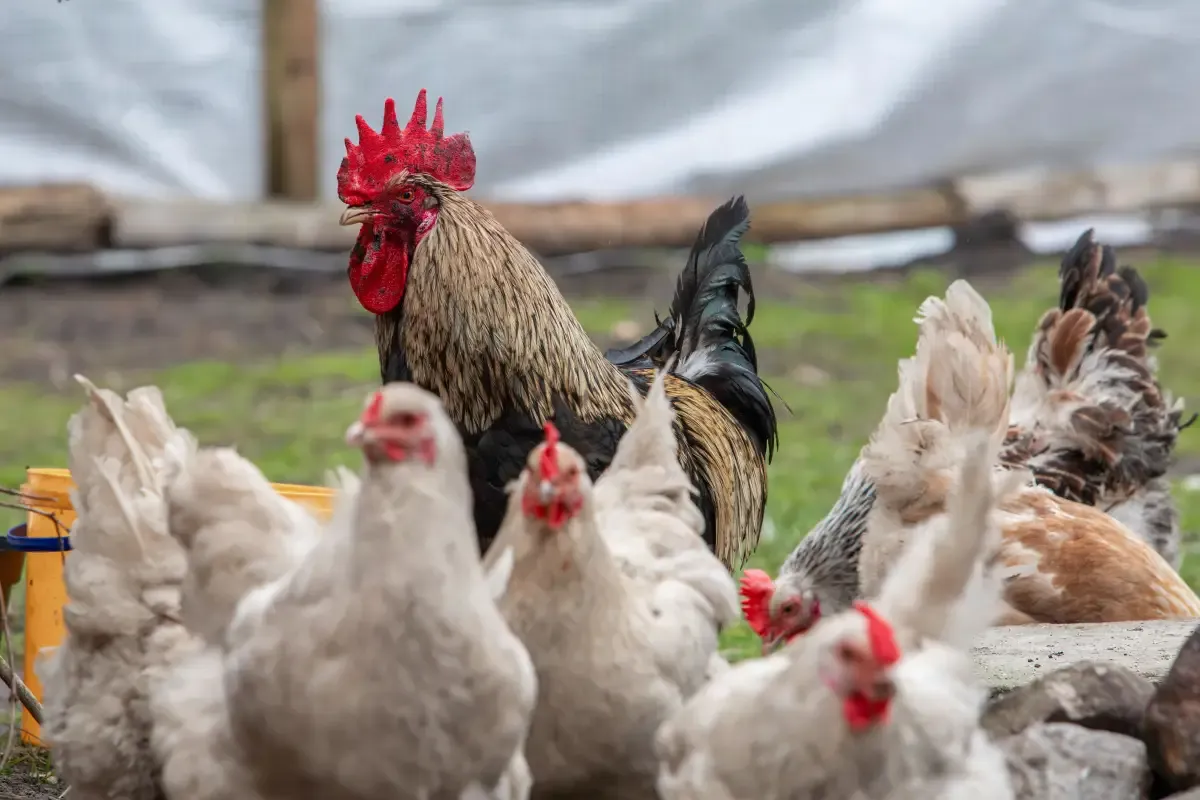
Every flock runs on an internal clock. Hens adhere to predictable daily arcs: morning foraging, midday dust bathing, loafing during heat, and roosting at dusk. A keeper who walks the run daily and mentally logs the standard tempo—how many minutes pass before the feeder empties, which birds dust bathe in pairs, who perches beside whom—owns the single most reliable diagnostic tool available. A change in behavior, not an isolated oddity, is the genuine signal.
This framework holds because chickens mask vulnerability. A hen that feels unwell will continue scratching and pecking until she physically cannot. By the time she breaks from the flock or stops eating, pathology is usually advanced. Subtler deviations surface weeks earlier: a normally assertive hen pausing at the pop door, a bird that skips its morning dust bath, a feeder scuffle that escalates from a peck to a sustained chase. Recording these shifts—even as brief phone notes—converts vague unease into a trackable trend. When three birds simultaneously shorten their foraging bouts, the driver is likely environmental or nutritional; when only one does, internal pathology becomes the primary suspect.
A baseline also prevents misdiagnosis. A pullet entering the laying cohort will temporarily lose rank and receive sharp reminders from established hens. That is normal social recalibration, not a flock crisis. Knowing what constitutes typical behavior for a specific group—a mixed flock of Rhode Island Reds and Leghorns operates differently than a pen of all bantam Cochins—sharpens the diagnostic lens. Breed shapes baseline: flightier breeds startle more readily, heavy breeds dust bathe less, and broody genetics rewrite the entire daily script. The objective is not cataloging every quirk, but detecting when the pattern fractures in a way that compromises welfare.
Feeding Intensity and Feed Refusal as Nutritional Red Flags
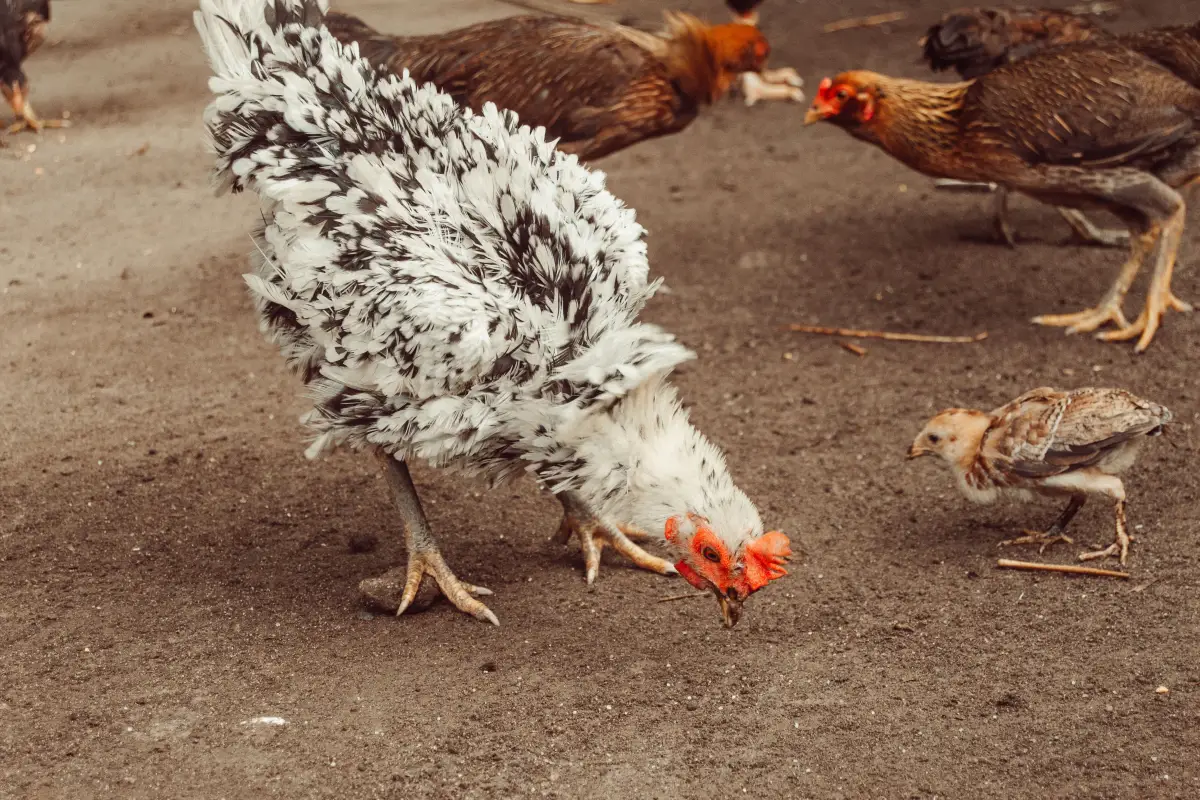
Foraging is not simply ingestion; it is a display of gut integrity, nutrient status, and parasite pressure. A healthy hen pecks the ground roughly every two to three seconds during active foraging, moving methodically across the run. When that cadence slows, the differential starts with the feed itself: mold, a new bag from a different mill, or a feeder design that intimidates subordinate birds can all suppress intake. If the feed passes inspection, the investigation shifts to the bird.
Selective feeding—picking out specific grains while ignoring pellets or vice versa—often flags a micronutrient craving. Hens short on protein frequently escalate feather pecking and begin eating fallen feathers, not from a behavioral vice but because their tissues demand sulphur amino acids. A calcium deficit, in contrast, drives a hen to obsessively peck at painted surfaces, mortar, or even her own eggs. Water consumption trends matter equally: a flock that drains drinkers far faster than usual during mild weather should raise suspicion for kidney stress or salt toxicity; a bird that loiters at the drinker but only takes tiny sips may be dealing with crop impaction.
Parasites distort feeding behavior as dependably as diet imbalances. A hen with a heavy roundworm burden continues eating but loses body condition, its foraging turning rushed and less systematic. Coccidiosis, particularly in juveniles, presents as huddled inactivity near the feeder coupled with fluffed plumage. Watching the flock’s foraging rhythm after a deworming or treatment reveals whether the intervention worked: a return to steady, paced foraging within three to five days counts as a positive indicator.
Feather Pecking and Cannibalism: Tracing Root Causes Through Behavior
Feather pecking follows a diagnostic logic; it does not appear at random. The first step is separating gentle pecking—a dominant hen tapping a subordinate from the feeder—from destructive pecking. Gentle pecks land on the head or back of the neck and rarely remove feathers. Destructive pecking targets the vent, tail, or wings, pulls feathers out repeatedly, and spreads quickly because bare pink skin becomes a visual magnet for the rest of the flock.
The diagnostic sequence for destructive pecking runs in a fixed order. First, audit dietary protein: layer rations at 16% may sustain maintenance but fall short for a mixed flock that includes growing pullets, moulting hens, or high-production layers; a temporary increase to 18–20% often stops the behavior if protein is the trigger. Sodium deficiency, less frequent but still possible on all-grain diets without a balanced supplement, induces pica-like behavior that includes feather eating. Second, rule out external parasites. Northern fowl mites are diurnal and cluster around the vent; a vent inspection with a flashlight reveals grey-black specks moving on the skin. A bird infested with mites plucks its own feathers and tolerates pecking from others because the irritation overrides normal social avoidance. Third, evaluate space and enrichment. A crowded pen with 2 square feet per bird or fewer produces feather pecking regardless of diet. Suspending a head of cabbage at head height or scattering scratch grains in deep litter redirects pecking toward the environment rather than flockmates.
Cannibalism follows untreated feather pecking but can also emerge independently from brooder heat stress, intense lighting, or abrupt changes in flock composition. When a hen begins cannibalizing, immediate separation is mandatory, but the diagnostic work continues because whatever triggered her will affect the remainder. Checking light intensity—a lumen level above 5 lux for laying hens can elevate aggression—and reviewing recent bird additions or removals often identifies the stressor.
Dust Bathing and Preening: External Parasite Pressure and Comfort
A hen that cannot dust bathe operates under chronic stress. Dust bathing has two functions: physically coating skin and feathers with fine particles that absorb excess oil and dislodge parasites, and executing a deeply wired behavioral sequence that signals psychological comfort. Birds in enriched environments dust bathe once or twice a day, selecting dry, loose soil or sand in a sunny spot. When that pattern changes, the cause is typically a lack of suitable substrate or a surge in ectoparasites.
A sudden frequency spike—three, four, or even five times a day—combined with attempts to bathe on hard-packed earth, gravel, or the coop floor strongly suggests mites or lice. The birds are trying to scrub off an irritant. Preening, too, intensifies: a hen may spend prolonged periods nibbling at the base of her tail or beneath her wings, sites where louse eggs and mite debris collect. When multiple birds show this pattern, confirm infestations with a sticky-tape sample or a close visual inspection of the vent and belly region before applying any topical treatment.
Conversely, a total cessation of dust bathing carries equal weight. A bird that previously spent ten minutes wallowing but now stands listless on the roost is likely systemically ill, in pain, or too weak to perform the vigorous motions. Bumblefoot, internal laying, or advanced respiratory disease can all suppress the motivation. At that point the diagnostic scope must broaden: palpate the abdomen, examine the footpads, listen for rattled breathing. The behavior merely confirms what the flock dynamics already implied—this hen needs a full physical exam.
Substrate quality itself yields diagnostic clues. A flock that relocates its preferred dust bathing site from a sunny patch to shade may be reacting to overheating; the original spot receives too much direct afternoon sun. Supplying multiple well-drained, loose-soil bathing locations distributed across the run lets the birds choose and reveals their thermal and security preferences. A site that stays untouched despite excellent substrate indicates social exclusion—a lower-ranking group avoiding a dominant bird’s territory.
Roosting Habits and Social Hierarchy as Welfare Barometers
Roosting is where social order and physical health intersect most transparently. The sequence in which birds settle onto the roost bar is a stable hierarchy map: dominant hens take the highest, centermost positions, subordinates fill in outward and downward, and the lowest-ranking birds occupy the ends, often near droppings boards or walls. This arrangement rarely changes without cause. When a hen that regularly roosts in the middle suddenly moves to the floor, two categories of cause dominate the differential: a physical impairment that makes perching painful, or acute bullying that makes the roost feel unsafe.
Birds that sleep on the ground or in nest boxes despite an available roost bar demand a leg and joint exam. Scaly leg mites, arthritis, bumblefoot, or any injury can render gripping a perch unbearable. Respiratory conditions that disrupt balance—Aspergillosis, for example—can also force a bird low. If the hen shows no obvious leg pain and still avoids the roost, observe the flock at dusk. A subordinate hen driven repeatedly off the bar by a more dominant counterpart will eventually stop trying; adding a second roost bar at the same height but separated by a visual barrier often restores her perching access.
Shifts in roosting time serve as stress indicators. A flock that normally settles onto the roost at civil twilight but stays on the ground thirty extra minutes, foraging edgily in near-darkness, may be reacting to a new predator cue that makes entering the coop feel risky. The same flock might huddle tightly together on a single bar instead of spreading across two, even on mild evenings, signaling insecure attachment after a fright. Conversely, birds that go to roost abnormally early, especially in summer, may be ill or depleted; check for anaemia (pale combs) or coccidiosis.
The social hierarchy also manifests in daytime spacing. A hen that formerly foraged near the group but now isolates at the farthest edge of the run is often clinically ill; her flockmates can detect it and may peck her away. The behavior is not malice but a biological response to a weakness that attracts predators. Tracking which individuals consistently eat last or wait until the feeder is clear tells keepers whether resource distribution is equitable. If the same three hens always eat last, even with multiple feeding stations, the station layout probably fails to accommodate the flock’s social architecture.
Vocalizations and Activity Levels: Audible Stress Signals
Chickens hold a vocabulary far larger than the egg song, and each call carries diagnostic weight when mapped against daily rhythms. A calm, foraging flock produces a low, steady murmur—soft clucks and trills that bind the group. Silence is usually more troubling than noise. A flock that abruptly goes quiet during daylight, birds standing still and not vocalizing, signals either a predator overhead (triggering a freeze response in prey species) or a systemic health issue that saps energy across the group, such as heat stress, coccidiosis, or an infectious bronchitis outbreak.
The classic alarm call—a sharp, iterated “buk-buk-buk-BAWK!”—unambiguously means threat. If this call sounds multiple times per hour on days when the keeper sees no visible predator, the flock is likely detecting subtle cues: fox scent marking near the run, a hawk that passes rapidly out of human sight, or an unfamiliar object in the environment. Chronic alarm calling that persists over days points to an unsecured perimeter that needs hardening, because the stress response is metabolically costly and suppresses egg production and immune function. Walking the fence line for dig evidence, then adding overhead cover to the run, often cuts call frequency within a day.
Distress calls—sustained, rhythmic squawking—are unmistakable and mean a bird is caught or injured. In a well-managed flock, these should be rare, but if a hen gives a distress call inside the coop during daylight, check immediately for leg entrapment, a stuck head, or a comb snagged in netting. Pacing and repetitive calling at the pop door may signal that a hen cannot access the nest box she wants because another hen occupies it; this call, often a steady “cluck-cluck-cluck,” communicates frustration rather than pain, but left unaddressed it can escalate to vent pecking.
Activity rhythms complete the picture. A flock that normally rushes to the gate at the keeper’s arrival but instead stays huddled in the coop deserves a rapid environmental scan: temperature, drinker function, recent feed change. A single bird that isolates and stands motionless with a drooped tail demands immediate handling and a full exam. On the opposite end, a flock that is abnormally active—pacing the fence line, repeatedly flying up against the wire—is trying to escape something, typically excessive heat, crowding, or a persistent predator just visible beyond the run.
Behavioral Signals That Demand Immediate Action
- A normally active hen that isolates and stops foraging: check for illness, injury, or bullying.
- A sudden, flock-wide increase in dust bathing frequency: rule out ectoparasites first.
- Destructive feather pecking spreading beyond one bird: audit protein, sodium, space, and enrichment immediately.
- A change in roosting position tied to a specific individual: examine for leg or respiratory issues and observe social dynamics at dusk.
- Chronic alarm calling over multiple days: improve predator-proofing and run cover.
- A flock that falls unusually silent during daylight: consider heat stress, disease, or environmental toxin exposure.
- Multiple birds attempting to dust bathe on inappropriate surfaces: treat for mites or lice, then provide better dust bathing substrate.
Flock Behavior Questions Answered
Why do chickens peck each other’s feathers?
Feather pecking typically stems from a dietary deficiency (most often protein or sodium), a heavy external parasite load, or overcrowding that causes redirected foraging behavior. If the pecking removes feathers and draws blood, intervene within 24 hours by addressing the likely cause while separating injured birds.
What does it mean when a chicken stands on one leg?
A chicken standing on one leg with the other tucked up is resting and conserving heat—this is normal, especially in cool weather. If the behavior pairs with lameness, swelling, or reluctance to move, however, it may indicate bumblefoot, arthritis, or an injury in the tucked leg.
Why is my chicken dust bathing in wood shavings inside the coop instead of outside?
Bathing in coop litter usually means the outdoor run lacks loose, dry soil or sand in a preferred location. Check whether the bathing spots outside are compacted, wet, or monopolized by dominant birds. Adding a shallow tray of play sand or dry dirt in a sheltered corner of the run often resolves the behaviour.
Can stress cause my chickens to lose feathers?
Stress alone does not pull feathers out directly, but it can trigger feather pecking by flockmates or induce a premature moult. A stressed hen may also self-pluck if irritated by mites. Identify the proximate stressor—predator pressure, heat, new flock members—and address it while examining for parasites.
Why are my chickens suddenly quiet?
Sudden silence in a previously vocal flock can signal a predator threat that has triggered a freeze response, the onset of heat stress that makes birds lethargic, or illness that drains energy. If the silence lasts more than a few hours and is accompanied by fluffed feathers and inactivity, begin a systematic health check starting with respiratory sounds and comb color.
From Observation to Management: The Action Plan
The behaviors detailed here operate as early-warning systems, often surfacing days or weeks before clinical signs. The single most powerful action a keeper can take is to build a daily, structured observation routine: walk the run at the same time each day, note which birds are foraging actively, track where dust bathing occurs, and record who roosts where at dusk. Deviations accumulate into a pattern that points to the root cause, whether nutritional, parasitic, or environmental. Treat the run as a living diagnostic interface, and every squabble and scratch becomes actionable data.