Cold Hardy Chickens: A Selection Matrix for Your Flock
A chicken that survives a zone 3 winter without supplemental heat does so because four measurable traits work in combination — comb type, body mass, feather density, and breed origin. Whether any breed actually works on a given homestead depends on how those traits intersect with the real limits of space, noise tolerance, and egg color goals. This article applies a decision matrix to that intersection, using the cold‑hardiness levers to rank breeds for USDA zones 3–5, then filters them against husbandry constraints. It sets aside the usual breed‑list approach and gives you a scoring method you can repeat for any property.
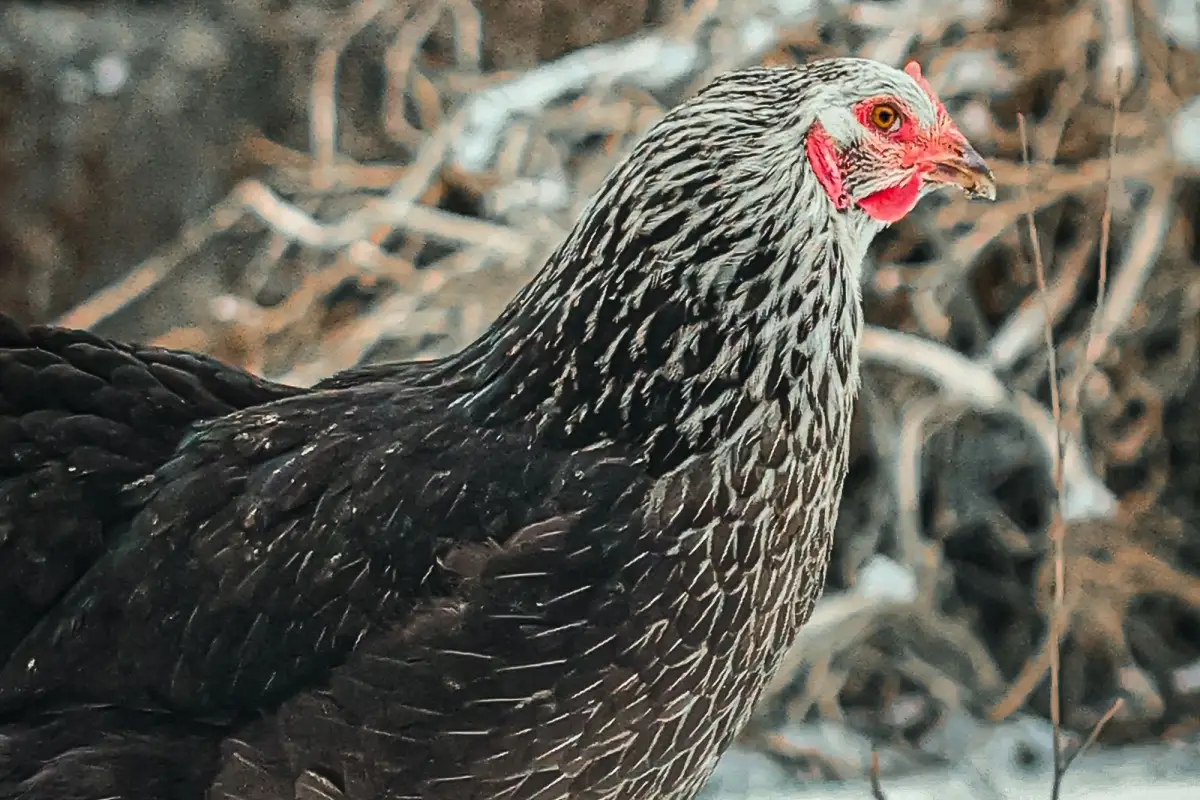
The matrix does not pretend that all cold‑hardy breeds are equal, nor that climate alone dictates the right bird. It treats comb type as the first gate, body mass and feathering as energy‑budget factors, and origin as a tiebreaker. By the end, you will have a shortlist that reflects your actual conditions, not a catalog page.
The Four Levers of Winter Resilience in Chickens
Winter mortality in poultry typically traces back to one of four physiological factors. Understanding each as a lever you can pull through breed choice is what separates a flock that scrapes through January from one that stays functional.
- Comb type — The most direct exposure risk. Surface‑area‑to‑volume ratio dictates how quickly blood‑filled tissue freezes. Pea, rose, and walnut combs concentrate mass close to the skull, reducing heat loss; large single combs (Leghorn, Minorca) freeze quickly. Extension bird‑handling notes consistently show far less frostbite in pea‑combed birds, and the mechanism aligns with basic physics.
- Body mass and conformation — Thermal mass matters, but only within a range. Hens under 5.5 pounds lose heat faster and require more feed per unit of body weight to maintain core temperature. The practical floor for zones 3–5 is 6.5–9 pounds for standard hens, with a deep, compact body that lowers surface‑area‑to‑volume ratio without creating leg‑stress or feed‑efficiency problems.
- Feather density and structure — Dense, tight feathering traps a still‑air layer; a thick underfluff does the heavy lifting. Breeds like the Chantecler and Orpington were selected for this trait explicitly. Leg feathering can add insulation but collects ice in wet snow, so it is a net negative on properties with damp winters.
- Origin and historical selection pressure — Breeds forged in short‑day, low‑temperature environments (Chantecler, Orloff, Icelandic) bring metabolic adaptations — lower activity levels in cold, efficient feed conversion — that Mediterranean breeds lack. This is not folklore; it is the result of generations of culling birds that failed to lay or maintain condition through winter.
These four levers do not carry equal weight. Comb type is the gatekeeper: a wrong choice here produces injury even when the other three are strong. Body mass and feathering then set the energy equation. Origin breaks ties when two breeds score similarly on the first three factors.
Building the Selection Matrix: Step by Step
The matrix begins with constraints, not with breeds. Each step addresses a specific failure point in the typical selection process.
Step 1: Map Your USDA Zone and Homestead Constraints
Start with what cannot be changed.
- Climate minimums — Zone 3 (−40 to −30°F) requires the most conservative breed choices; zone 5 (−20 to −10°F) allows slightly more flexibility, though single combs still carry risk.
- Space — Overcrowding raises humidity, and humidity is the multiplier that turns a survivable cold night into a frostbite event. For cold‑climate flocks, 4 sq ft per bird inside the coop and 10 sq ft in the run are entry‑level numbers; less than that forces management burdens that the matrix cannot fully offset.
- Noise constraints — Some otherwise excellent cold‑hardy breeds (certain Wyandotte strains) can be vocal. If neighbors are close, prioritize breeds with documented calm, quiet dispositions.
- Egg color and production goals — Wants versus needs. Brown‑egg preference eliminates some white‑egg breeds that score high on hardiness; winter production without supplemental light requires breed‑level selection for that trait.
A constraints profile is one sentence: "Zone 4, 6 hens max, small run, must be quiet, brown eggs." Everything after this step either serves that sentence or wastes time.
Step 2: Score Breeds on the Four Cold‑Hardiness Levers
Rate each candidate breed against the levers. Use a simple high/medium/low rating for each, based on documented breed characteristics, not catalog enthusiasm.
Comb type rating
- High hardiness: pea, rose, walnut, cushion combs (Chantecler, Buckeye, Wyandotte, Brahma)
- Medium: smaller, thicker single combs (some Orpington lines)
- Low: large, thin single combs (Leghorn, Minorca, Fayoumi)
Body mass rating
- High: hens over 7.5 lbs (Brahma, Jersey Giant, Cochin)
- Medium: 6–7.5 lbs (Orpington, Wyandotte, Australorp)
- Low: under 6 lbs (most Mediterranean breeds, bantams)
Feather density rating
- High: profuse, tight feathering with thick undercoat (Chantecler, Cochin, Brahma)
- Medium: adequate coverage but less underfluff (Buckeye, Australorp, some Wyandotte lines)
- Low: sparse or loose feathering (Campine, Hamburg, game breeds)
Origin rating
- High: breeds selected specifically for cold climates (Chantecler, Orloff, Icelandic)
- Medium: temperate origin with proven cold‑climate adaptation over decades (Orpington, Sussex, Wyandotte)
- Low: developed in hot climates, no cold selection history (Leghorn, Minorca, Fayoumi)
This step is not about generating a precise number. It is about lining up the ratings so mismatches become immediately visible. A breed that rates low on comb type should drop out here, regardless of its other scores.
Step 3: Filter by Egg Color, Production, and Temperament
Hardiness ratings create the pool; management goals narrow it.
- Egg color — If brown eggs are a requirement, set aside breeds that lay white or tinted eggs (Leghorn, Chantecler light brown is borderline). This filter is binary; do not fudge it.
- Winter production — Breeds selected for consistent cool‑season laying without artificial light (Chantecler, Buckeye, some heritage lines) outperform commercial strains that have been bred for maximum output under controlled lighting. Expect all hens to slow down when day length drops below 14 hours, but the degree of slowdown varies.
- Temperament and noise — Confinement stress in winter elevates cortisol, depresses immunity, and increases feather picking. A docile, quiet breed (Orpington, Buckeye, Chantecler) reduces the pathogen pressure that cold weather already amplifies.
Done correctly, this step yields three to five breeds that satisfy the hardiness threshold and the keeper's non‑negotiable management criteria.
Step 4: Finalize Your Shortlist and Adjust for Microclimate
Breed ratings are general; your property is specific. A coop that faces south and sits behind a windbreak can stretch the tolerance of a medium‑comb breed; a run exposed to a north wind narrows the margin. For example, an Orpington with a smaller single comb might survive in a well‑insulated, low‑humidity setup, but a pea‑combed Buckeye would be the safer choice where wind‑driven moisture is present.
Also verify availability early. Northern‑hardy breeds sell out by late winter; have at least one backup candidate on your shortlist. The perfect combination means nothing if you cannot source the birds before brooding season ends.
The Framework Applied: A Zone 4 Homestead with Tight Space and Brown Eggs
A 70‑square‑foot coop and attached 120‑square‑foot run in USDA zone 4, lowest temperature typically −25°F. The keeper can house six hens at most, needs quiet birds because of a nearby property line, and markets brown eggs. Here is how the matrix prunes the options.
Step 1 (Constraints) — Zone 4 extreme cold, small run, quiet essential, brown eggs.
Step 2 (Score breeds) — Chantecler (pea, high mass, high feather density, high origin), Wyandotte (rose, medium mass, medium feathering, medium origin), Orpington (medium comb, medium‑high mass, high feathering, medium origin), Buckeye (pea, medium mass, medium feathering, medium origin), Brahma (pea, high mass, high feathering, medium origin). Leghorn and Minorca eliminated on comb type alone.
Step 3 (Filter by goals) — All lay brown or tinted eggs; Chantecler light brown is acceptable. Noise: Chantecler and Buckeye are the quietest; Wyandotte can be vocal. Space: Brahma and Jersey Giant need more room; medium‑sized hens fit the small run better.
Step 4 (Final shortlist) — Buckeye and Chantecler hold the top spots: both have safe combs, adequate mass, good feathering, and quiet temperaments. Hatchery availability favors Buckeye. The keeper selects Buckeyes, adds a wind‑block panel on the north run wall to manage the microclimate.
Twenty minutes of matrix work avoided buying a flock of attractive Orpingtons that would have tolerated the cold but faced repeated comb frostbite in that damp, exposed run.
Where the Matrix Goes Wrong: Common Selection Errors
Choosing by Appearance Instead of Comb Type
The most damaging shortcut is looking at a breed that appears heavy and fluffy and deciding it is cold‑hardy without checking the comb. An Orpington with a moderately large single comb can lose comb tips in a damp, poorly ventilated coop, even if its body handles the temperature. Comb type must be the first filter, not an aesthetic footnote. When comb type is ignored, frostbite becomes a matter of when, not if.
Treating Body Mass as a Substitute for All Traits
A heavy bird retains more heat, but mass alone does not stop comb frostbite, nor does it protect against humidity. A 10‑pound Brahma with a pea comb handles damp cold far better than a 9‑pound Cochin with a single comb. Moreover, oversized birds in a small coop increase ammonia load and can develop leg issues on frozen ground. Match size to both climate and housing dimensions.
Cramming Too Many Birds into the Same Footprint
Winter flock density is a multiplier on every other risk. Too many birds raise humidity, spike ammonia, and raise stress — and stress suppresses immune function. Even the most cold‑adapted breed will break down in a damp, overcrowded space. The matrix loses its predictive power when the keeper tries to circumvent physics by adding one more hen than the square footage can ventilate.
Quick Reference: Selection Matrix at a Glance
| Stage | Goal | Key Action |
|---|---|---|
| 1. Map Constraints | Define climate minimum, space limits, noise tolerance, egg color needs | Write a one‑sentence homestead profile (zone + limits) |
| 2. Score Hardiness Levers | Rate comb type, body mass, feather density, and origin for each breed | Compare ratings side‑by‑side; eliminate low‑comb breeds |
| 3. Filter by Egg/Temperament | Overlay egg color, winter production, and docility | Cross out breeds that don't meet your must‑have goals |
| 4. Finalize and Adjust | Apply microclimate tweaks and check availability | Pick the top 1–2 breeds that are actually obtainable |
FAQ
Can cold hardy chickens survive without a heated coop?
Yes, provided the coop remains dry, draft‑free but ventilated, and the breeds have small combs and adequate body mass. Supplemental heat often raises humidity enough to cause more frostbite than it prevents. In most zone 3–5 setups, moisture management and breed selection replace the need for heat.
Do cold hardy breeds stop laying in winter?
Most reduce or pause laying without 14–16 hours of light. Breeds developed in short‑day northern climates (Chantecler, Buckeye, Icelandic) tend to maintain more consistent production through dark months, especially if they enter winter with adequate body reserves. Molt and extreme cold snaps can still interrupt laying even in these breeds.
Which cold hardy breed is the quietest?
Among high‑scoring breeds, Chanteclers and Buckeyes are repeatedly described as quiet. Strain and individual variation exist, but these two have a documented calm temperament that translates to lower vocalization, making them candidates for suburban cold‑climate lots.
Is a pea comb always better than a single comb for frostbite?
In zones 3–5, the advantage is decisive for most properties. A pea comb minimizes exposed tissue surface area. A very thick, modified single comb on a sheltered bird in a dry coop can succeed, but the margin is narrow. Pea, rose, or walnut combs are the safer default. Frostbite incidence tracks comb geometry more closely than any other single variable.
Can bantam breeds survive zone 3 winters?
Some bantams with small combs and dense feathering (bantam Wyandottes, bantam Cochins) can survive, but their lower body mass leaves less thermal inertia. They need a well‑insulated, draft‑free coop and may require increased feed to sustain body heat through extended cold.
Conclusion
The matrix imposes a sequence that short‑circuits impulse choices: define hard limits, score breeds on the four physiological levers, filter by your must‑have goals, and adjust for site‑specific details. Begin with comb type because it is the trait most likely to cause visible injury when ignored. Once that gate is locked, the rest of the selection process becomes a logic exercise you can repeat whenever your homestead setup or goals change.