Why large combs aren't enough for heat-tolerant chickens
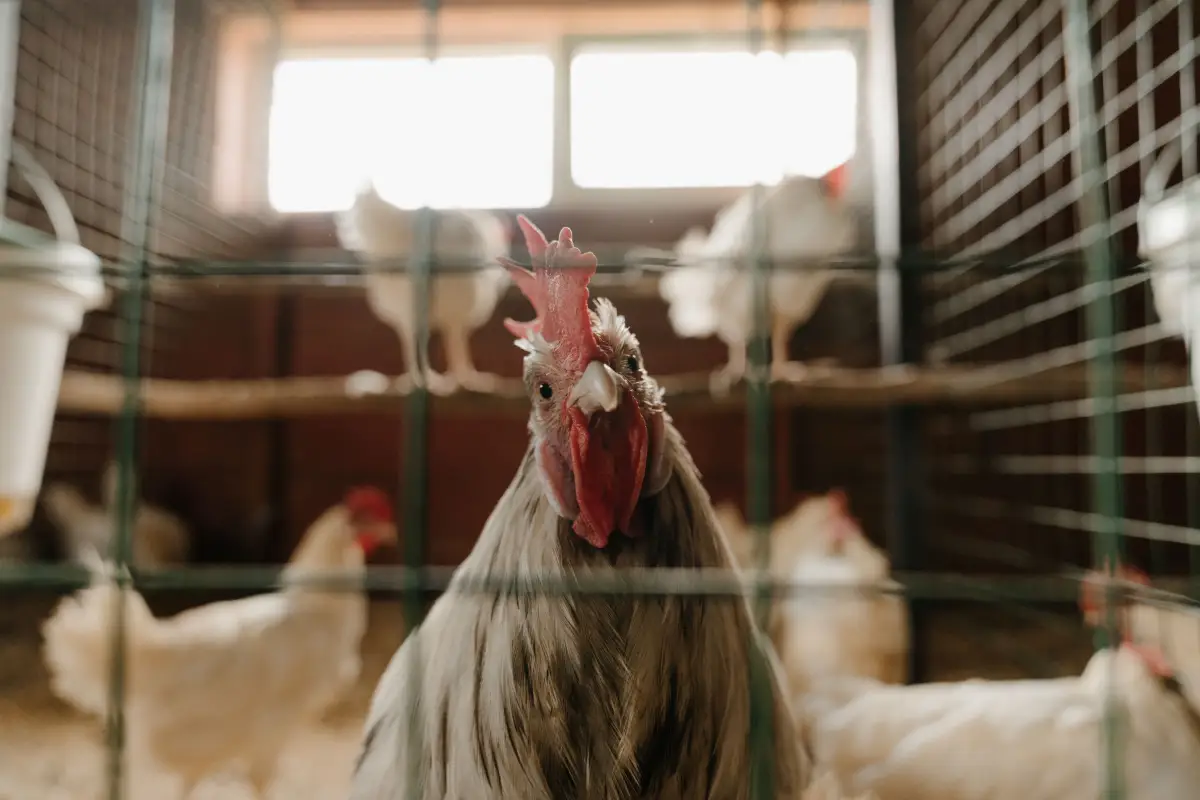
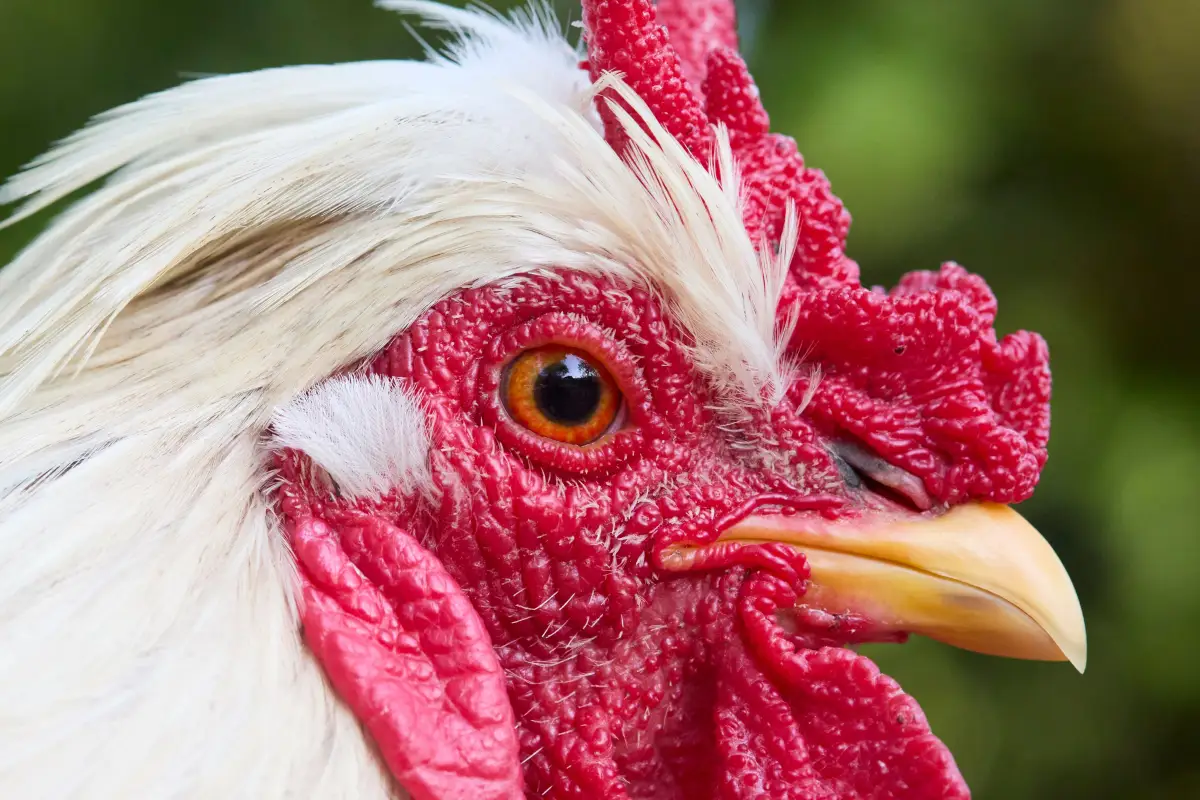
A large comb aids convective cooling, but it’s a single variable inside a system that also includes feathering and body mass. Judging heat tolerance by comb size alone misses the two traits that most often decide whether a bird overheats: the insulative load of its plumage and the absolute metabolic heat its tissues generate. True heat tolerance is a three-factor equation, not a headshot.
Every season, keepers in hot climates learn this the hard way when a big-combed bird collapses from heat stress. The reason is structural. Three biological mechanisms — radiative surface area, feather-mediated insulation, and body-mass-driven heat production — co-determine thermal margin. Over-focus on one mechanism, and the others silently erode it. The rest of this article traces how that happens and which trade-offs deserve attention.
The Three Variables That Decide Whether a Chicken Stays Cool
Convection from the comb is the most visible cooling route, but it’s never independent. Feather coverage and body weight set both the internal heat load and the alternative paths for heat loss. If the feather barrier is thick or the body mass is high, even a generous comb can’t shed heat fast enough. This framework explains the cases where comb size misleads, and it’s what makes selection decisions robust.
The Heavy Leghorn That Defeated Its Own Comb
Consider a heavy-line White Leghorn hen kept in the Southeast, on a farm where producers selected for larger carcass weight. Her comb is textbook: tall, deeply serrated, richly vascularized. Her feathering is dense and close, a nearly uniform insulative layer. She weighs 7.5 pounds, more than a pound above the breed’s standard weight.
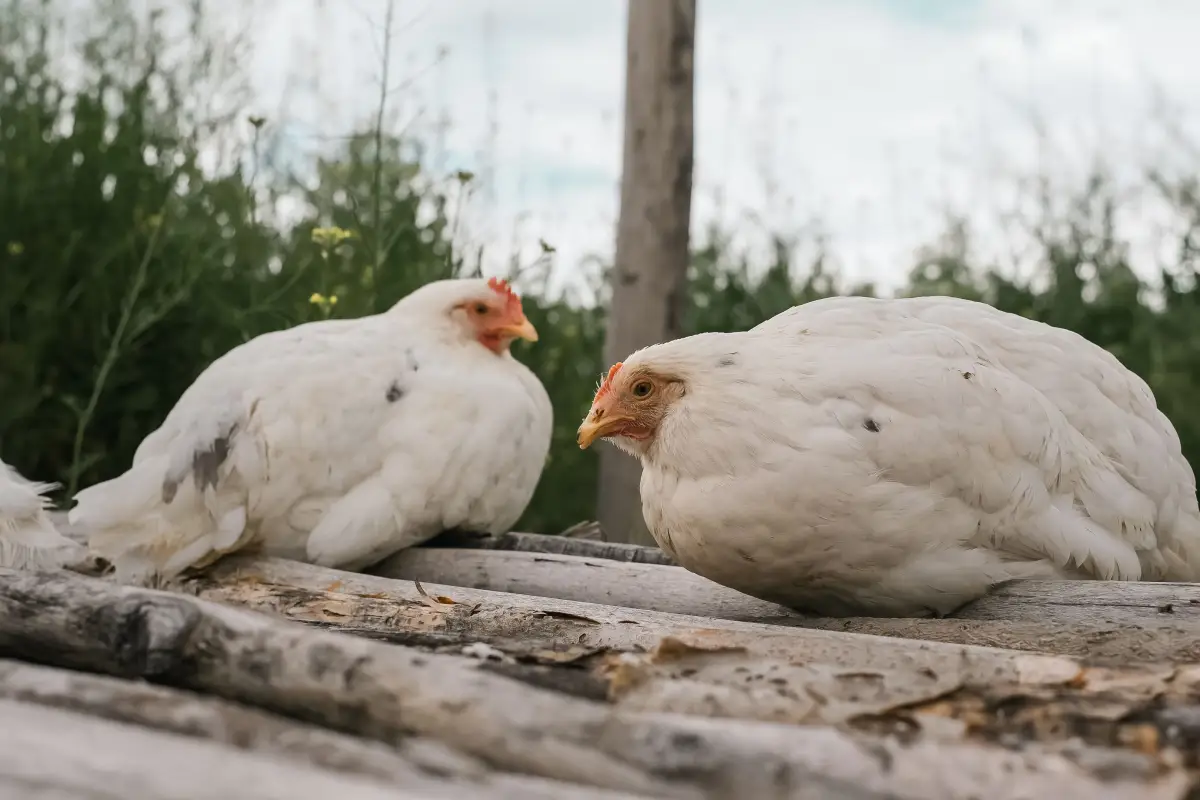
When afternoon temperatures hit 95°F with moderate humidity, she stands in the shade, panting, wings held away. A lighter-bodied, standard Leghorn — same comb type, less body mass, sparser feathering — forages comfortably nearby. The heavy hen’s comb is large, yet it can’t keep up. Breaking down why reveals how each mechanism interacts.
Comb Surface Area and the Limits of Convection
Blood circulates through the comb close to the surface, and airflow carries heat away. More surface area increases potential heat transfer. The heavy Leghorn’s comb is large, so convective loss should be strong.
But convection depends on the temperature difference between blood and ambient air. At 95°F, that gradient is narrow. Heat flows out of the comb only as fast as the differential allows. The comb’s size gives it capacity, but capacity means little if the rest of the bird keeps feeding it more heat than it can unload.
Feather Coverage and the Insulative Overhead
Feathers trap a layer of still air that acts as thermal resistance. The denser the coverage, the less body heat reaches the skin surface where it could be dissipated or picked up by airflow. This hen’s tight plumage wraps her in insulation that convection at the comb cannot bypass. Holding her wings out exposes some bare areas, but the overall feather coat still blocks most heat escape routes.
A chicken in hot conditions needs a net thermal resistance low enough that internal heat can find a path out. This bird’s feather density raises that resistance, forcing a larger share of the cooling burden onto the comb — a burden the comb’s capacity cannot meet alone once ambient temperatures climb.
Body Mass and the Square-Cube Penalty
A 7.5-pound hen produces noticeably more basal metabolic heat than a 5.5-pound standard bird, simply because she has more metabolically active tissue. Independent of feathering, that larger heat load must be moved from core to surface.
Body mass also carries a geometry cost. As mass increases, volume and heat production rise faster than surface area. The large comb adds some radiative surface, but not enough to offset the volume-to-surface penalty that comes with extra weight. Metabolic heat production grows, while the total surface for heat loss grows more slowly. The comb advantage gets overwhelmed by the sheer amount of heat demanding exit.
Three Practical Contexts Where the Three Variables Matter
Selecting breeds for a consistently hot region. When comparing a moderate-combed but light-bodied breed like a Sussex with a heavy Orpington bearing a similar single comb, body weight and feather density become the deciding factors. In sustained heat, the lighter bird with looser feathering will almost always thermoregulate better, regardless of comb parity.
Deciding which individuals to keep within a flock. Even within the same breed and hatch, two hens with equal comb size can differ sharply in body condition and feather tightness. A heavier, denser-feathered bird will pant earlier and stop eating sooner. Culling for heat tolerance requires scoring body mass and feather coverage side by side with comb dimensions.
Managing fast-growing meat birds. Cornish Cross broilers pile on muscle mass rapidly, generating enormous metabolic heat, while their combs stay small. Feathering is sparse but irrelevant because internal heat production so far outpaces any comb’s capacity. The triad explains why these birds are inherently heat-sensitive: mass is extreme, comb surface is minimal, and the equation is broken. Only environmental mitigation (foggers, fans, lower stocking density) can compensate.
Why Trusting Comb Size Alone Keeps Backfiring
The single most persistent error is treating a large single comb as a reliable heat-tolerance marker. It’s a heuristic that works only when body mass and feather insulation are held constant — a condition almost never met in real flocks.
Breeders who fixate on comb appearance often select birds that still overheat because the other two variables silently offset the radiator. The heavy Leghorn example illuminates the mechanism: a classically “heat-tolerant” comb type, defeated by the insulative and metabolic loads of the body carrying it. The mistake is mistaking a necessary component for a sufficient one.
A Naked Neck That Runs Cool Without a Big Comb
Now compare that heavy Leghorn with a Naked Neck hen. She has a moderate single comb, perhaps half the surface area. Feather coverage is sparse, with bare skin across the neck and breast that can lose heat directly through radiation and trans-epidermal water loss. She weighs about 4.5 pounds, producing less metabolic heat and sporting a favorable surface-to-volume ratio.
In the same 95°F heat, this bird forages actively. Her comb contributes little to cooling, but she doesn’t need it to — exposed skin and low internal heat load keep her within safe limits. This contrast solidifies the point: heat tolerance has multiple paths, and a large comb is neither necessary nor protective unless the other two variables cooperate.
FAQ: Heat Tolerance Traits in Chickens
Does comb type (single vs. rose vs. pea) affect cooling capacity?
Surface area and vascular layout differ across comb types, with single combs generally offering the largest area. In theory that gives them an edge in dry heat, but rose and pea combs often accompany breeds with lower body mass or looser feathering, which can erase the gap. Comb type is a weak predictor on its own.
How much does body weight impact heat tolerance?
Weight directly sets basal metabolic output. A bird that is 20–30% heavier can produce proportionally more internal heat while facing a less favorable surface-to-volume ratio. This factor frequently outweighs a comb advantage, explaining why standard layers typically handle heat better than heavy dual-purpose breeds.
What feather traits work against heat dissipation?
Dense, tight plumage with a well-developed undercoat maximizes insulation and is characteristic of cold-hardy breeds. Loose, open feather structure or reduced coverage (frizzled or naked-neck variants) allows air to reach the skin, aiding both convective and evaporative loss. In sustained heat, any gain in feather density is a direct cost in cooling.
Can heat tolerance be improved through selection?
Yes, but effective programs target the full package: moderate frame size, feather structure that lets air through, and enough vascular surface (comb and wattles) to support convective loss. Comb size is rarely the primary selection target; it emerges as part of a thermoregulatory suite that prioritizes low insulation and modest metabolic heat.
Does the relative importance of comb size shift with humidity?
In dry heat, the comb’s convective cooling operates efficiently because the air readily accepts heat. In high humidity, evaporative cooling from panting and skin becomes more critical, and comb radiation contributes a smaller share. Body mass and feather coverage then become even more decisive, as the thermal burden shifts away from external radiators.
The Simplest Check for Heat Tolerance: Don’t Stop at the Head
Return to the heavy Leghorn. Her comb was large, but her feather coat and body mass added heat faster than the comb could remove it. The practical lesson: heat tolerance is a system property, not a single trait. When evaluating any bird, ask whether its build, feathering, and vascular surfaces together give it a positive thermal margin. If the answer relies solely on comb size, the margin is probably thinner than it looks.