Feather Pecking Won't Stop? Try These 5 Run Enrichments That Actually Work
Finding feathers scattered across the coop and bare patches spreading across hens’ backs is unsettling in a way that goes past lost plumage. It’s a quiet sign that something the birds need to do each day isn’t possible in their current space. Feather pecking isn’t aggression—it’s a redirection of normal, deeply felt urges: the need to perch at different heights, to work dust through feathers, to search and peck at items that fight back a little. Behavioral research consistently points to those three missing outlets as the most common trigger, and when you restore them, pecking almost always quiets down. The five enrichments below are drawn from poultry ethology, not from folk remedies, and they work because they speak to the hen’s own idea of a full day.
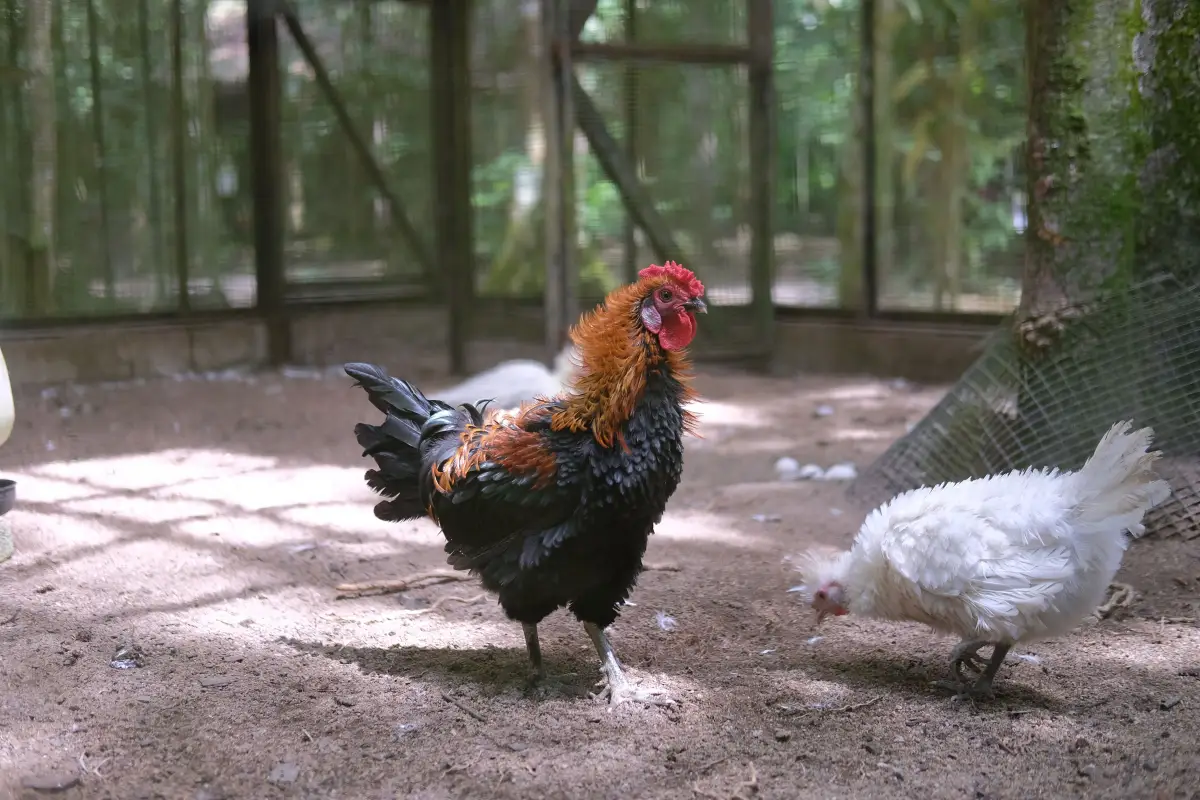
Stop Feather Pecking Fast: 3 Immediate Changes
If birds are already bare and distressed, there’s no time to wait on a full run overhaul. These three changes can be made in an afternoon, and they directly address the behavioral gaps most likely behind the pecking.
- Install at least three perch types — one high roost above head height, one mid-level branch around waist height, and one low stump or log. Vary the diameter and use natural wood with bark texture, not uniform milled lumber.
- Dig a dust-bathing pit in a dry, sunny corner — fill it with a blend of dry sand, sifted wood ash, and a small amount of food-grade diatomaceous earth. Aim for 18 inches across and at least 6 inches deep.
- Hang a whole cabbage, broccoli stalk, or a tightly bundled bunch of kale at a hen’s eye level with sturdy twine. Replace it once it’s pecked to the stem.
These three moves give the flock immediate ways to perch, dust bathe, and forage—three core behaviors that, when absent, funnel directly into feather pecking.
Step-by-Step Fixes: The Enrichments That Rewire Pecking Behavior
Each enrichment below tackles one unmet behavioral need. The order moves from the quickest to implement to those that benefit from a little more planning, but all of them reflect what applied ethology tells us about keeping a settled flock.
Perch Diversity: Give Every Bird a Safe Place to Escape and Preen
A run with a single roost creates a social bottleneck. Lower-ranking hens get pushed to the ground, where they become easy targets, or they begin targeting others in an effort to displace tension. Adding varied perches changes the social landscape; birds can spread out, choose a spot that matches their physical ability, and settle into the calm, self-directed act of preening instead of pulling feathers.
How to confirm this is the issue: Watch the flock at dusk. If you see some hens staying on the ground or huddled in corners while a few claim the only elevated spot, dominance-related feather pecking tends to follow within days.
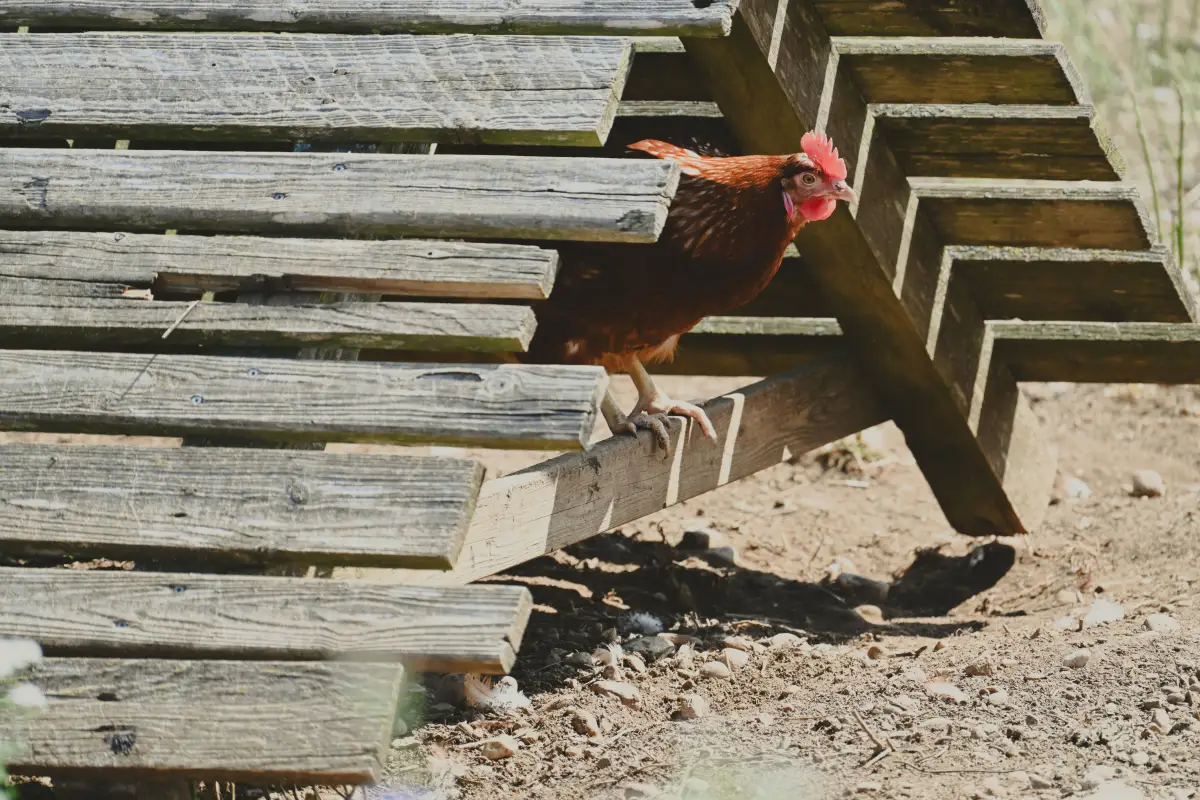
Fix: Set up at least three perching stations that differ in height by 12 inches or more. Natural hardwood branches, 2 to 4 inches thick, with bark intact give feet a firm, comfortable grip and wear down nails naturally. Mount some at slight angles rather than dead horizontal. For heavier breeds or older birds, a small wooden platform at waist height offers a rest spot that doesn’t require tight gripping. Space the perches so a dominant bird can’t defend two at once.
Dust-Bathing Pits: The Behavior That Replaces Pecking With Self-Care
Dust bathing is more than hygiene; it’s a ritual with a strong opiate-like release in poultry. When hens can’t access a dry, loose substrate, that unmet drive often turns into obsessive pecking at feathers—the next closest thing that lets them go through a similar peck-and-rub motion. A designated dust pit gives them back the full sequence of scratching, ruffling, and shaking, which quiets the flock as a whole.
How to confirm: You’ll spot birds trying to dust bathe on hard-packed dirt or in damp litter, going through a few half-hearted motions before standing up and pecking their own feathers or a neighbor’s. The behavior gets worse after rain when the ground stays wet.
Fix: Dedicate a spot at least 2 feet square and 8 inches deep. Use a 50% construction sand, 30% sifted wood ash, and 20% food-grade diatomaceous earth blend. Cover it with a sloping roof or a tarp so rain doesn’t turn it into mud. A sturdy plastic kiddie pool or a deep galvanized tub works in tight runs; just change the mix every couple of months. A sunny placement invites use and keeps the material dry.
Hanging Edible Enrichment: The Daily Foraging Distraction
Chickens are wired to work for food; given a choice, they’ll choose to peck at something that takes effort over an open dish of the same thing. A stationary feeder that’s emptied in minutes leaves a long, empty stretch of day where the drive to peck remains high. Hanging items that swing, resist, and reward with bits of green channel that peck-force into a productive, self-paced activity.
How to confirm: Feeders clear out quickly, and the rest of the day the run looks bare aside from water. You’ll see mounting pecking in the late morning and afternoon when the birds are active but have nothing to do.
Fix: Tie a sturdy vegetable—cabbage, romaine, half a pumpkin—at head height so it hangs freely. You can also use a treat ball or a mesh bag filled with scratch grains that releases a little with each peck. Rotate the item every couple of days; the flock’s curiosity stays sharp when the objects and location change. In cold weather, a frozen fruit-and-veggie block hanging in a mesh bag stretches out the activity.
Forage Substrate Across the Run Floor: Turn Every Step Into a Search
Even with hanging items, a hard-packed floor offers little to do. A deep, loose litter layer that you scatter with whole grains or insect larvae each morning mimics the leaf-litter of a jungle floor, where wild cousins spend hours scratching and pecking. It turns the entire run into an activity center, drastically reducing the idle time that leads to redirected pecking.
How to confirm: Hens pace the perimeter, peck at the wire, or sit motionless for long periods. The ground is solid enough that you can’t push a finger easily into it.
Fix: Build a litter layer 4 to 6 inches deep with wood shavings, dried leaves, and straw. Every morning, toss a handful of whole oats, cracked corn, or dried black soldier fly larvae across the surface. Fluff and turn it once a week to keep it loose and interesting. In a small run, a shallow wooden box—a “foraging frame”—filled with the same mix concentrates the activity and is easy to refresh.
Rotating Novel Objects: Breaking the Habituation Cycle
Chickens investigate new things eagerly, but they also habituate fast. An object that fascinated them on Monday loses its pull by Thursday, and the flock’s attention slips back toward the easiest moving target—other birds. A simple rotation system keeps the environment novel enough that curiosity, rather than social friction, drives the pecking.
How to confirm: Enrichment items you added weeks ago sit untouched, and pecking has crept back. The flock gathers at the run gate waiting for you rather than engaging with their space.
Fix: Keep 4 to 6 interchangeable items—a pecking ball, a mirror, a perforated jug that drops grain when rolled, a broccoli head, a small hay bale—and swap one out every couple of days. Place each in a new spot. Avoid highly reflective surfaces that can cause compulsive pecking in some strains. Something as simple as a bucket with a few large stones and mealworms inside forces birds to tip and peck, and that same item can be revived by simply setting it in a different corner.
When More Than Enrichment Is Needed: Underlying Triggers
A well-equipped run sometimes still sees pecking, and that calls for a look beyond the enrichment itself.
Nutritional Deficiencies That Mimic Boredom
A shortage of methionine, lysine, or certain B vitamins can drive hens to seek protein from feathers. If all the enrichments are in place and pecking continues, ask a feed supplier for a protein analysis or switch to a layer feed with 18–20% protein and offer dried mealworms as a supplement. A simultaneous drop in egg production often points toward a nutritional gap rather than a behavioral one.
Overcrowding That Enrichment Can’t Overcome
Even the most thoughtfully enriched run fails if the social pressure is too high. Aim for at least 10 square feet of outdoor run per bird, and 3–4 square feet in the coop. When stocking density climbs past that, stress hormones stay elevated, and pecking becomes a contagious habit. Thinning the flock or adding a connected run section may be the only answer.
Identifying the Chronic Bully
Sometimes one individual drives the whole problem, even in a rich environment. Remove her to a separate pen for one week and watch the main flock. If the pecking stops, reintroduction after that pause sometimes breaks the pattern, but if the aggression returns immediately, rehoming her may be the kindest option for the group.
Designing a Peck-Proof Run from the Start: Preventative Husbandry
It’s far easier to prevent the problem than to stop it mid-crisis. These principles belong in every new run or renovation.
- Build structural diversity in from day one: permanent perches not just roosting bars, installed at multiple heights and angles during construction.
- Make the dust bath a permanent, roofed feature, not something you drag out after noticing feathers.
- Pre-install attachment points—hooks or eyes—along the run ceiling so hanging enrichments can be clipped up in seconds.
- Establish a deep litter floor as the default; don’t wait for the ground to harden.
- Keep a small bin of rotating enrichment items and set a calendar reminder to swap them. A rhythm of small changes keeps the environment alive.
Frequently Asked Questions
Can feather pecking be stopped by simply adding more protein to the feed?
Only when a genuine protein deficiency exists. For most backyard flocks, the culprit is a monotonous environment, not a nutritional shortfall. Try enrichments first—perch diversity, a dust bath, and hanging foragers. If pecking continues after those are in place, then review the feed label and consider stepping up the protein ration.
Will beak trimming fix the problem?
Trimming may lessen immediate damage, but it doesn’t address why the birds are pecking in the first place. Extensive behavioral research shows that birds in unenriched settings remain stressed, and the pecking often shifts to vent areas or turns into feather pulling. It’s a last-resort tool, never a substitute for a run designed around the birds’ behavioral needs.
How long does it take for enrichments to stop feather pecking?
Most flocks show a noticeable change within two to three days of adding varied perches and a proper dust bath. Hanging and floor-based foraging enrichments bring steady improvement over the following week. If after two full weeks there’s no reduction, shift your investigation to nutrition, bird density, or the presence of a single persistent bully.
What if my chickens stop pecking feathers but start pecking eggs instead?
That switch often signals a continuing environmental trigger. Keep nest boxes dark, well-bedded, and collect eggs frequently. The same enrichments that quiet feather pecking—especially a deep foraging floor and hanging distractions—usually reduce egg eating too, because they satisfy the pecking drive in healthier ways.
When Nothing Worked: The Next Step
If you’ve given the flock perch diversity, a covered dust bath, hanging foraging items, a deep litter floor, a rotation of novel objects, reviewed protein, and checked stocking density—and bloodied backs persist—it’s time to bring in trained eyes. Find a veterinarian with poultry experience who can check for mites, skin conditions, or underlying disease. Contact your state’s agricultural extension office; poultry specialists there often provide free, evidence-based guidance. Peer forums can offer moral support, but weigh anecdotal solutions against the behavioral science that anchors the steps above. A hen’s world should be full enough that pecking a flockmate never becomes the only interesting thing left to do.