Why Your Blue Eggs Are Turning Green: Breed Color Shifts
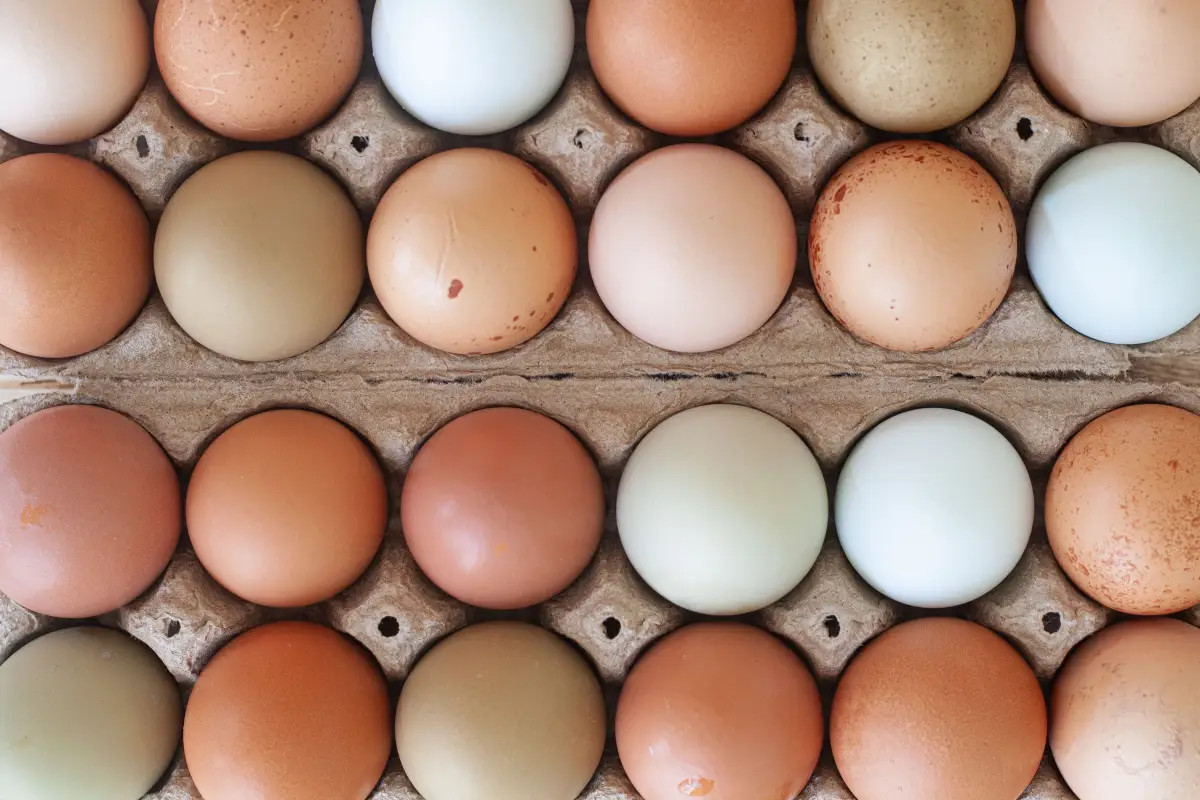
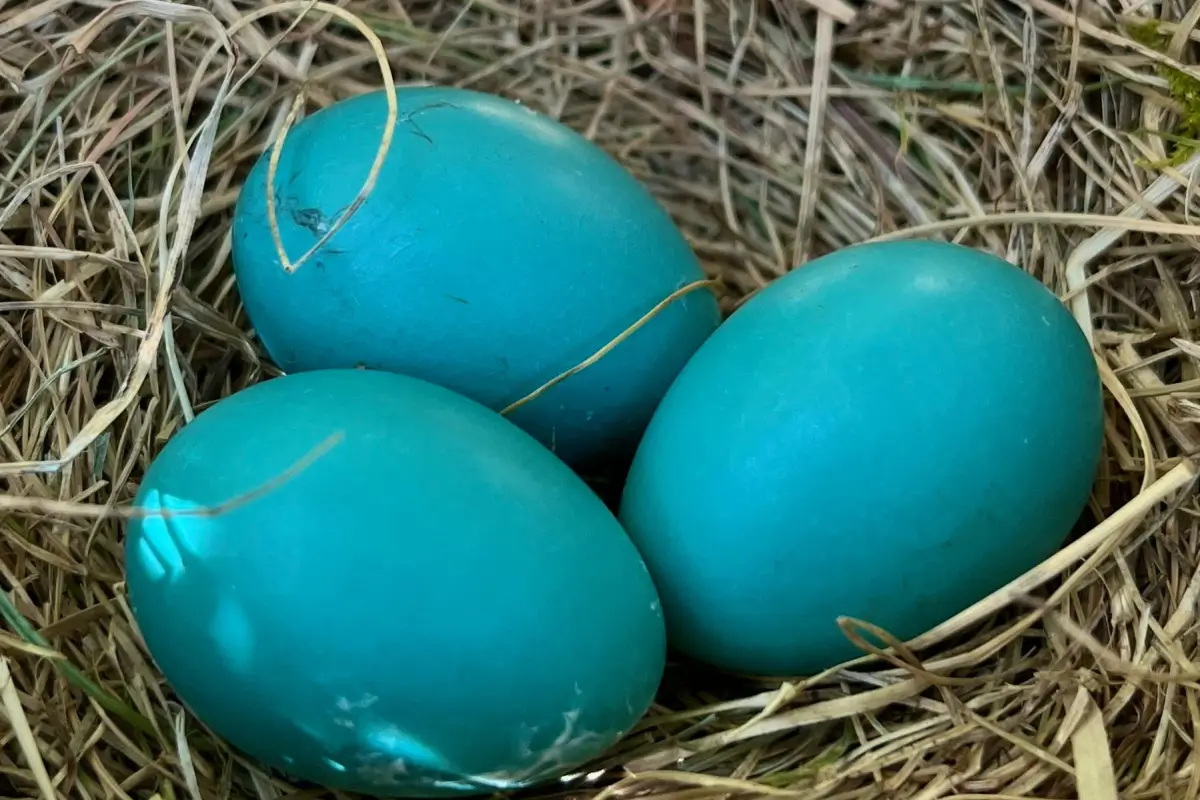
A blue egg turning green is not a breed mistake or a feed emergency—it’s just brown pigment hitchhiking on a blue shell. This field guide cuts through the mythology around olive eggers and similar crosses by showing you how egg color actually shifts under real management conditions, so you can set your expectations where they belong: on the wide, messy, fascinating spectrum these birds actually produce.
The Pigment Pairing Behind Every Green Egg
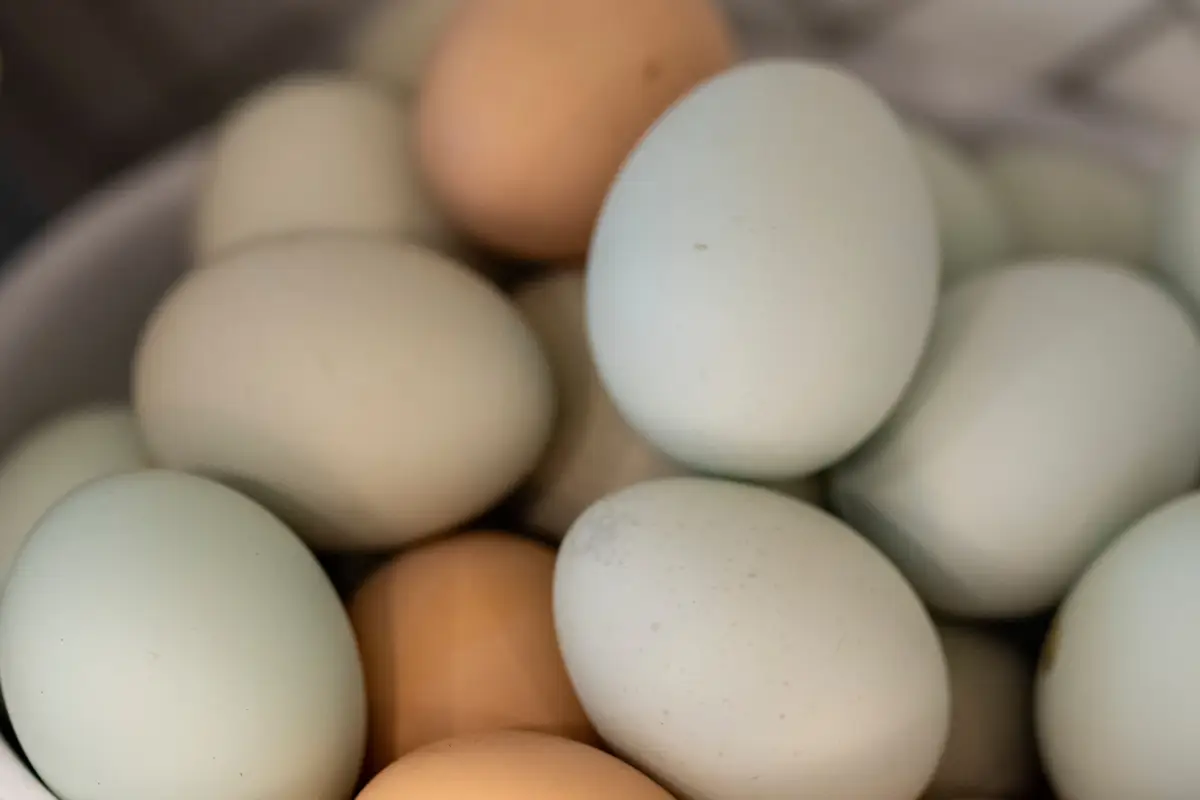
Blue comes from oocyanin, a biliverdin derivative that saturates the entire shell as it forms. It’s a simple genetic switch: a hen either has the gene and lays blue eggs, or she doesn’t. There is no pastel middle ground written into the shell itself.
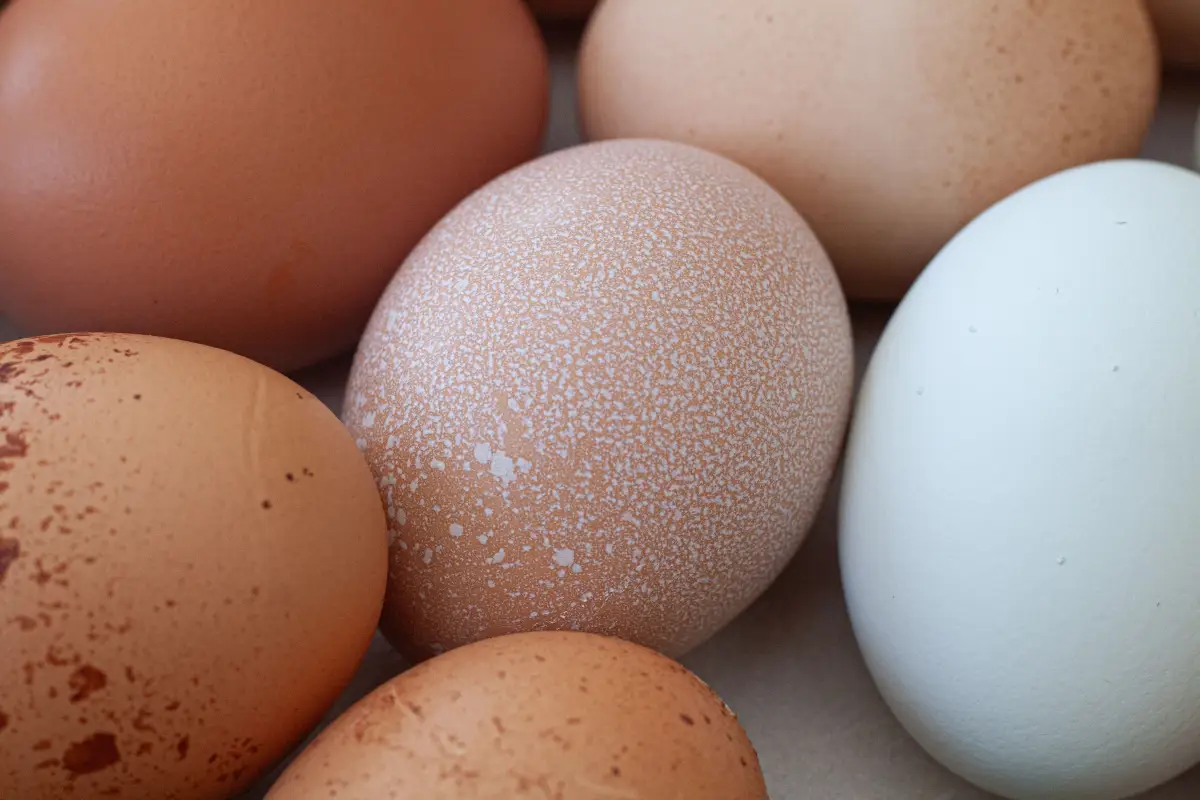
Brown is the trickster. Protoporphyrin, a hemoglobin breakdown product, gets brushed onto the shell surface during the last few hours before lay, and multiple genes control when, how intensely, and where it lands. When a hen carries both the blue-shell gene and some of those brown-overlay genes—as every olive egger does—you don’t get a fixed shade. You get a biological negotiation that plays out every single egg.
Cross a Cream Legbar with a Black Copper Marans, and the chicks may produce a range from pale teal to near-moss to deep olive. The blue is the constant; the brown overlay is the variable.
Why the Same Hen Lays Different Hues Across the Season
Photograph the eggs from a single olive egger every couple of days for a full year, and you’ll watch her color shift like a slow-motion kaleidoscope. Here’s what moves the needle.
Age and Pullet Eggs
Fresh layers often unload a heavy dose of brown pigment right out of the gate. Their first few weeks of eggs are frequently the darkest you’ll ever see from them. As they settle into a regular rhythm, the intensity usually dials back a notch and stabilizes at a lighter but consistent middle ground.
Stress and Disruption
Any event that spikes a hen’s stress hormones—a dog chase, a lice outbreak, a heat wave, a feed change, an aggressive rooster—can shut down protoporphyrin deposition on the spot. A hen that laid a rich olive egg yesterday may drop a nearly sky-blue egg today. If the stress resolves, the brown coat almost always returns within a few days. If multiple hens simultaneously lose their brown overlay, check for a common stressor: water outage, predator pressure, or a ventilation failure.
Molt and Seasonal Light
Molting rebuilds the reproductive tract from scratch, and the first post-molt eggs often arrive with erratic or absent brown pigment. Short day length in winter also suppresses brown production in many lines, so winter greens lean toward pale sage while spring greens deepen again. The underlying blue doesn’t budge.
Diet and Forage
Blue pigment isn’t diet-modifiable, but the brown layer responds mildly to what the hen eats. Xanthophyll-rich forage—alfalfa, marigold, dark leafy greens—can intensify the brown tint. A protein- or mineral-deficient ration does the opposite. However, nutrition only tweaks the expression floor; it doesn’t rewrite the genetic ceiling. No feed additive will turn a light green egg dark olive unless the bird already carried the genetics for it.
Health Status
Chronic respiratory disease, intestinal worms, or a smoldering bacterial infection drain resources, and pigment deposition is an early energy cut point. A sustained fading of the brown layer that doesn’t coincide with molt or known seasonal drift warrants a flock-level health investigation, not a supplement order.
Reading the Shell: What an Olive Egger’s Color Shift Actually Means
Once you move past the idea that egg color is a static label, the real question becomes: when is a shift harmless background noise, and when is it a signal?
Gradual lightening over a clutch cycle, or a seasonal drift to paler greens in winter, is normal. A single off-color egg after a storm is normal. The departure point for concern is a sudden, dramatic drop that persists for more than a week, especially when multiple hens show it at the same time and it’s paired with listlessness, sneezing, or reduced appetite. That fading is not a cosmetic issue—it’s the hen’s way of telling you she’s pulling resources away from luxury functions like pigment to handle something more urgent.
For the keeper who wants a picture-perfect olive egg basket every day, the truth is inconvenient: selecting for a narrow, stable color requires many generations of linebreeding. In a small backyard flock of first- or second-generation olive eggers, color range is not a bug—it’s the expected output. Expecting uniformity is like expecting every apple on a seedling tree to match a Honeycrisp.
Photographing Egg Variation: A Management Field Guide
If you want to understand what’s actually happening with your flock’s egg color, a dated photo log with consistent conditions will tell you more than any genetics article. Subtle shifts are easy to miss with the naked eye over weeks, but a sequence of images makes change obvious.
Standardize Light and Background
Indirect natural daylight, same time of day, same spot. Use a plain gray card or a sheet of white paper as your background. Place a handwritten date card in the frame—nothing fancy, just something that anchors the sequence. This prevents your phone from auto-color-balancing the greens into a different universe every shot.
Use a Fixed Color Reference
Tuck a clean white egg from the grocery store or a matte ceramic egg into every photo. It gives your eye a constant anchor so you can separate real pigment changes from lighting drift.
Track Individual Hens
Leg bands or wing tags are cheap. Knowing that Hen 77 lays deep olive through April and pale sage through December, while Hen 82 never goes darker than mint, lets you spot when something actually breaks that pattern.
What to Look For in the Log
A healthy olive egger’s color will cycle: slightly darker at the start of a clutch, fading as the clutch continues, freshening after a rest day. A sudden collapse in brown pigment across several hens without a clear stressor says “investigate feed, water, ventilation” before you start treating individual birds.
Key Takeaways
- Every green egg is a blue shell with a variable brown protoporphyrin coat—there’s no magic "olive" pigment.
- Olive eggers and other blue-brown crosses are built to produce a range, not a Pantone swatch; variation is their factory setting.
- Age, stress, molt, season, diet, and health all tug at the brown overlay, often shifting the visible color week to week.
- A consistent photo log gives you a baseline that one-off snapshots never will, and it’s your earliest warning system for health-related pigment loss.
- A blue egg turning green is just expression of genetics—nothing’s gone wrong.
FAQ
Can diet change the color of a blue egg to green?
No. A blue egg turns green only when brown pigment is genetically possible and the hen deposits it. Diet can tweak the intensity of that brown layer, but it cannot add brown pigment to a pure blue-layer. Feeding alfalfa may deepen an existing olive, but it will never conjure a green egg from an Ameraucana.
Why did my olive egger lay a blue egg today?
A temporary glitch in protoporphyrin deposition—stress, a disturbance, or just a physiological off day—can strip the brown coat entirely, revealing the blue shell beneath. If the brown doesn’t return within a few days, review recent management changes and watch for other symptoms, but a single blue egg from an olive layer isn’t an emergency.
Do green eggs fade after they are laid?
The pigment itself holds fine under normal storage, though long direct sunlight can bleach the brown slightly. The cuticle may wear off with handling, which changes the surface gloss but not the underlying tint.
What breeds produce olive eggs without turning blue?
None. Every olive egg starts with a blue base. The darkest olives come from crossing a heavy brown-layer with a strong blue-layer, but there is no breed you can buy that guarantees a specific green shade with no variation.
Can I predict what color eggs a cross will lay?
Only in broad strokes. If both parents carry the blue-shell gene and brown-layer genes, offspring will fall somewhere in the green spectrum, but the exact tint is probabilistic. Several generations of selection can narrow the range, but individual eggs will still wobble.
Where Color Shifting Leads
Egg color in olive eggers isn’t a fixed trait you dial in once; it’s a daily report your hens fill out based on their genetics, environment, and health. Stop expecting a paint chip and start reading the signal. Put a dated photo log into practice this week—same light, same background, same reference egg. Over a full season, those images will teach you what your birds are telling you more clearly than any breed chart ever could.