The Overlooked Step Before Choosing Chickens for Small Yards
Most people begin by scrolling through hatchery websites and photo grids of colored eggs and fancy plumage. That sequence skips the one number that decides whether any chicken can live well on a small plot: the square footage of usable run space per bird. This article provides a space‑first selection method — measure the run first, then run every candidate breed through a matrix of noise level, egg color, and climate tolerance to arrive at a shortlist that matches physical reality.
A 4‑foot by 8‑foot enclosure looks adequate until you divide by the established minimum of 10 square feet per standard hen. That calculation permits three birds, not the half‑dozen that a photo of a colorful egg basket suggests. For small yards, the sequence of constraints is not arbitrary: spatial capacity always comes first, then behavioral and environmental fit, while cosmetic preferences sit at the bottom. By the end of this guide, the process of measuring a run, calculating capacity, and applying a matrix filter will replace guesswork with a repeatable, evidence‑based protocol.
Why Run Space Sets the Absolute Ceiling (and How to Measure It Correctly)
Chickens scratch, dust‑bathe, and navigate a pecking order for roughly 12 to 14 hours a day. Crowding them below a critical threshold disrupts those routines and reliably triggers stress‑linked outcomes: feather pecking, egg eating, and suppressed immune function. No amount of coop refinement offsets an undersized run.
The 10‑Square‑Foot Minimum Is a Survival Floor, Not a Comfort Goal
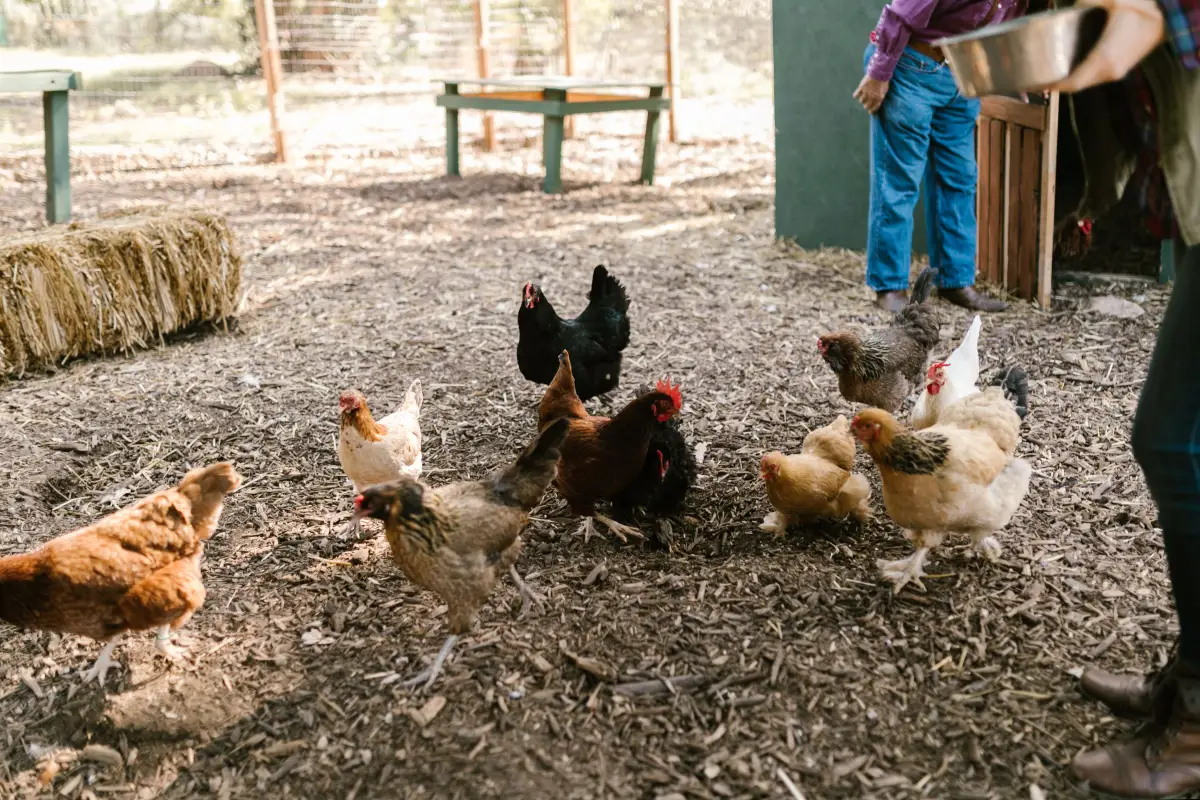
The 10‑square‑foot yardstick per standard bird comes from decades of practical husbandry guidance. Bantams can function on about half that. However, those figures assume birds free‑range part of the day or rotate through fresh ground. In a small, permanently confined run — the typical small‑yard scenario — a better working minimum is 12 to 15 square feet per hen. The extra two or three square feet per bird materially reduces the frequency of stress‑related behaviors that lead to injury and disease.
Usable Space vs. Total Run Dimensions: Width, Shape, and Obstructions
A run that is 3 feet wide and 16 feet long offers the same 48 square feet as a 6‑foot by 8‑foot rectangle, but birds use the space differently. In a narrow corridor, a lower‑ranking hen moving from one end to the other must pass in close quarters with dominant birds and has no escape route. A minimum width of 4 to 6 feet allows lateral movement that defuses tension. When calculating usable area, subtract the footprint of dust‑bath boxes, feeders, waterers, and any permanent structures that consume floor space. What remains is the traversable ground — the only number that matters for stocking density.
Determining the Maximum Flock Count for a Small Yard
Take the run’s length and width (inside the fence), subtract the area occupied by fixtures and dead zones. Divide by the per‑bird target for the confinement level — 10 square feet as an absolute survival baseline, 12 to 15 for full‑time lockdown. The resulting integer is the hard ceiling. Exceeding it, even temporarily while raising pullets, will produce measurable signs of stress within weeks. Write that number down before looking at any breed. It will immediately eliminate every breed whose space needs exceed even a single extra bird.
The Space‑First Framework: Why Constraints Must Be Applied in Order
A typical novice wish‑list reads: “I want green eggs, a friendly hen, and maybe a dual‑purpose bird.” On a tiny yard, that sequence is backward.
First constraint: run square footage. It sets the ceiling on bird count and automatically disqualifies large, active, or flighty breeds that demand more than the standard minimum.
Second constraint: noise. In any lot where neighbors are within earshot, a hen that announces every egg for 20 minutes straight is a bigger risk to flock longevity than a mild winter chill. Noise tolerance is often the invisible line between a permitted backyard project and a code enforcement visit.
Third constraint: egg color and production. Once the flock size is fixed — say, two or three hens — each bird’s output drives the daily egg count and the color palette. A keeper who wants dark brown eggs from a three‑bird flock may need to allocate all slots to Marans or Welsummers, which then forces a hard look at whether those breeds can handle the local climate and run configuration.
Fourth constraint: climate tolerance. A breed that cannot handle a region’s heat or cold will need costly modifications — shade cloth, misters, heated waterers — that a small run may not have room to install without further reducing usable space.
Applying these four filters in that order collapses a breed catalog that numbers in the hundreds into a shortlist of perhaps three to five breeds, each of which fits within the run’s physical and social boundaries.
The Shortlist Matrix: Noise, Egg Color, and Climate Hardiness
Once the maximum flock size is locked, the keeper can lay candidate breeds against a simple matrix that weights the three factors most noticeable in a small‑yard setting. The intent is not to document every breed but to surface the trade‑offs that each filter forces.
Noise Level: Silent Breeds Are Not a Myth, Just Rare
Breed‑level tendencies are the best predictor of yard volume, even if individual birds vary. Heavy, calm breeds — Australorps, Barred Rocks — tend to produce soft clucks and minimal alarm calling. Orpingtons and Wyandottes lean toward more conversational vocalizations, while the light Mediterranean breeds (Leghorns, Minorcas, Andalusians) combine flightiness with loud, frequent calls. Bantam size alone does not guarantee quietness; it is the breed’s temperament that sets the baseline. In a run located six feet from a neighbor’s window, the safe play is to pick breeds with a documented history of low‑volume behavior.
Egg Color as a Filter, Not a Wish
A small flock cannot absorb aesthetic misses. If the goal is a basket of blue eggs and the run holds only two birds, both must be Araucana‑derived layers. That requirement then narrows the rest of the matrix — those breeds often need more space and may not tolerate extreme cold well. Many small‑yard keepers eventually standardize on one reliable shell color (light brown, for example) from a breed that marries calm temperament with broad climate tolerance. The egg color becomes a filter of last resort, applied only after the breed passes the noise and climate gates.
Climate Tolerance: Matching Physiology to the Run’s Microclimate
Small runs exaggerate thermal swings. There is less ground to burrow into shade or huddle against wind. In regions with hard winters, breeds with cushion combs, pea combs, and heavy body mass (Chantecler, Wyandotte, Buckeye) resist frostbite better. In the South and Southwest, Mediterranean breeds with large combs and light bodies shed heat efficiently, but they often fail the noise filter. For mixed climates, the dual‑purpose American class — Plymouth Rock, Dominique, Rhode Island Red — offers a midpoint. Absent climate‑matched genetics, the keeper will spend more on environmental retrofits than on the birds themselves.
Illustrative Matrix for a 3‑ to 4‑Bird Flock
| Breed | Min. Run Space (sq ft/bird) | Noise Level | Egg Color | Cold Tolerance | Heat Tolerance |
|---|---|---|---|---|---|
| Australorp | 10–12 | Low | Brown | Good | Moderate |
| Buff Orpington | 12–15 | Medium | Brown | Excellent | Poor |
| Wyandotte | 12–15 | Medium | Brown | Excellent | Moderate |
| Rhode Island Red | 10–12 | Medium | Brown | Good | Good |
| Ameraucana | 12–15 | Low–Medium | Blue/Green | Moderate | Moderate |
| Leghorn (White) | 10 | High | White | Poor | Excellent |
| Barred Plymouth Rock | 10–12 | Low | Brown | Excellent | Good |
| Silkie Bantam | 5–8 | Medium | Cream | Moderate | Poor |
| Belgian d’Uccle Bantam | 5–8 | Low | Cream | Moderate | Moderate |
This matrix is illustrative, not a prescription. What matters is how the columns interact: a climate‑tolerant breed frequently drives up noise, and a quiet, cold‑hardy bird may suffer in a 95°F run without extensive shade.
Traits That Slide Down the Priority List When Space Is Tight
Applying the space‑first filter does not mean other traits evaporate. It means they are secondary. Temperament matters less in a three‑bird flock where each hen has enough lateral room to avoid a bully; a “friendly” breed that requires 15 square feet per bird remains a poor fit. Dual‑purpose utility for meat disappears in a 25‑square‑foot run where raising even one cockerel is impractical. Feather color, comb type, and egg‑laying frequency become tie‑breakers only after the four primary gates are passed. Small‑yard keepers must accept that the photogenic mixed flock — a rainbow of eggs from a half‑dozen heritage breeds — almost always collapses under the weight of real square‑footage limits, leaving a compact set of quiet brown layers that survive the climate and fit the run.
A Concrete Walk‑Through: 40 Square Feet
Consider a run 5 feet wide and 8 feet long, or 40 total square feet. After deducting 4 square feet for wall‑mounted feeder and waterer, the traversable area is 36 square feet. Dividing by 12 square feet per bird (the target for full‑time confinement) gives a ceiling of three hens.
Noise is the first true filter because the run sits near an adjacent bedroom window. Leghorns drop off immediately. The keeper wants brown eggs, so the pool shrinks to Australorp, Buff Orpington, Wyandotte, Rhode Island Red, and Barred Rock. Climate: the location endures hot afternoons and freezing winters. Buff Orpingtons, with poor heat tolerance, come out. The remaining three breeds — Australorp, Rhode Island Red, Barred Rock — all handle moderate extremes, stay relatively quiet, and lay brown eggs. The final choice can be made on availability or personal preference.
The entire process started with a tape measure. That is the point.
Key Takeaways
- Measure traversable run square footage first; deduct fixtures and dead zones.
- Treat 10 square feet per bird as a survival floor; aim for 12–15 in a permanently enclosed run.
- Apply a fixed sequence of constraints: run capacity → noise → egg color → climate tolerance.
- Use a matrix to see trade-offs directly — a breed’s climate strength may come with a noise liability.
- In tight quarters, plumage color and dual‑purpose potential fall to the bottom of the decision stack.
What to Do Next
An accurate square‑foot count, not a breed catalog, is the best tool a small‑yard keeper owns. Once that number is in hand, the matrix of noise, egg color, and climate tolerance collapses a sprawling breed list into a short, viable set.
The single next action: go outside and measure the run — the enclosed ground where birds will spend their days. Do not estimate. Give yourself a real number, write it down, and let it set the hard cap on flock size. Then return to the matrix and pick the birds that fit.