The 50-Decibel Limit: How Extension Defines a Quiet Chicken
A hen that stays below 50 decibels at three feet is functionally silent to neighbors in a standard suburban lot. That number aligns with the nighttime noise cap written into most municipal codes, and it is the cutoff Extension poultry guides use to identify quiet breeds. After reading this guide, you will know which hens consistently operate under 50 dB and how to match those breeds to your local noise tolerance.
Where the 50-Decibel Line Comes From
The majority of U.S. suburban noise ordinances impose a daytime limit of 55–60 dBA and a nighttime limit at or below 50 dBA. A chicken’s clucking that registers at 51 dB for more than a few continuous seconds at the property line can be classified as a nuisance. Cooperative Extension services—university programs that translate agricultural research into practical recommendations—have adopted this 50 dB threshold as a clear, measurable standard. Their published breed guides routinely flag hens likely to breach that barrier under normal conditions, and they steer owners toward breeds that do not.
What 50 Decibels Actually Sounds Like
Fifty decibels is regularly overestimated. A refrigerator hum from across a room measures 40–45 dB. Moderate rainfall registers around 50 dB. A face-to-face conversation at three feet is closer to 60 dB—a 10 dB increase represents a perceived doubling of loudness. A hen that hums along at 45–50 dB throughout the day fades into the ambient background noise of a typical yard. One that routinely hits 60 dB, as a Leghorn might during an egg announcement, becomes a persistent auditory presence and a predictable source of neighbor frustration.
How Breed Choice Determines Noise Output
Chicken vocalizations fall into measurable categories. Foraging clucks sit at 40–55 dB. The post-laying egg song can spike to 70 dB. Alarm calls in response to a predator easily exceed 80 dB. Broody hens may produce low growls under 40 dB, but defensive pecks can register 55 dB momentarily. The problem is not the existence of these sounds—it is their frequency. Calm, dual-purpose breeds produce far fewer high-decibel events per hour than high-strung layer strains. Extension field data consistently show this pattern, which makes breed selection the single most leveraged decision for noise control.
Decibel Levels of Common Backyard Breeds
The following ranges, based on owner observations and Extension sound assessments, apply to hens at a distance of 3–6 feet during routine daytime activity:
- Australorp: 40–52 dB (mostly soft foraging clucks; occasional brief spikes)
- Buff Orpington: 42–50 dB (low, steady chatter)
- Barred Plymouth Rock: 45–53 dB (more vocal, but rarely sustained)
- Wyandotte: 43–50 dB (quiet unless startled)
- Rhode Island Red: 45–58 dB (vocal around feeding time)
- Leghorn: 50–70 dB (frequent, high-pitched egg songs)
- Easter Egger: 48–62 dB (variable; some lines are noticeably talkative)
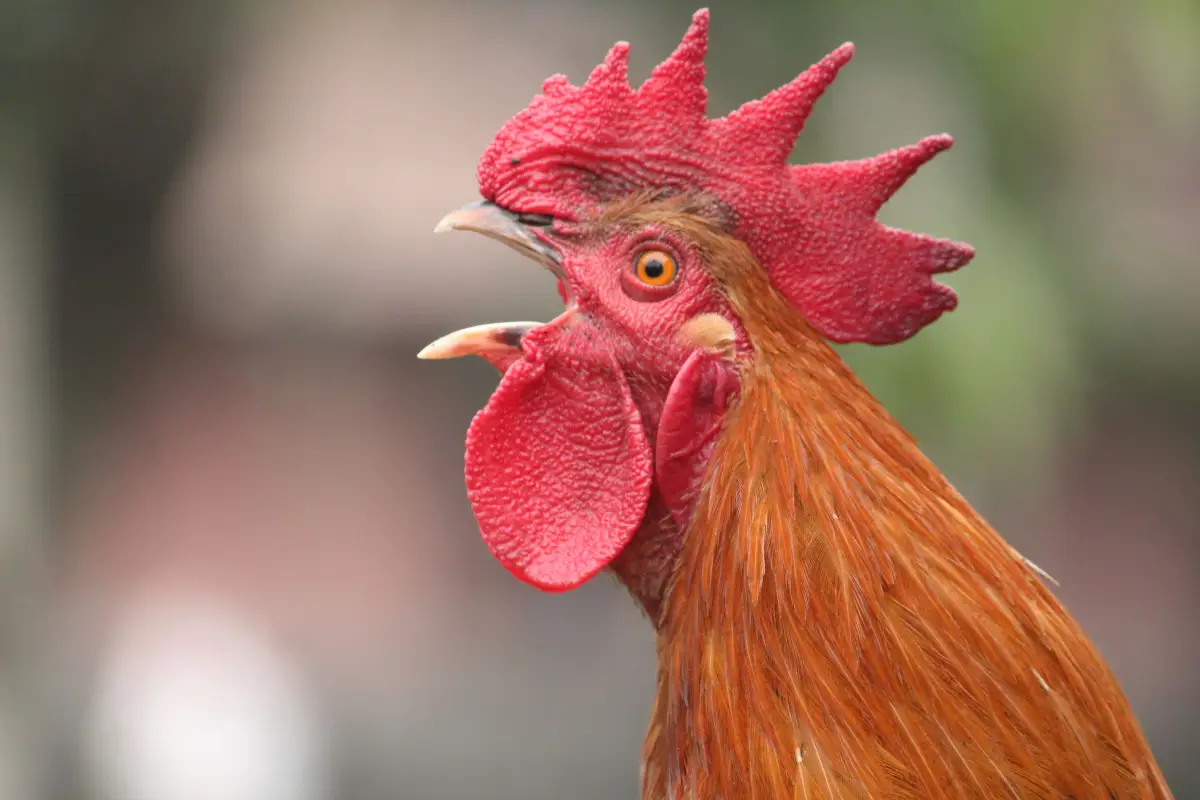
These numbers represent typical hens. Roosters crow at 90–130 dB and exceed the 50 dB limit by orders of magnitude; they are generally incompatible with noise-regulated neighborhoods.
Breeds That Consistently Stay Below 50 dB
For a noise-sensitive site, the following breeds reliably spend the vast majority of their day under 50 dB:
- Australorp: calm disposition, soft vocalizations, forages quietly.
- Buff Orpington: heavy breed that rarely pushes above a low purr.
- Wyandotte: steady and undisturbed by minor stimuli; avoids extended calling.
- Silkie: broody tendencies and small size correlate with reduced noise; generates soft clucks.
- Cochin: large, docile, often stays below 45 dB.
These breeds also tend to be poor fliers, which minimizes the crash-squawk events common when flighty birds panic along fences.
When Even Quiet Breeds Break the 50 dB Limit
No hen is silent. All will produce an egg-laying song that momentarily reaches 65–70 dB, irrespective of breed. A hawk overhead will trigger alarm calls above 60 dB. The critical distinction is recovery time: quiet breeds vocalize briefly and settle back to their baseline within seconds, whereas a naturally noisy breed may repeat the cycle every 30 minutes. Managing these spikes requires placing the coop well away from property lines and using solid fencing to remove visual triggers.
Practical Ways to Keep Chicken Noise Under 50 dB
- Distance reduces sound predictably: Sound level drops about 6 dB each time distance doubles from the source. Moving a coop from 5 feet to 20 feet from the property line cuts the residual noise significantly.
- Solid barriers block more than chain-link: A wooden fence or dense hedge between the run and a neighbor’s window obstructs sound waves more effectively than open mesh.
- Enrichment lowers boredom calling: Chickens that pace and emit contact calls out of boredom are louder. Scattering feed, hanging greens, and adding perches keep behavior occupied and quiet.
- Keep the flock female: A single rooster pushes daily noise firmly past 50 dB and will violate nearly all local noise regulations.
- Verify local regulations first: Some municipalities specify a numeric decibel limit; others rely on “nuisance” or “reasonable person” standards. Knowing the exact legal language determines how much margin a chosen breed actually provides.
Key Takeaways
- The 50-decibel line mirrors common nighttime noise ordinances and defines the practical upper limit for a quiet backyard hen.
- Breeds like Australorp, Orpington, Wyandotte, Silkie, and Cochin operate predominantly under 50 dB.
- Brief spikes above 50 dB during egg laying or alarm calls are unavoidable, even in quiet breeds.
- Roosters exceed 50 dB by a wide margin and are typically prohibited.
- Coop distance and solid barriers can reduce perceived noise at the property line by 6–12 dB.
Frequently Asked Questions
What does 50 decibels sound like compared to everyday noises?
Fifty decibels is comparable to a running refrigerator, light rain, or a library ambience. It is markedly quieter than normal conversation (60–65 dB) and far below a vacuum cleaner (70–75 dB).
Are any chicken breeds completely silent?
No breed is silent. All hens vocalize, especially during egg laying and predator alerts. The breeds listed above simply produce fewer and quieter sounds on average.
How far does a 50-decibel chicken sound carry?
In an open yard without sound barriers, a 50 dB call is discernible up to roughly 30–50 feet before blending into background noise. With a solid fence or thick shrub line, that distance falls to 15–25 feet. At a typical property line, a well-placed coop renders normal hen sounds nearly inaudible.
Will a rooster ever be below 50 decibels?
No. A rooster’s crow measures 90–130 dB at close range. Even at 20 feet, it rarely falls below 70 dB. Roosters are incompatible with any noise ordinance that caps continuous noise at 50 dB.
Can I reduce chicken noise with coop placement?
Yes. Positioning the coop centrally and behind a solid barrier can lower the sound level at the property line by up to 12 dB—enough to make a 52 dB hen register as a soft 40 dB hum.
What to Do Next: Matching Breed to Property
The highest-impact action after internalizing the 50-decibel limit is to select a breed that compliments your lot layout. Choose an Australorp or Orpington group, site the coop a minimum of 15 feet from the nearest neighbor’s fence, and install a solid visual screen. Then, stand at the property line during an active part of the day. If you hear only ambient noise and the occasional muted cluck, the flock passes the quiet test.