10 Square Feet Per Bird: The Real Minimum for Small Yards
If you searched for "10 square feet per bird," you need an answer that works in a yard where every foot matters. The number itself is a standard, but it's only useful when applied to a measured run and matched to the adult size of the birds you'll keep. Too often, people start with the chicken catalog and try to make the space fit later. That approach fails. The method that succeeds starts with a tape measure and moves from there.
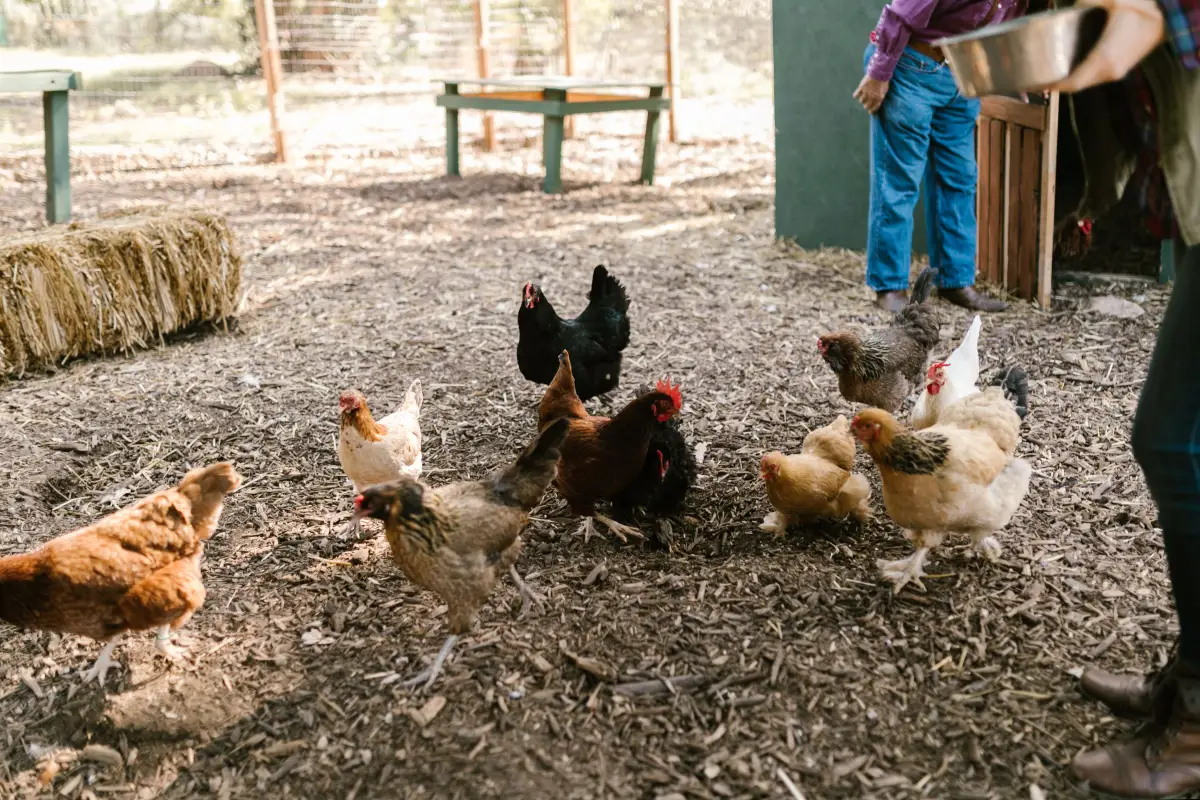
This article lays out a sequence: measure your run, compute true usable square feet, set a strict bird cap, then select breeds whose adult frame fits that cap. You'll avoid the mistake of overcrowding a small yard based on rough estimates.
The Three Numbers That Control Small-Yard Flock Size
A small-yard chicken project balances three fixed numbers. If any of them is off, the system breaks.
- Run square footage, measured to the inch: This is the fenced ground, after subtracting beds, paths, trees, and objects that rob floor space. It is never the lot size.
- 10 square feet per bird as a run minimum: Extension guidelines use this as a baseline for standard-sized hens. It is not a luxury target; it is the floor from which heavier breeds need more.
- Breed adult weight and wingspan: A 5-pound Leghorn and a 9-pound Brahma demand different amounts of ground and personal space. The 10 sq ft figure assumes an average 5-6 pound hen.
When these three numbers line up, the run stays cleaner, the birds stay calmer, and management is simpler. When they don't, the weakest hens show the strain first.
The Measure-Then-Match Framework
Each step builds directly on the one before it. Skipping a step leads to overestimating what your yard will carry.
Stage 1: Take a Raw Measurement with a Steel Tape
Why this comes first: Without an exact footprint, no calculation downstream holds. A run that looks 10 feet by 12 feet to the eye might be 9 feet 4 inches by 11 feet 8 inches when measured. In a small yard, that difference equates to a whole bird's space.
What to do:
- Use a 25-foot or longer steel tape measure. Yardsticks and phone apps introduce slop you cannot afford in a confined area.
- Measure the longest straight length and width of the fenced run area. For L-shaped or odd lots, break the shape into rectangles and triangles; measure each separately.
- Record every dimension in inches first, then convert to decimal feet. Rounding at this stage causes compounding errors later.
Done well means: You have a rough dimension sketch with inches noted, and you know the exact raw area before you ever open a breed catalog.
Stage 2: Calculate Usable Square Feet, Not Just the Footprint
Why this comes now: Feeders, waterers, dust-bath stations, and the 8-12 inches birds avoid along the wire fence all reduce the space birds actually move through. In a small run, those subtracted feet matter more than in a 200-square-foot pen.
What to do:
- Compute rectangle areas (length × width), then add triangle sections ((base × height) ÷ 2).
- Subtract fixed object footprints: a compact feeder and waterer station takes about 4-6 square feet; a dust-bath tub adds another 2-3 square feet; posts or bracing take away small fractions. Be exact.
- For runs under 100 square feet, deduct an additional 8-10 square feet for edge avoidance and human access lanes. Birds rarely use the last foot of fence line for foraging, and you need room to work.
Done well means: You have a single usable-square-foot number—say, 76 or 83—that is smaller than the raw area. That number, not the property line, becomes the basis for all flock size decisions.
Stage 3: Convert Square Feet into a Hard Bird Ceiling
Why this comes now: The 10-square-foot rule gives a mechanical limit. You need a ceiling you treat as non-negotiable.
What to do:
- Divide usable square feet by 10. Round down, never up. A 76-square-foot run allows 7 birds using that floor.
- Use this as a maximum, not a suggestion. If you will free-range the birds daily for hours, they may tolerate slightly less run space, but the run is their primary environment on days they stay inside. Build for that reality.
- For breeds over 7 pounds, you will adjust the allowance upward in the next stage, so the numerical cap will drop further.
Done well means: You write down a bird number—example: 7—and you respect it regardless of how many chicks a hatchery ships in a single box.
Stage 4: Match Breed Adult Size to Your Ceiling
Why this comes now: The 10-square-foot baseline assumes a standard 5-6 pound hen. Heavier, broader birds need more ground space; active lightweight birds still need the full floor area but use vertical space if offered. The breed weight decides how many of that specific bird your run can actually house.
What to do:
- Look up adult female weight for each breed you're considering through a reliable source, such as the American Poultry Association breed standards or a hatchery's weight chart. A Plymouth Rock hen weighs around 7.5 pounds, a Sussex around 7 pounds, an Australorp around 6.5.
- If a breed's adult hen exceeds 7 pounds, add 2 square feet per bird to the 10-square-foot minimum. For a 9-pound Brahmas, add 4 square feet. That means a Brahma hen needs 14 square feet of run space. In the same 76-square-foot run that held 7 standard hens, you could only keep 5 Brahmas.
- Do not mix heavy and light breeds without recalculating: a mixed flock's space requirement is set by the largest breed present.
Done well means: Your breed choices produce a flock that can live within the calculated square footage without stress.
Stage 5: Test the Layout for Daily Movement and Shelter
Why this comes now: Square footage tells you capacity, but layout determines whether that capacity is livable. Birds need paths between resting, eating, and drinking zones. A poorly placed roost or waterer can create a bottleneck and constant low-grade conflict.
What to do:
- Sketch the run, plotting where feeders, waterers, dust bath, shade panel, and roosting bars will sit.
- Check that more than one bird can move between the feeder and the waterer without the path narrowing to a single-bird width.
- Place waterers at least 4 feet from feed stations to reduce wet mash buildup and soiling.
- Ensure shade covers at least 20% of the run during the hottest part of the day, without blocking the entire area.
Done well means: You've walked through the run design mentally and confirmed that a bird can reach water, feed, and shelter without being pinned in a corner.
The Framework in Action: A 96-Square-Foot Run
A small-yard keeper marks out an 8-foot by 12-foot run: raw area of 96 square feet.
Stage 1: A 25-foot steel tape confirms the dimensions to the inch: 96 inches by 144 inches.
Stage 2: A wall-mounted feeder and waterer set takes 4 square feet. A 2-foot square dust-bath box claims 4 square feet. Edge avoidance along the 40 linear feet of fence at roughly a 6-inch strip eats another 8 square feet. Usable square feet: 80.
Stage 3: 80 ÷ 10 = 8 birds, strictly rounded down.
Stage 4: The keeper wants two Orpingtons (8 pounds) and several Leghorns (4.5 pounds). Orpingtons, at over 7 pounds, need 12 square feet each: 24 square feet total. That leaves 56 usable square feet. Leghorns, as standard light layers, fit the 10-square-foot baseline. They can add up to 5 Leghorns (50 square feet) and remain within the adjusted allowance. Total flock: 7 birds, one under the original numerical cap but correctly sized for the larger hens.
Stage 5: The layout puts the dust bath at the far back corner, feed and water along one side, and a long roost above the opposite side. A central path 3 feet wide allows birds to move without crowding.
This flock fits the space, the breed weights, and the behavioral needs. The run stays clean longer and the birds show less feather damage.
Where the Framework Falls Apart: Three Common Missteps
Using the raw perimeter instead of usable square feet
People measure the fence line, multiply, and call it done. They ignore the feeder footprint, the corner the hens never use, and the shaded patch where they all squeeze. A 100-square-foot pen that drops to 80 usable square feet loses two birds' allowance. The result is chronic damp, manure overload, and birds that start pecking each other's backs.
Choosing breeds before doing the space math
It's easy to pick fluffy, heavy breeds and trust that the 10-square-foot number covers them. Then at six months, those 8-pound hens are broad-bodied and the run feels cramped. The pecking order tightens, injuries increase, and egg production becomes inconsistent. Rehoming adult birds is the ugly alternative to running the calculation early.
Assuming square footage makes any layout work
Even a correctly sized run can fail if the water station and the single shaded area sit at opposite ends. On hot afternoons, birds are forced to choose between water and relief from heat. A roost placed directly over the feeder rains droppings onto the feed. Fixing these after the fact costs time and money that a paper test would have saved.
Quick Reference: The Measure-Then-Match Stages
| Stage | Goal | Key Action |
|---|---|---|
| Raw Measurement | Get an accurate footprint | Use a steel tape; record inches, convert to decimals |
| Usable Square Footage | Find the real floor space | Subtract fixed objects and edge allowances |
| Maximum Bird Count | Set a hard ceiling | Divide usable sq ft by 10, round down |
| Breed Adult Size Match | Tune count to breed weight | Add 2-4 extra sq ft for birds over 7 lbs |
| Layout Test | Confirm behavioral fit | Sketch zones; check for bottlenecks |
Frequently Asked Questions
How accurate does my measurement need to be?
Measure to the inch. A 6-inch error on one dimension, multiplied by the other, changes the usable area by several square feet—enough to overcount birds in a small run.
Can bantams get by with less than 10 square feet?
True bantams under 3 pounds can manage with 5-6 square feet in a managed run. But if you mix bantams with standard-sized hens, use the standard hen's space requirement for everyone to avoid conflict.
Does the 10-square-foot rule apply to the coop too?
No. The 10-square-foot minimum refers to the outdoor run. Coop space follows a separate standard—typically 4 square feet per bird inside—and confusing the two leads to birds packed tightly at night.
What if my yard is L-shaped or has curves?
Break the area into rectangles and triangles to calculate. For curved boundaries, approximate with straight segments, but round the total usable square footage down, not up. In a small yard, overestimating is riskier than underestimating.
Is 10 square feet per bird enough for winter confinement?
It's the minimum for fair-weather use. If birds are confined during prolonged wet or cold months, add 2-4 square feet per bird or install a covered deep-litter extension to manage mud and moisture. Heavy breeds show stress from tight winter quarters more quickly than lighter layers.
How do I account for a run that also contains a tree or bush?
Measure the ground covered by the trunk and the drip line where scratching is impossible, and subtract that area from the usable square footage. The shade benefit is real, but the lost floor space still needs to be counted.
Start with Your Tape Measure
The Measure-Then-Match framework turns a rough yard into a calculated flock: measure the true space, subtract unusable area, set a bird cap based on 10 square feet, then adjust for breed weight—and only then finalize your bird order. Stage 1 is the only place to begin. Take a steel tape out to the run site today and record your inches.